ENG

In my recent text on new diasporas in mainland Ukraine and across Europe, I touched on a complex topic: the divisions among Crimean Tatars resulting from changes in their way of life and the emergence of differing agendas among those whom the occupation and war have scattered across the globe.
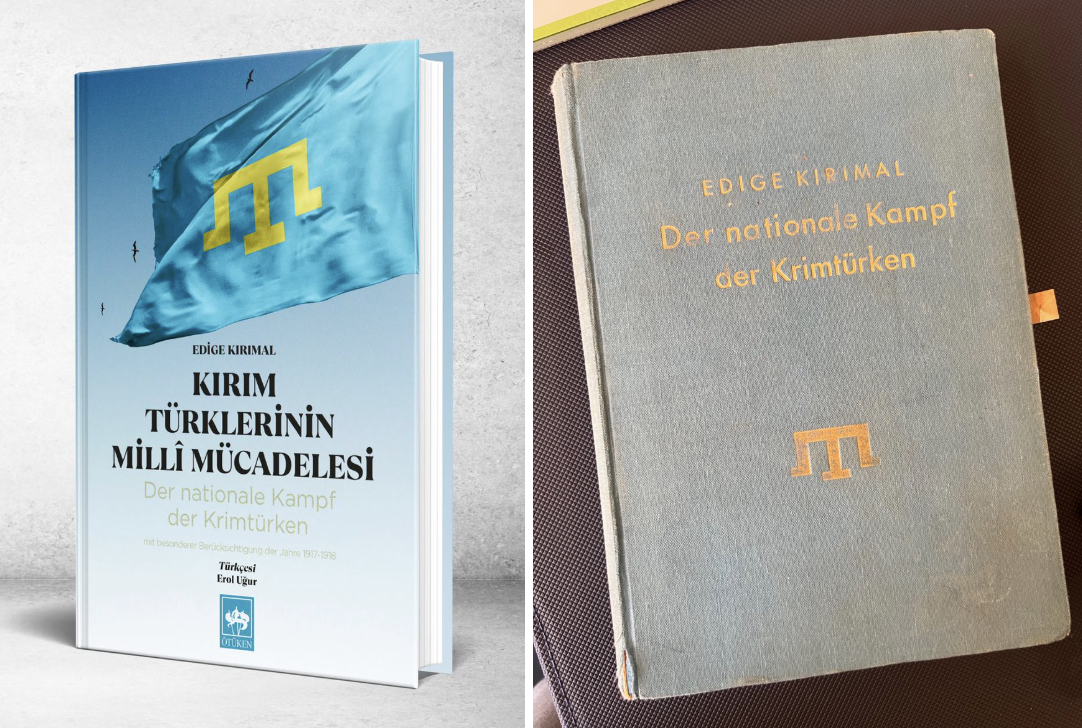
For the first time, these processes are taking place within the framework of established national institutions and forums for discussion, which means there is an opportunity to reexamine the experiences of past expulsions, deportations, and voluntary-compulsory emigration.
Attempts to sow discord among different segments of the population by spreading misinformation and labeling people have so far been unsuccessful. In 2014–2015, there were attempts to portray the small number of Crimean Tatars living on the mainland as “Kyiv Tatars” or “fugitives.”
One can flee from prison or from one's spouse. In all other cases, people were either barred from entering Crimea for political reasons or threatened with imprisonment.
The attempt to label people didn't take off. By the time of the Great War, it had completely failed against the backdrop of several anecdotal cases in Crimea, where the most prominent collaborators, having pocketed a portion of Russia’s generous budgets, actually fled Crimea — some to Turkey, like Ruslan Balbek, and others to the U.S., like Seiran Mambet.
There are now attempts to pull off a similar stunt against Crimean Tatars in Germany, Belgium, Poland, and Ireland. A cursory analysis of the accounts from which such insults are disseminated shows that in 70% of cases, comments and posts aimed at inciting internal hostility are posted via bots and private profiles with Crimean Tatar names, while the remaining 30% are split between individuals compromised through collaboration with Russian criminals and useful idiots.
There is undoubtedly a genuine fear of leaving one’s homeland on one’s own free will. The trauma of the mass deportation from Crimea in 1944 can trigger a sense of pain every time a Crimean Tatar man or woman moves to a new place.
But first of all, the national slogan “Qırımda yaşa” (Live in Crimea), adopted at the World Congress of Crimean Tatars in Ankara in 2015, has not been revoked.
Second, the traditions of nonviolent resistance suggest that if there is a risk of ending up in prison or being drawn into a war against Ukraine, it is better to leave Crimea. Would anyone in their right mind think to call Ayshe Seitmuratova a “fugitive,” given that she lived in the United States for decades after her time in the Mordovian labor camps?
Third, there are unpopular topics in any society or nation that experts may discuss, but which fail to resonate with the majority — and this is precisely why populists win over the masses.
So I won’t be getting into arguments with bots and criminals. This post is more of a reassurance for those who are susceptible to the influence of useful idiots and are genuinely feeling the emotional turmoil caused by the new diaspora communities in Europe and North America.
Many European countries cannot survive without migrants, yet it is precisely in societies with the most rapidly aging and shrinking populations that pro-Nazi and xenophobic parties are gaining ground. Before the Syrian war, Turkey was the source of the largest economic migration flows to Europe, but after taking in several million Syrians, the country unexpectedly revealed its intolerance, blaming migrants for its troubles. Before the Ukrainians, the largest group of migrants in Europe were Poles, who are now massively defending Poland’s right to be exclusively Polish….
What does all this have to do with the Crimean Tatars? It’s the absolute value of a number with the opposite sign. As one of the Muslim peoples most open to the world, who easily find common ground with representatives of other religions and cultures in everyday life, we are very conservative when it comes to national unity and identity.
This quality allowed us to preserve our language despite a complete ban on its study and deportation to Central Asian countries, where — due to the similarity of the languages — we were expected to assimilate within a single generation. But this very quality turns us into a “capsule nation” that lacks its own lobbying capabilities in the world. And the absence of viable diasporas, whose representatives are integrated into the economic and political life of Europe, was the main (if not the only) reason for the Crimean Tatars’ isolation.
Let’s recall the attempts to hold donor conferences with Ukraine’s international partners to address the losses suffered by the Crimean Tatars, even before the occupation of Crimea. On several occasions, we even managed to bring together ambassadors from many European countries at the Hyatt in Kyiv. Everyone liked the ideas and understood the problem, but nothing happened. And the main reason was not some conspiracy or a lack of empathy. The world did not know the Crimean Tatars. Almost no one had ever seen a living Crimean Tatar in person. Apart from a few specialists in politics, history, or Turkology, few Europeans had ever been to Crimea. The most recent collective memories of Crimea in France, Britain, and Italy are linked to the participation of the peoples of those countries in the Crimean War of 1853–1856.
But there is also an insurmountable gulf between knowing that a people exists and taking action to support them. The fact that you know the Tuaregs exist in Mali or the Tamils in India and Sri Lanka does not change anything for the Tamils or the Tuaregs. But if a Tamil is your neighbor, colleague, or partner, your empathy reaches a whole new level. You develop a personal connection, a personal stake, or a personal interest that can be leveraged for influence.
Even the presence of Mejlis representatives in Germany or the United States since the 1990s did nothing to change the main problem — the marketing issue. At the time, the Crimean Tatars could be “sold” to European policymakers just as easily as the inhabitants of Atlantis or aliens.
Now that occupation and war are threatening Europeans themselves, they are beginning to reexamine the sequence of events, and the annexation of Crimea is seen as the starting point for the collapse of the world order. In 2014, they tried to sweep this fact under the rug, getting away with sanctions that meant nothing to Moscow.
Now Moscow needs to be punished in a serious way. The Crimean Tatars are becoming the necessary pretext for this punishment. Are we being used as a tool? Absolutely. Will they use us for their own purposes? Without a doubt. It’s just that 12 years ago, no one was interested in us, not even as a tool. And if we view politics as an extension of economics, then we’ve finally gone public, and much depends on us — whether we’ll simply be someone’s proxies (spoiler: unlikely, we have too much experience and caution), or whether we’ll turn this into a mutually beneficial process. We’re a tough nut to crack. We’re not ready to turn into partisans or guerrillas. And the intelligence services know almost nothing about other methods of working with nations fighting for liberation.
Our approach can only be based on long-term strategies. And for now, both the international community and the Crimean Tatars are forced to reinvent the wheel.
That is precisely why it is important to understand that, since the emergence of Crimean Tatar diasporas is now a fait accompli, there are only two possible paths forward: either fostering mistrust and mutual weakening among both those who remain and those who have left, or creating opportunities.
We are only at the beginning of this journey, with many migrants in Europe currently living in limbo, with limited proficiency in the local language and a lack of social capital. But as the years go by, a generation of integrated Crimean Tatars will emerge who are fully aware of both their heritage and their new country.
It is up to us today whether they will choose to flee the Crimean Tatar “whip” and assimilate more quickly, or whether they will take the initiative themselves by promoting the interests of the Crimean Tatars to European societies and governments.