ENG

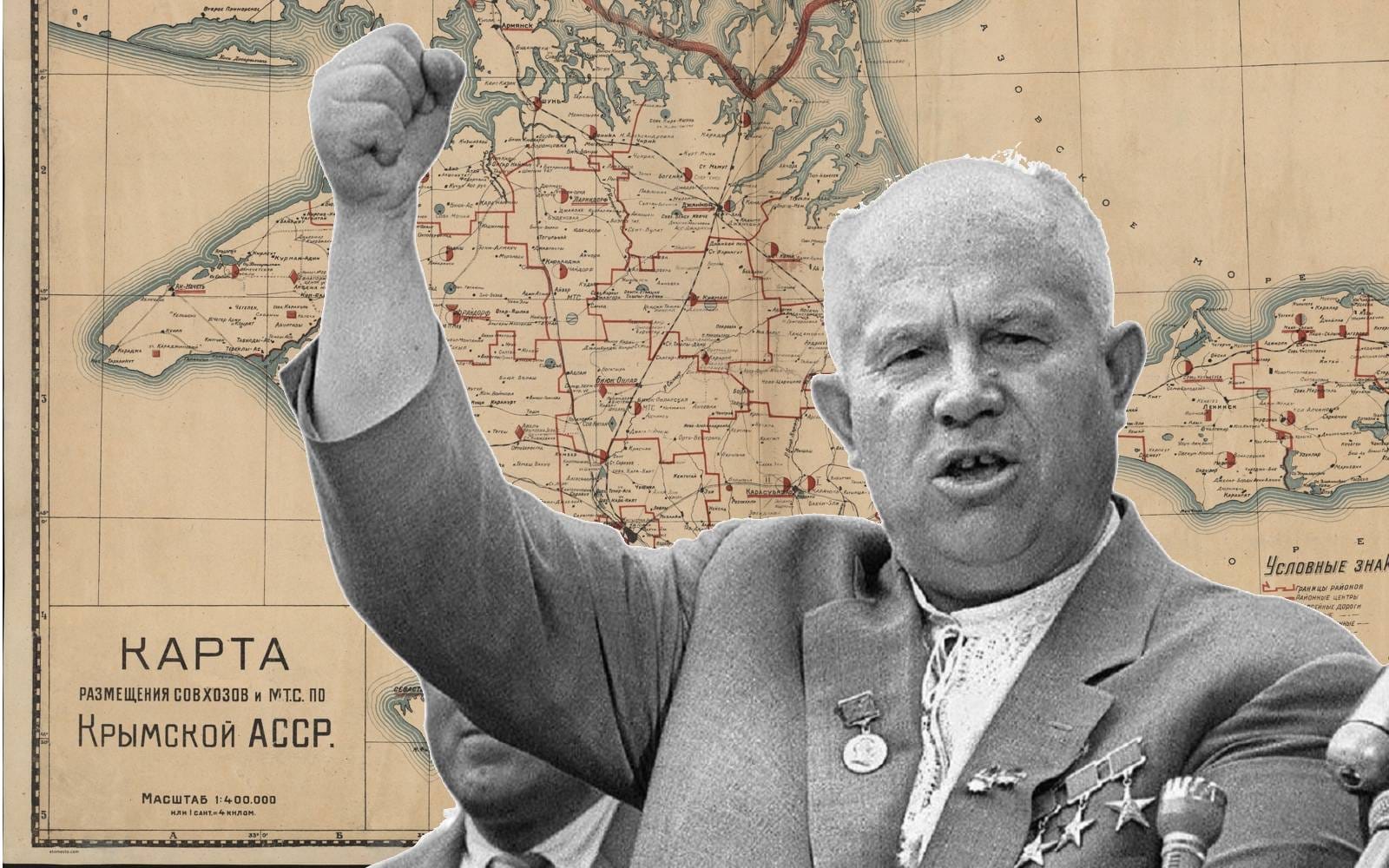
In March 1954, the Presidium of the Supreme Soviet of the USSR adopted a resolution transferring the Crimean Oblast from the Russian SFSR to the Ukrainian SSR. For three decades after the collapse of the Soviet Union, this document remained the subject of one of the major geopolitical disputes. Moscow argued that the transfer was “illegal,” Kyiv cited the inviolability of the 1991 borders, and the international community invoked the principle of territorial integrity.
But there is an important aspect hidden within this familiar narrative. Kyiv officials, Moscow strategists, and Western diplomats viewed — and continue to view — Crimea solely through the prism of Soviet administrative geography. They argued over who was the legitimate owner of the territory, ignoring the agency of the people who had been formed within that territory and through whom this land historically and culturally came to be named. In their bureaucratic logic, claims to the peninsula were determined by decisions made at the central level: 1954 — the transfer to the Ukrainian SSR; 1991 — the Belovezh Accords; 2014 — the “referendum.” Crimea was merely an object that fell to one state or another as a result of bureaucratic or military maneuvering. And the Crimeans… were simply a demographic variable that materialized by chance.
Let’s conduct a thought experiment. If, in 1954, Nikita Khrushchev had, by his own decision, transferred Crimea not to the Ukrainian SSR but, for example, to a hypothetical Soviet republic in the Alpine valley of Liechtenstein, and if the Soviet Union had collapsed in 1991 — where would the Crimean Tatars have returned from their places of deportation? To Liechtenstein?
The absurdity of the question is the answer itself. They would have returned to Crimea. Not to Liechtenstein, not to Ukraine, and not to Russia, but home, to their homeland — regardless of who was in administrative control.
The Crimean Tatars had no choice in the political context of their return. They accepted reality as it stood in 1991. Crimea was part of independent Ukraine. Faced with this historical reality, the people accepted the only rules of the game possible at that time, becoming citizens of Ukraine and beginning to build their lives within its legal framework.
While for the state bureaucracy the peninsula represented nothing more than square kilometers, ports, military bases, and arable land, for the Crimean Tatars, Crimea was and remains their only homeland on Earth. The people’s connection to this territory was formed long before any of the states that had controlled it over the past 250 years.
When the mass return of Crimean Tatars to their historic homeland began in the early 1990s, the fledgling institutions of independent Ukraine proved conceptually unprepared for this process. Kyiv viewed repatriation as a routine internal migration of a “poor, unfortunate people” who simply needed to be allocated a couple of acres in the steppe, issued passports, and left to hope that the problem would resolve itself.
That was the mistake. International law clearly distinguishes between internal migration and the repatriation of an indigenous people forcibly expelled from their land by a totalitarian regime in 1944. The 2007 UN Declaration on the Rights of Indigenous Peoples explicitly grants them the right to their historical lands. The return required not humanitarian aid, but a complete institutional overhaul that took into account the rights of the exiles. This meant the restitution of property, land quotas, and the creation of representative bodies with real authority.
Any state-bureaucratic system fears parallel legal statuses tied to ethnicity. The experience of some countries shows that recognizing the special territorial rights of one group can lead to decades of legal disputes and, at times, separatism. Therefore, Kyiv’s concerns are entirely understandable.
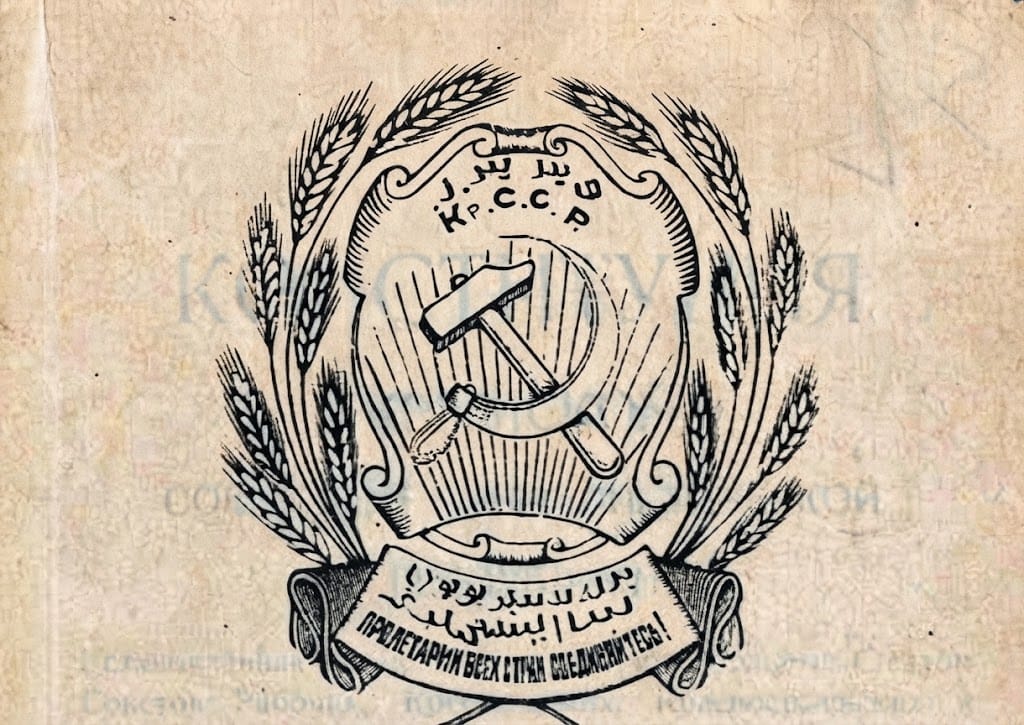
At the same time, however, in an effort to avoid this risk, Ukraine maintained Soviet-style nomenclature autonomy (the Autonomous Republic of Crimea, ARC) in Crimea for 23 years (from 1991 to 2014), a system built without regard for the interests of the indigenous people. The Crimean Tatars were forced to integrate into a system built on property seized from them, renamed villages and cities, and destroyed cemeteries. Moreover, none of what was taken from them in 1944 was ever returned. In an effort to curry favor with the pro-Russian majority, the central government only weakened its own institutional positions.
Nevertheless, it was the Crimean Tatars who remained the most consistent and reliable pro-Ukrainian force in the region. And the critical argument that prioritizing the rights of an indigenous people undermines the inviolability of state borders holds true only as long as these are viewed as irreconcilable opposites. In reality, a state’s true sovereignty over specific territories becomes rock-solid only when it is based on a genuine alliance with the indigenous population — in this case, with the Crimean Tatars, Karaims, and Krymchaks.
Ukraine eventually acknowledged this truth, but with a telling and tragic delay. The Verkhovna Rada did not pass the Law “On the Indigenous Peoples of Ukraine” until 2021 — thirty years after the mass return began and seven years after losing control of the peninsula itself. That long-awaited moment… The law explicitly designated the Crimean Tatars, Karaims, and Krymchaks as indigenous peoples, pointedly excluding Russians from this list (which provoked a storm of painful reactions in Moscow, where this decision was even compared to a “weapon of mass destruction”).
An important lesson from the post-Soviet history of Crimea is crystal clear: a territory that fails to take into account the rights of the people who have settled there inevitably becomes a vulnerable geopolitical trophy. It is a mistake to believe that the land belongs only to those who occupy administrative buildings on it. Any legitimacy based solely on administrative boundaries and decrees will sooner or later clash with an older and more enduring right — the right of the people whose history is written on this very land.