ENG

In early May, the Russian pavilion opened at the Venice Biennale – and the organisers couldn’t care less about the numerous protests and demonstrations. Moscow made it clear: “We’re still the big players; they fear us, and that’s why they let us in.” Last week’s news: “The International Gymnastics Federation has lifted the restrictions on Russian and Belarusian athletes that had been in place since February 2022. As early as the World Cup in Bulgaria at the end of May, gymnasts will be competing under the Russian flag.” Only Ukraine is opposing this decision.
The Russians made a clean sweep at this year’s Cannes Film Festival, deploying their tried-and-tested weapon – director Andrey Zvyagintsev. In 2014, his film *Leviathan* failed to win the top prize, taking home only the award for Best Screenplay. But he “didn’t give up”, raised some funds and promoted his new film “The Minotaur” in 2026.
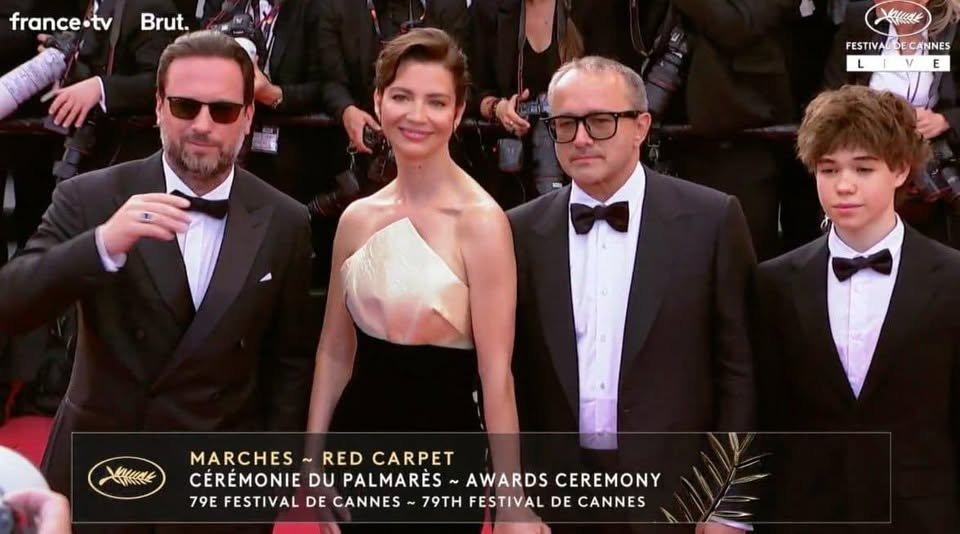
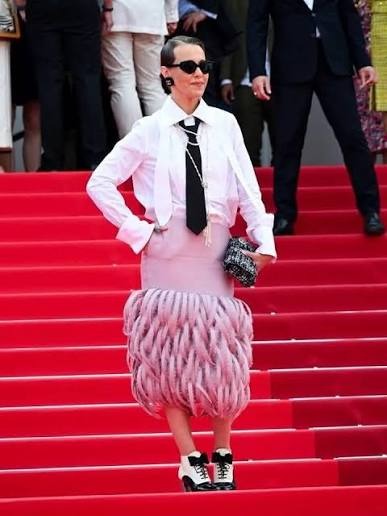
On the sly, apart from the ‘great Russian director’, the entire Moscow socialite crowd flocked to the Côte d’Azur, led by Ksenia Sobchak, who had long been referred to as Putin’s goddaughter and did not deny this until 2019. Only then did she admit that her family had always been close to the Russian president, but he is not her godfather.
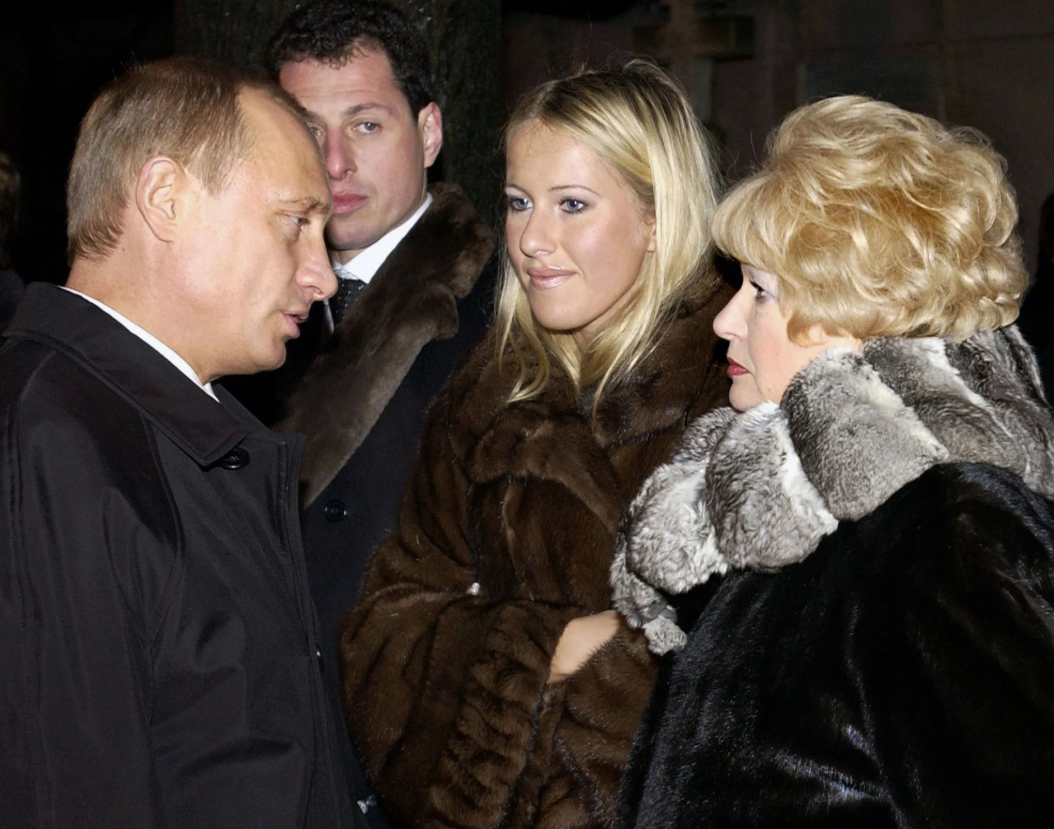
Ксенія Собчак, Володимир Путін і Людмила Нарусова, початок 2000-х
At the start of the full-scale invasion, Sobchak was so frightened that she left Russia and even obtained Israeli citizenship. But she later returned and now leads a full social life in Russia, showing the civilised world just how safe and pleasant it is for her there.
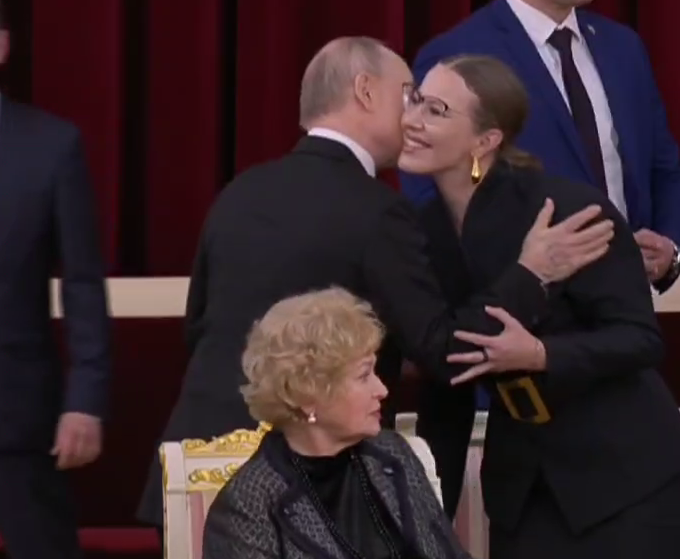
Ksenia Sobchak – a member of the “soft opposition” sanctioned by Putin – has her own media outlets and businesses, which do not contradict official Putin propaganda. In Russia, she not only hosts evenings in memory of her father, Anatoly Sobchak, at which Vladimir Putin speaks, but also promotes the narratives required by the Kremlin. At the same time, she constantly travels to Europe, where she persistently argues: “Russians are normal people; bring us back into civilisation, and everything will be as it was before.”
It was Sobchak who actively promoted the idea of Russia’s return to both the Venice Biennale and the Cannes Film Festival, thereby calling for the lifting of sanctions against a whole host of Russian oligarchs who are funding the war and the continued seizure of Ukrainian territories. Interestingly, Ukraine has also not yet imposed sanctions against Ksenia, although a petition to that effect was posted on the Ukrainian President’s website as far back as 2023.
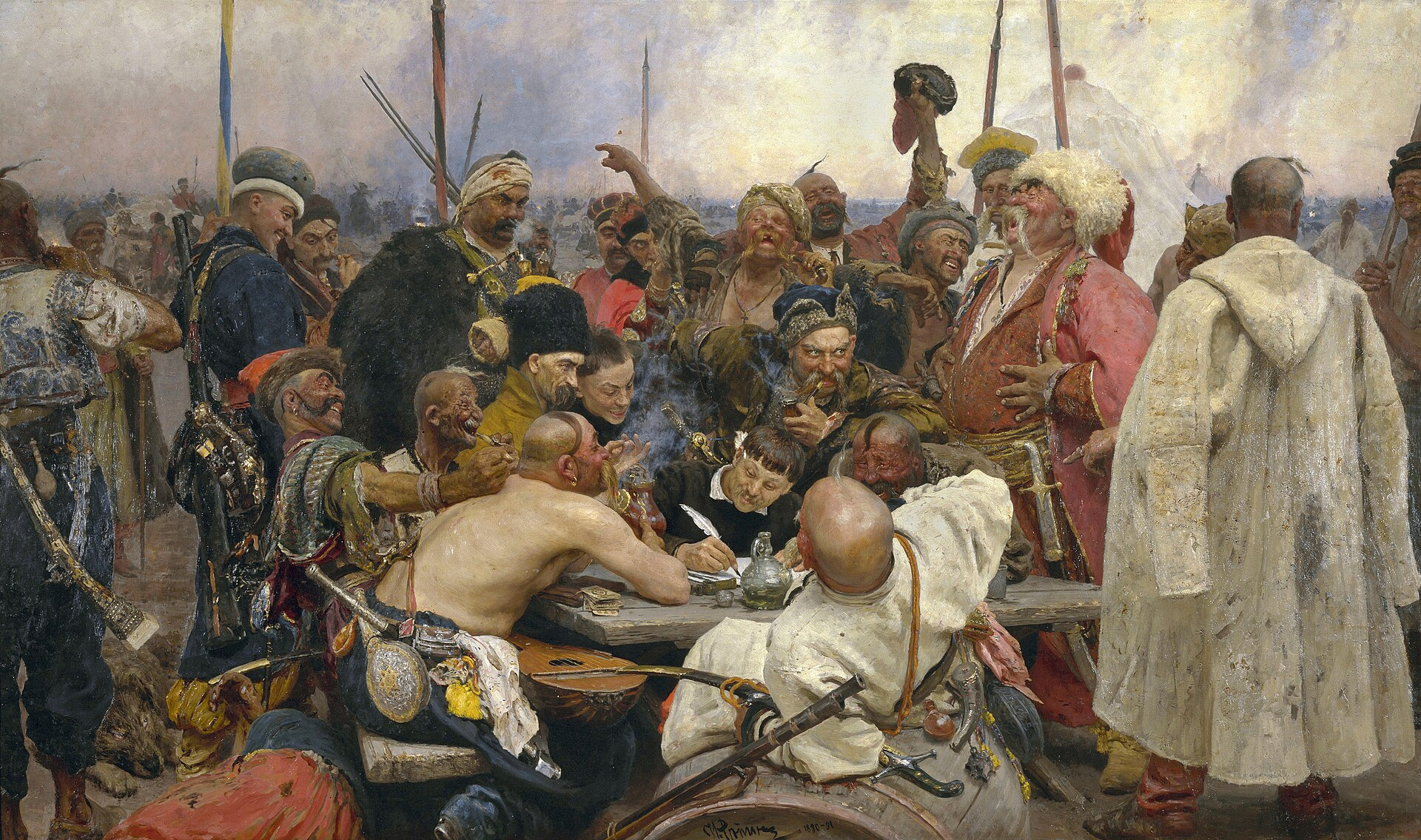
The promotion of “great Russian culture” has become particularly aggressive following the invasion of Crimea by Putin’s army and the war in Donbas. Since 2014, the Russians have been actively touring Europe and America with their ballet performances, concerts conducted by Valery Gergiev, operas featuring Anna Netrebko, as well as numerous art exhibitions. Just before the full-scale invasion, they brought to Europe the exhibition “Ilya Repin: Painting the Russian Soul” from the collections of Russian museums. It ended at the Petit Palais in Paris at the end of January 2022. And the “Russian soul” was embodied in “The Zaporozhian Cossacks Writing a Letter to the Turkish Sultan”, “Hopak – Dance of the Zaporozhian Cossacks”, and other Ukrainian works by the artist. Why shouldn’t European visitors, who are not very familiar with history, consider Russians and Ukrainians to be “one people”?
During the Great War, Russian propaganda began to operate more subtly. Now its main narrative is: we do not want punishment. And director Zvyagintsev’s speech – “Mr President of the Russian Federation, put an end to this slaughter. The whole world is waiting for this” – is in fact a cry for precisely that.
On the other hand, there is a question for the international jury that gave a platform to Russian propaganda: do you really not feel that war is knocking at your door? Ukrainian philosopher Volodymyr Yermolenko considers Russian ideology to be a ‘thanatocracy’ – rule through death: they genuinely enjoy revelling in suffering and, as they see it, thereby mastering death. This applies both to those who sign contracts with the Russian Federation’s Ministry of Defence and to film directors who have been living outside Russia for four years but are working in its interests.
One more thing. Always check who is commissioning the project and who is paying for it. As it turns out, the main beneficiary of Zvyagintsev’s film *The Minotaur* is the American billionaire and former Odessa resident Leonard Blavatnik.

He moved to the United States back in 1978, but he built his entire business in aluminium sales after the collapse of the Soviet Union in Russia and the former Soviet republics. His business partners – Russian billionaires Viktor Vekselberg and Oleg Deripaska – have been subject to US and European sanctions since 2014. Deripaska is very well known, for example, in the Ukrainian city of Mykolaiv, where he bought an alumina plant for a song. The red smoke billowing over the Southern Bug is from Deripaska’s plant, which was nationalised only in March 2024. These two Russian oligarchs desperately need the sanctions lifted as soon as possible. By hook or by crook. A more reliable approach is through culture. This is where Zvyagintsev’s impassioned speech finds its roots.
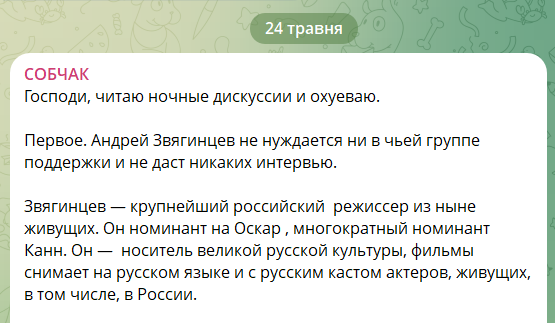
And Sobchak herself went on to say that Zelensky is just as much to blame for the war as Putin, because he is actively prolonging it.
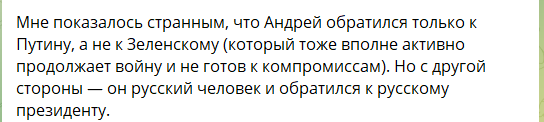
З телеграм-каналу Ксенії Собчак
Just as the awards ceremony was taking place at the Cannes Film Festival, on the evening of 23 May, a Russian ballistic missile struck the outskirts of Odessa, killing two adults and injuring three more men and three children. And afterwards, whilst the winners were drinking champagne on the Croisette, a whole swarm of suicide bombers and ballistic missiles flew towards Kyiv. The outcome of the Cannes aftertaste – two dead and 87 wounded. ‘Mr President’ must be pleased.