ENG

Perhaps someday someone will make a film about two girls from Odesa, who, on a cold March evening in 2014, miraculously managed to board a train and travel to already occupied Crimea to figure out what was going on there and an "occupendum" was taking place there.
My friend Viktoriia Sybir and I returned from Kyiv, from Maidan, on February 21st. Only the next day did it become definitively clear that it had won, and by February 23rd, the "Russian Spring" began in Odesa: adherents of the "Russian world" and "USSR 2.0" marched through the city in large marches under the flags of the Russian Federation, red flags with hammers and sickles, and flags bearing Stalin's image. The main Russian Anti-Maidan freely carried on its activities near the regional state administration, and on March 2nd, it moved to Kulikove Pole. Odesa was restless, but our native Crimea was even more alarming, and this danger was palpable in the air. We knew that it was better for Ukrainian journalists and civic activists not to draw attention to themselves on the peninsula; there were already reports of missing persons. But the desire to see with our own eyes, to document the moment, and to understand what was truly happening prevailed.
We had arranged in advance where we would stay in Akmesdzhit – at good acquaintances of our friend. On the evening of March 13th, we tried to buy tickets for the Odesa-Simferopol train. At the ticket office, they said, "None available." So we ran to the conductors. The first one wouldn't let us on, but the second, in a couchette car, looked at us and said, "Okay, 300 hryvnias each, and get on." We agreed. The car turned out to be almost empty – just a few people scattered around. A woman from Gurzuf was traveling with us, returning home. She told us that summer was coming, they were expecting tourists, renting out their house for the season, that she worked at the post office, and her husband was a driver at some company. We listened quietly; before the trip, we had agreed not to talk about Maidan, not to speak Ukrainian, and generally to pretend we were casual tourists, not journalists. Our only tech was smartphones. For documents, just passports. No IDs or accreditations whatsoever.
That evening, we managed to read the news and were silently horrified: on March 13th, nearly 10,000 Ukrainians marched in Donetsk for a United Ukraine. They were beaten; we read about the wounded and one person killed, and we understood that this was just the beginning.
Our "adventures" began near Armiansk. First, the train was stopped and stayed for an hour. Then, two Russian soldiers in body armor and with weapons entered and began checking documents. Our fellow passenger had a Crimean registration, while we had Odesa ones. "Why are you traveling? To whom?" Without batting an eye, I replied, "To my aunt in Feodosia." "Address?" the soldier, with a noticeable Moscow accent, persisted. I gave an address and asked, "I can call her. Do you need me to?" He silently handed back our passports, and Viktoriia and I breathed a sigh of relief. The soldiers left, the train stood for a while longer, and then departed. Beyond Armiansk, near the railway tracks, we saw military equipment covered with gray tarpaulins – likely armored personnel carriers and tanks, their barrels pointed towards mainland Ukraine. We started counting, reached 60, and lost track.
On the morning of March 14th, we finally reached Akmesdzhit. The familiar station, which I had passed through so many times and continued my journey throughout whole Crimea! Our fellow passenger called out as we left, "Actually, I'm for Russia" – perhaps we had somehow let something slip between ourselves after all. But we were already jumping onto the platform so she wouldn't have time to turn us over to the Cossacks with St. George ribbons who we saw through the window. Ahead of us, from the same Odesa train, a young couple walked – a girl holding hands with a guy who was carrying a laptop bag. The Cossacks stopped them, demanded documents, and began searching them. I grabbed Viktoriia's hand and turned towards the nearest side exit to avoid encountering the "militiamen." We ran out to the Station Square – I remembered there was a McDonald's there, which meant we could get decent Wi-Fi. We waited, messaged everyone that we were alive and well, and then walked to the family who had agreed to host us – two elderly women, a mother and daughter. At that time, the daughter still worked as a researcher at the Institute of Biology of the Southern Seas. The family was pro-Ukrainian – the women's ancestors had moved to Crimea from mainland Ukraine back in the 1860s, after the abolition of serfdom.
The women agreed to introduce us to their neighbors, all of whom supported Ukraine, and told us about the situation in the city. In principle, we didn't learn anything new: Akmesdzhit was occupied by Russian soldiers who had surrounded all Ukrainian military units. Tricolors flew over state institutions that still bore Ukrainian signs. The women fed us and made real Crimean coffee – in a cezve, with salt and cardamom. I haven't had such delicious coffee since! And we set off to photograph the city, which was already plastered with Russian propaganda.
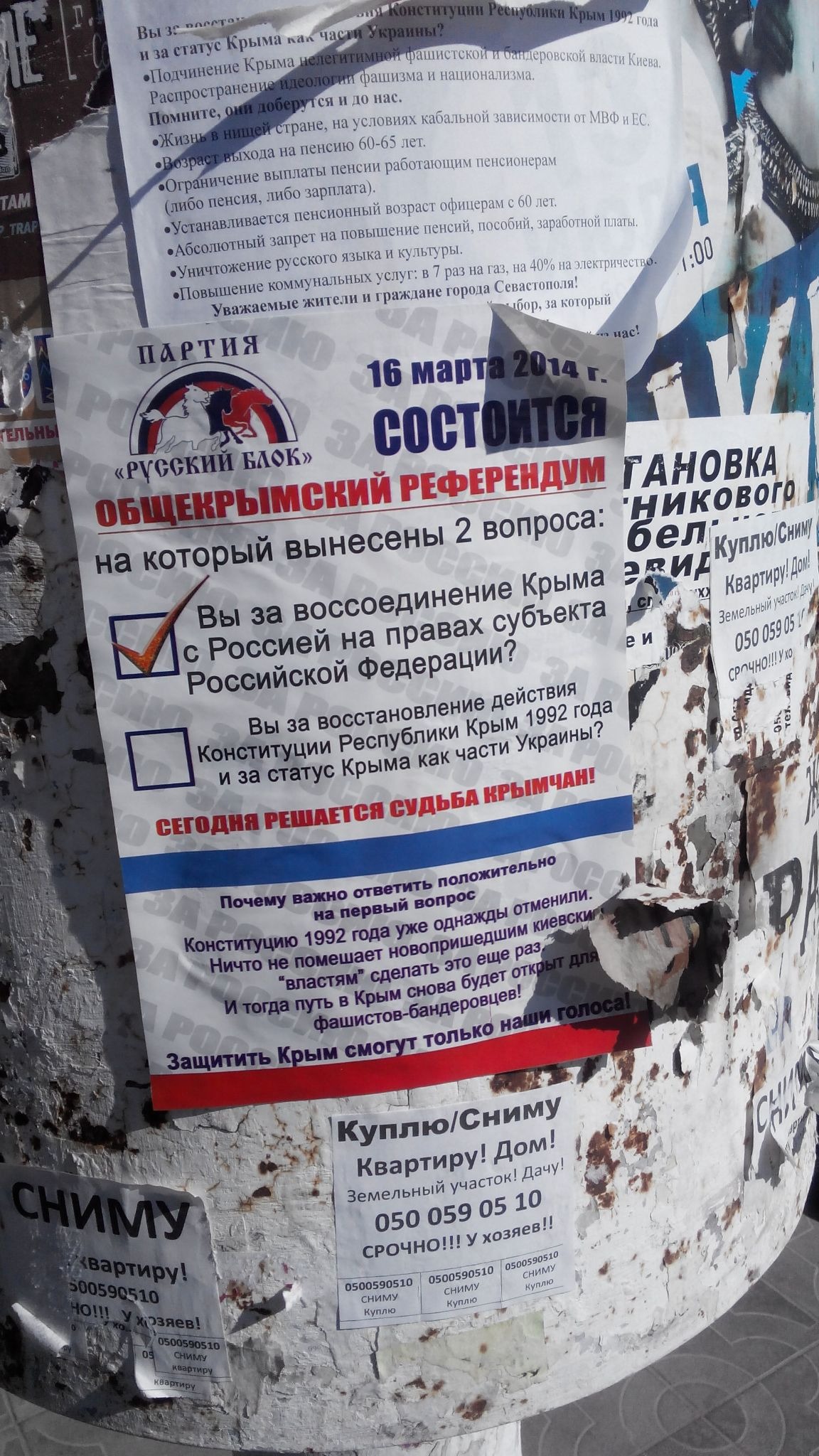
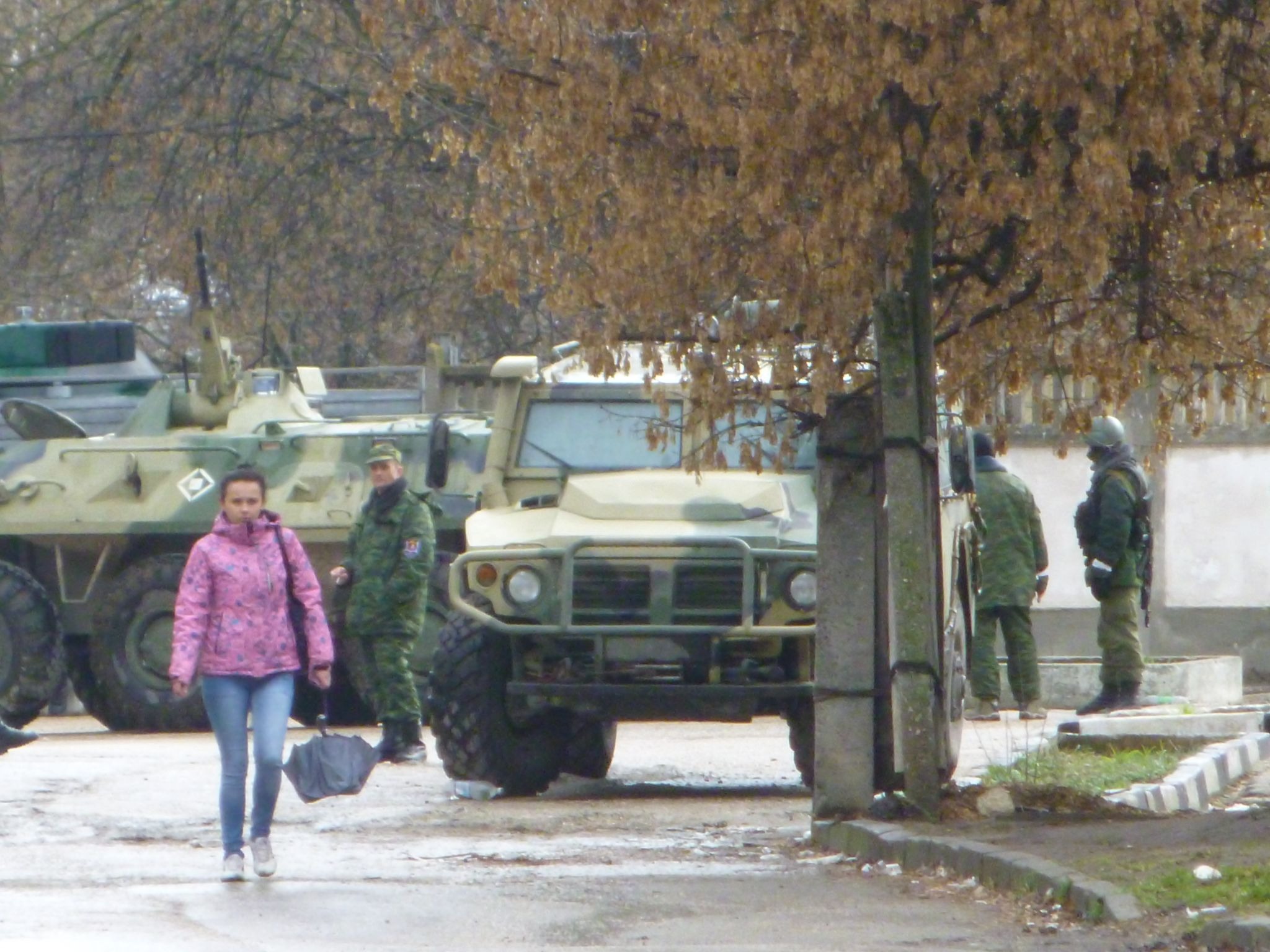
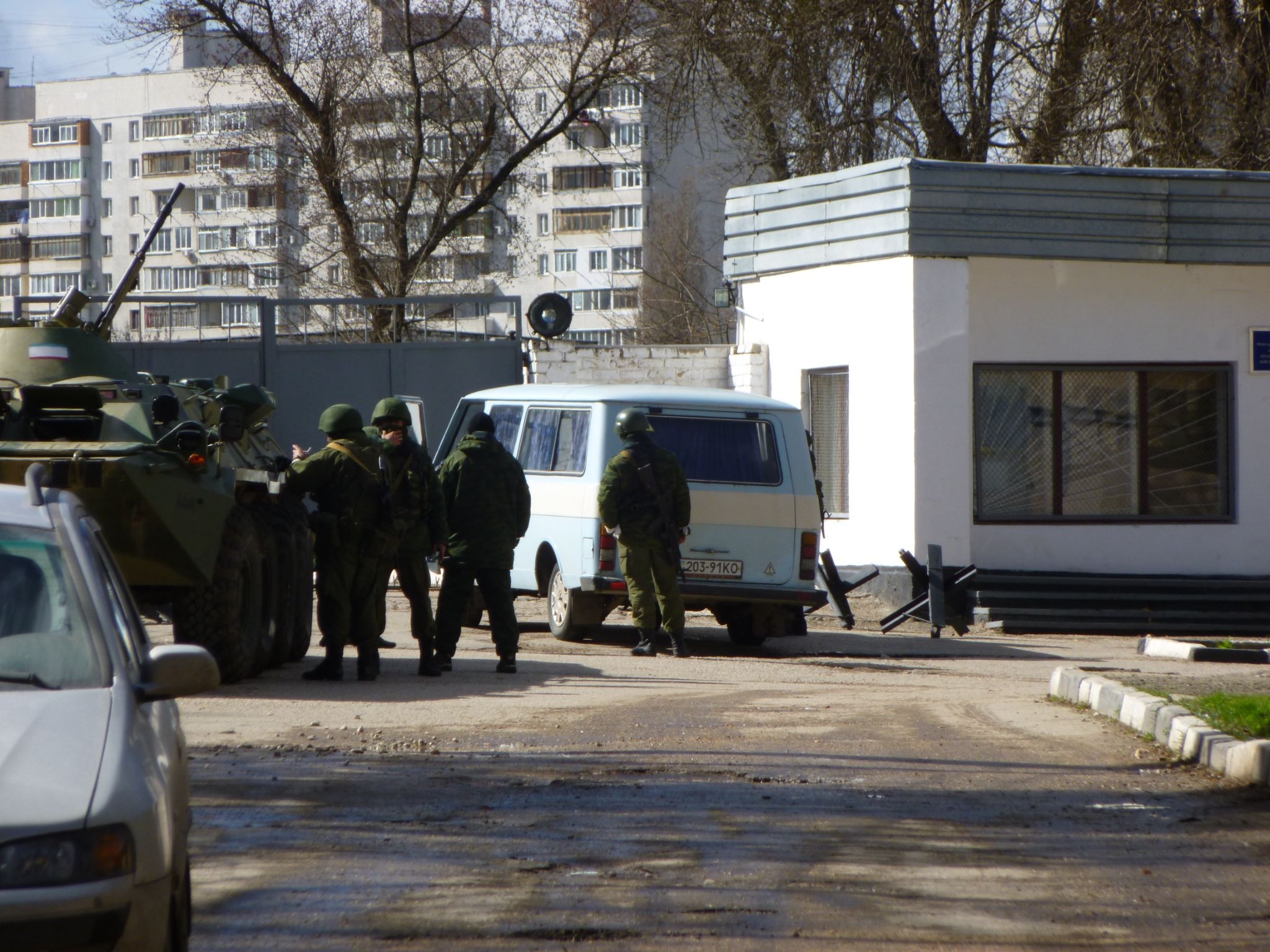
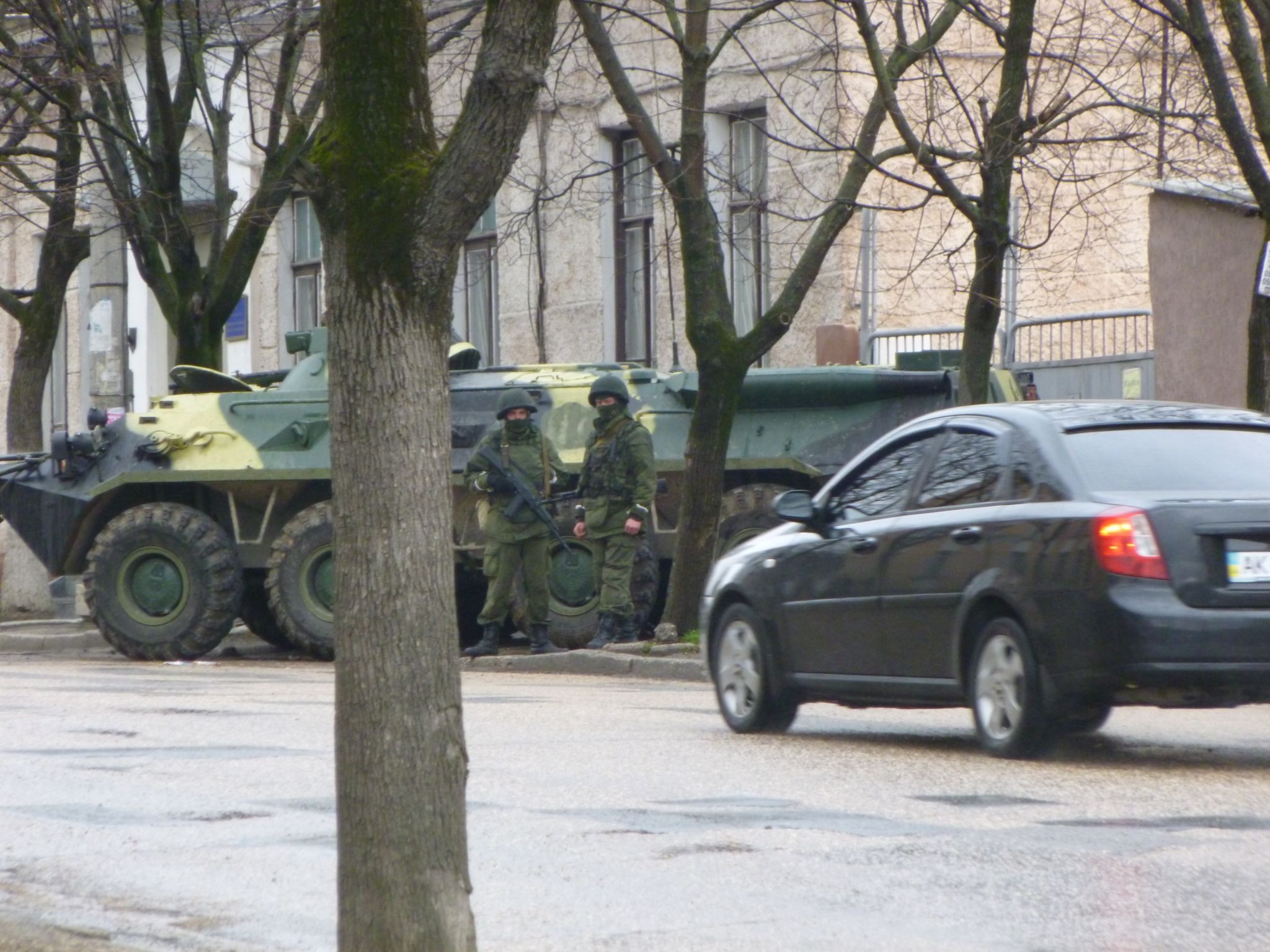
What struck us that first day were the Ukrainian military units in Akmesdzhit, right in the city center, surrounded by Russian soldiers. The sheer number of military vehicles "without identification marks" and soldiers in balaclavas with weapons was striking. None of us harbored illusions that these were some unknown "little green men"; we firmly understood that they were Russians.
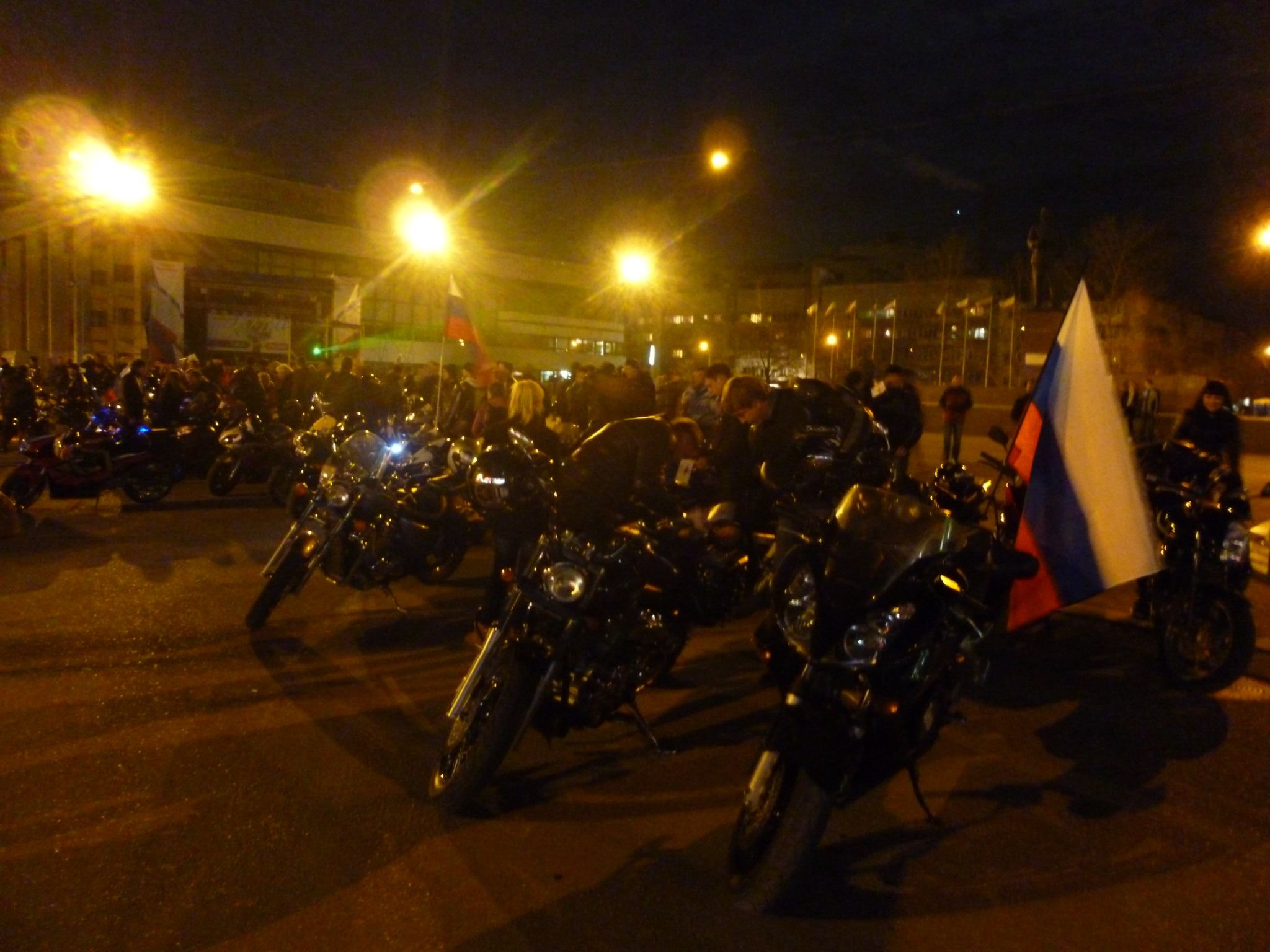
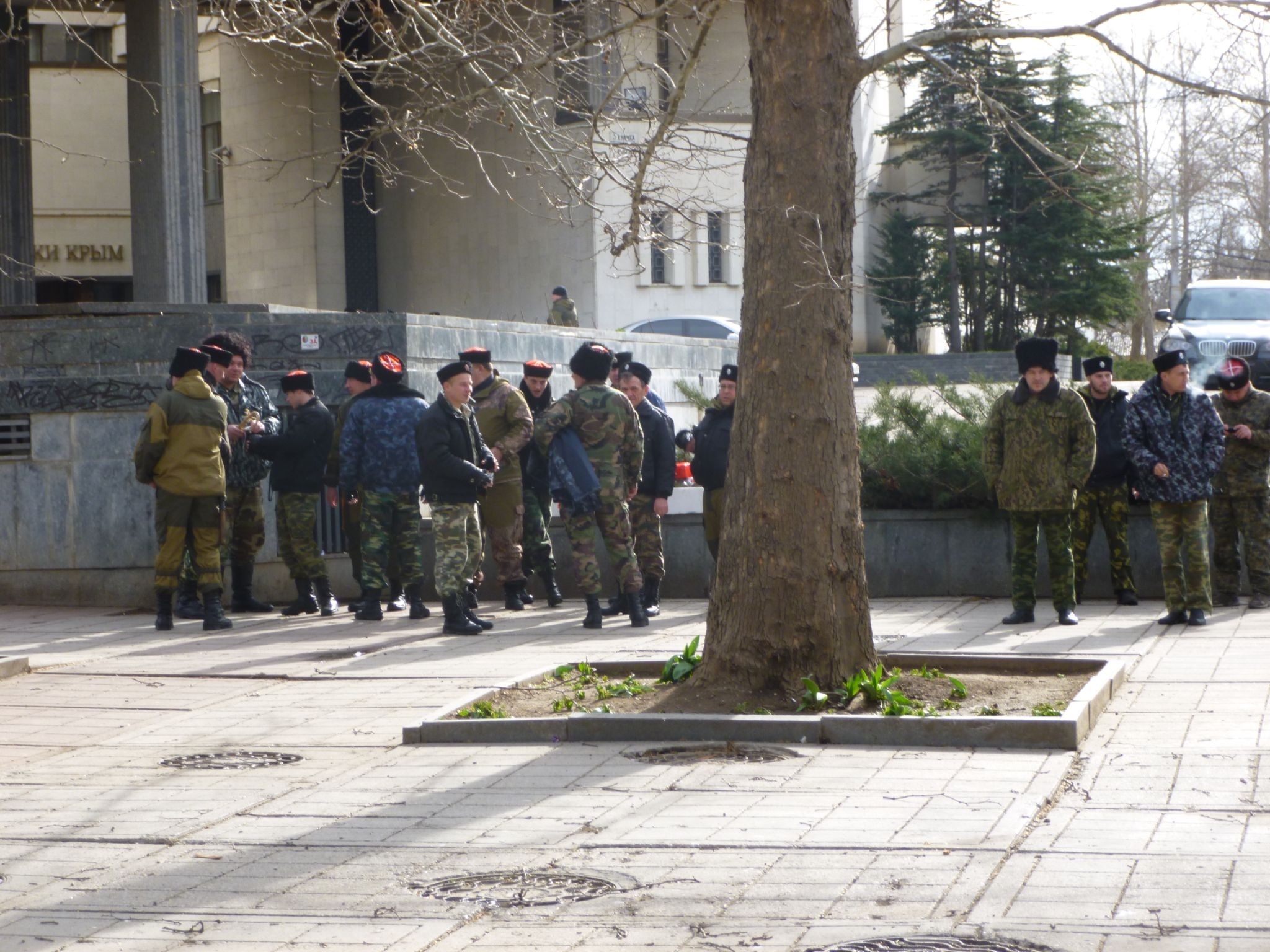
In the city center, on Lenin Square, tricolors were hung on all administrative buildings and on the musical theater, and in the evening, bikers gathered there – also under Russian flags. And in all public places, Cossacks in papakhas with "okolyshi" (brims/bands) and St.George ribbons "stood guard." From that moment on, this striped ribbon has been associated in my mind with occupation and the violation of human rights.
On the first day, I also managed to record a short interview with an elderly woman who said on camera that Crimean Tatars were not participating in the "referendum," that it was illegal, that they loved and respected Ukraine, held Ukrainian passports, and no one intended to vote for something unknown.
On Saturday morning, March 15th, we went to see what was happening in Ak'yar – Sevastopol. We reached the bus station, boarded a regular yellow "Bogdan" minibus, paid our fare, the minibus filled with people, and we set off. At the turn to Belbek, we saw a "checkpoint" – white construction sandbags were strewn across the road, along with several concrete blocks, and Cossacks with St.George ribbons were on duty, stopping our bus. Two of them came inside and began checking documents. They looked at us as if through glass; for some reason, they were more interested in the men. A young man in the back said, "Why should I show you my documents? You show yours and explain what right you have to demand to see mine." They grabbed him, dragged him out by the collar, began searching him, found his passport, and shouted, "Why are you acting up, you have Sevastopol registration!" Then they ordered our driver to continue, and they kept the young man. The entire minibus remained silent. What happened to that young man afterward is unknown.
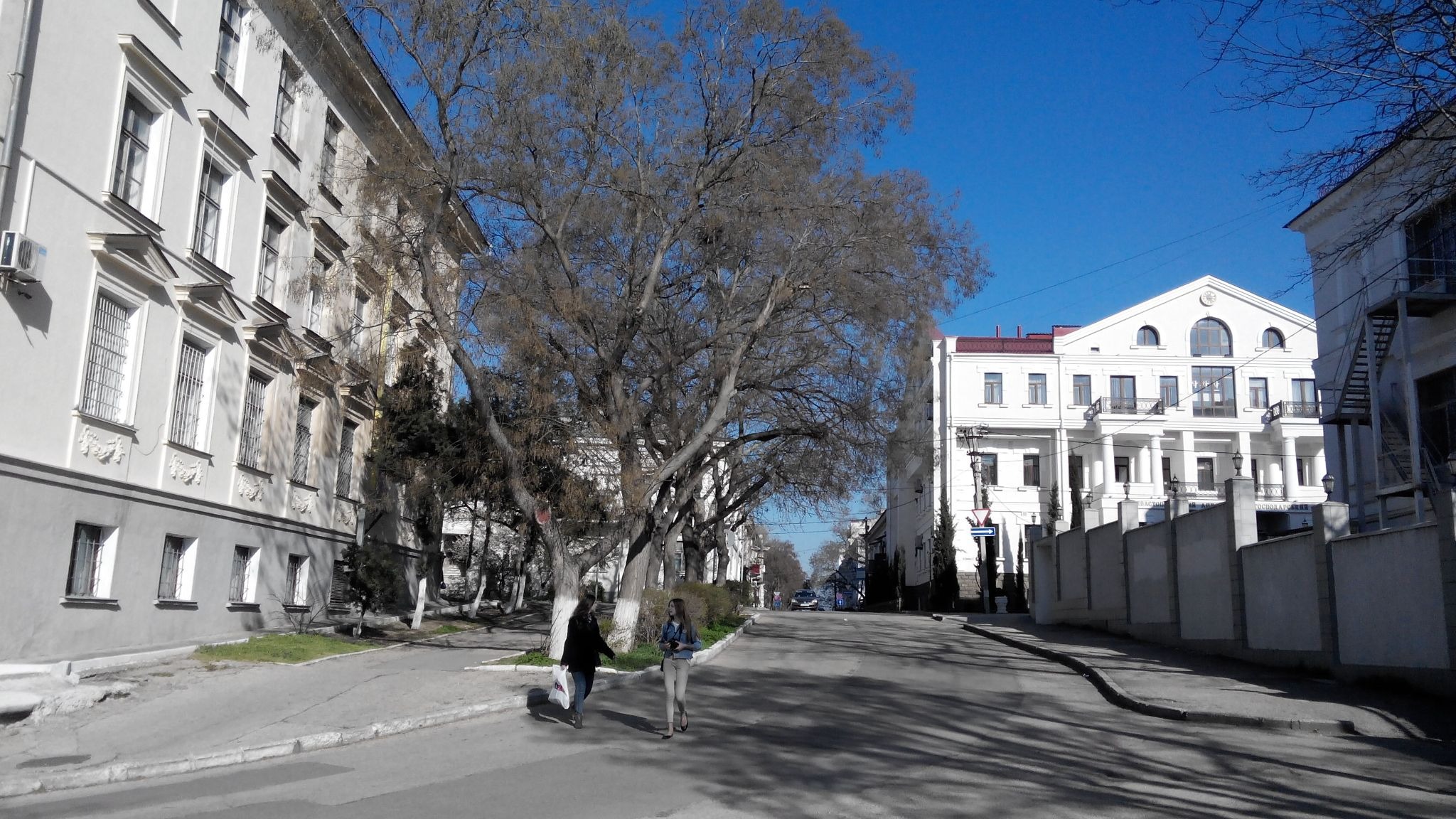
Ak'yar was almost deserted. It was a typical Saturday, a warm spring day, with many trees in bloom, sunny and beautiful – on such a weekend, everyone should have been strolling by the sea, sitting in cafes, and enjoying life. But no. The city also had Russian military equipment and even more Russian soldiers than in Akmesdzhit.
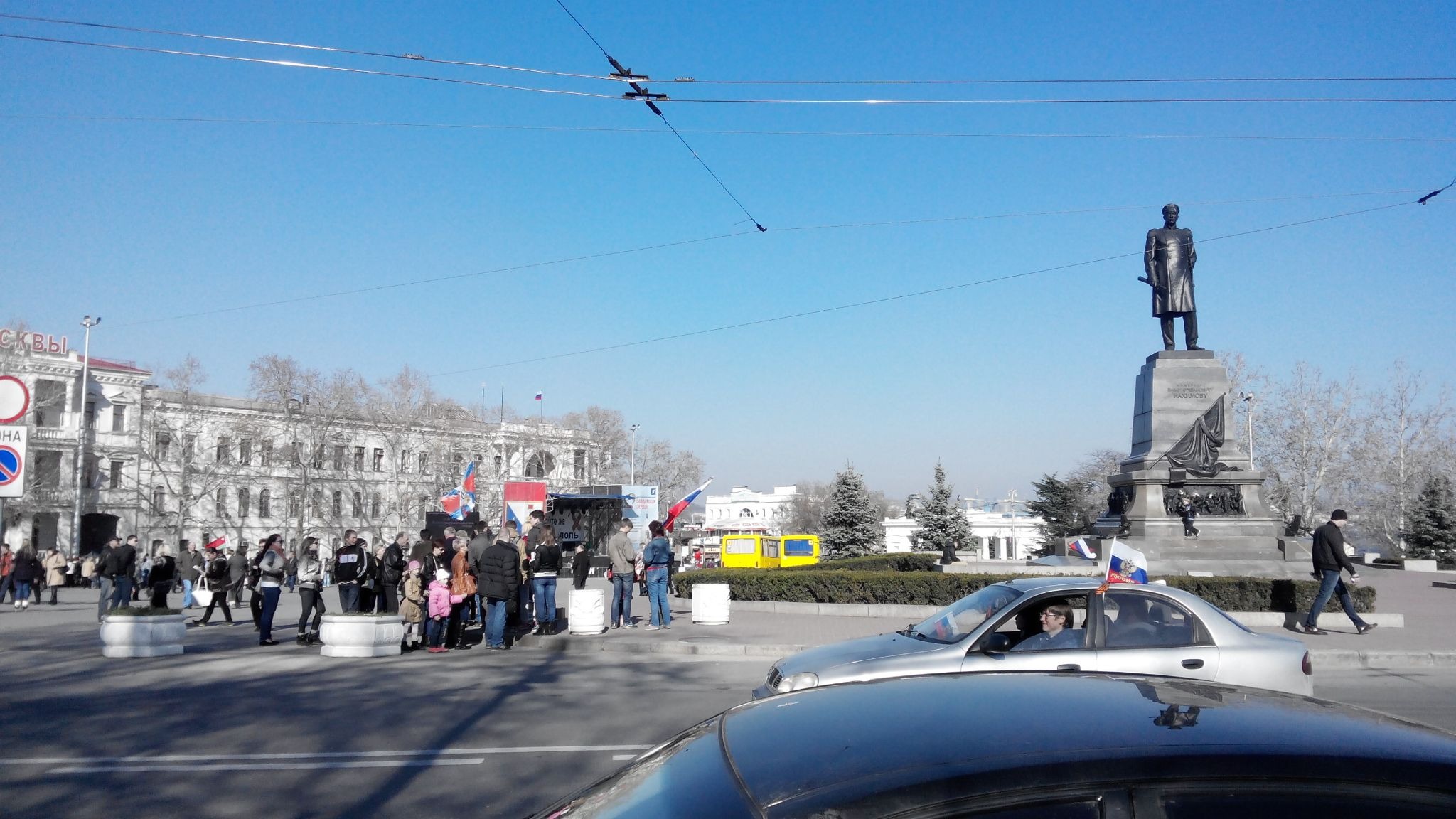
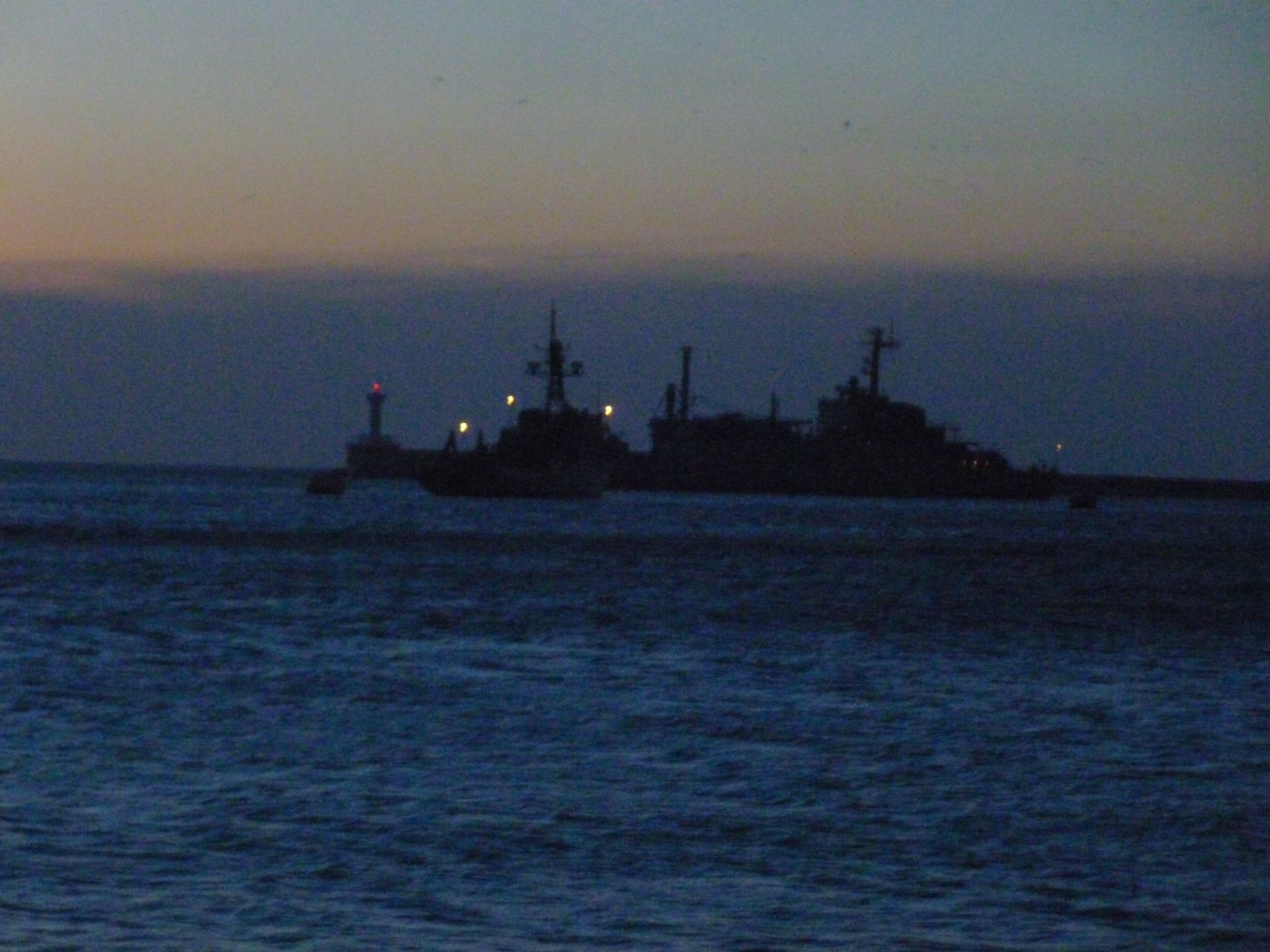
We walked through the city center, saw a small rally with tricolor flags near the Nakhimov monument, and sat in an empty Japanese restaurant where we caught Wi-Fi and messaged everyone we knew to let them know we were alive and well, and not to worry. Then we returned to the embankment, photographed ships at anchor in the evening, and rushed to catch a marshrutka back to Akmesdzhit. On the bus, a man loomed over us, loudly recounting how he had been at Maidan in February and how everyone there was paid money. He wasn't drunk or crazy. This is called 'whisper propaganda' – a tactic where agitators are sent into crowded places to loudly proclaim their narratives. In any other situation, I probably would have told him that people didn't stand on Maidan for money and that we had just come from Maidan ourselves, but not then. Danger was palpable in the air.
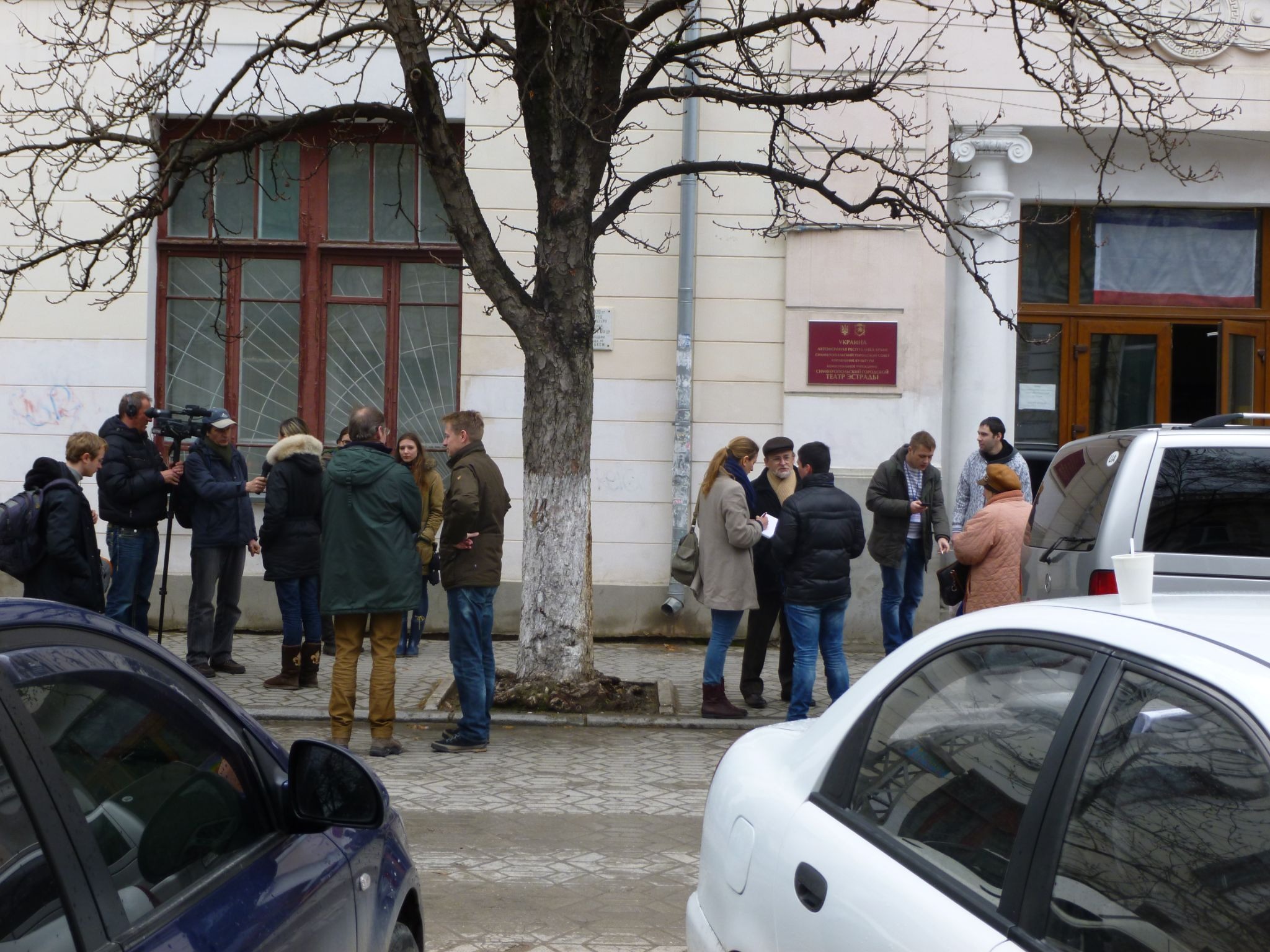
March 16. Journalists from "Babylon'13" and "Maidan Monitoring" contacted us – all were secretly in Crimea, all were filming the "referendum" with hidden cameras, all were sharing information: where the occupiers were setting up "carousel voting", how Russian journalists were being brought in, and how they were recording their stand-ups. Crimeans did not go to vote; "costumed" actors were bused from polling station to polling station – they would supposedly vote, then come out and take turns giving interviews to Russian TV channels, creating the necessary "picture".
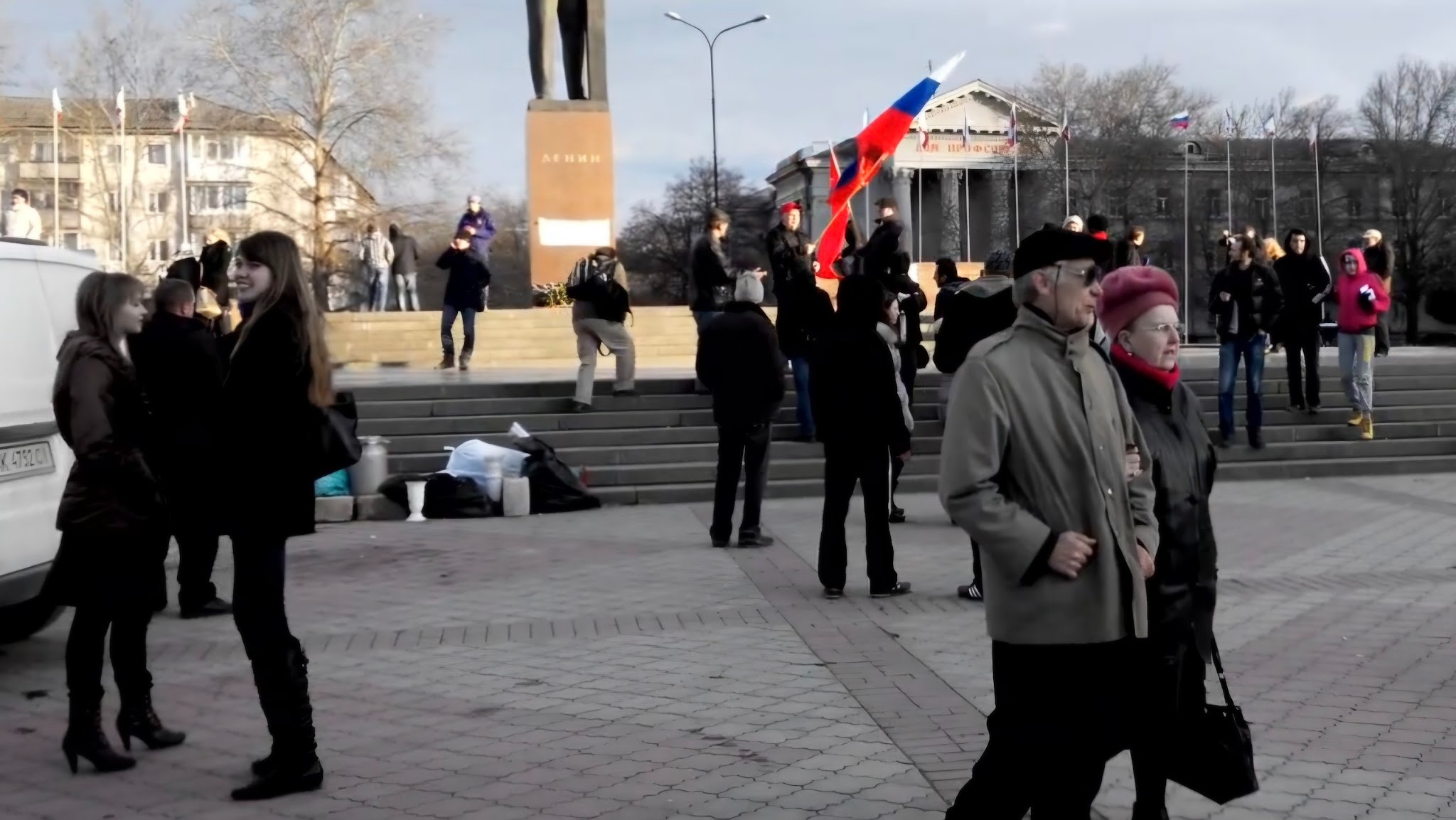
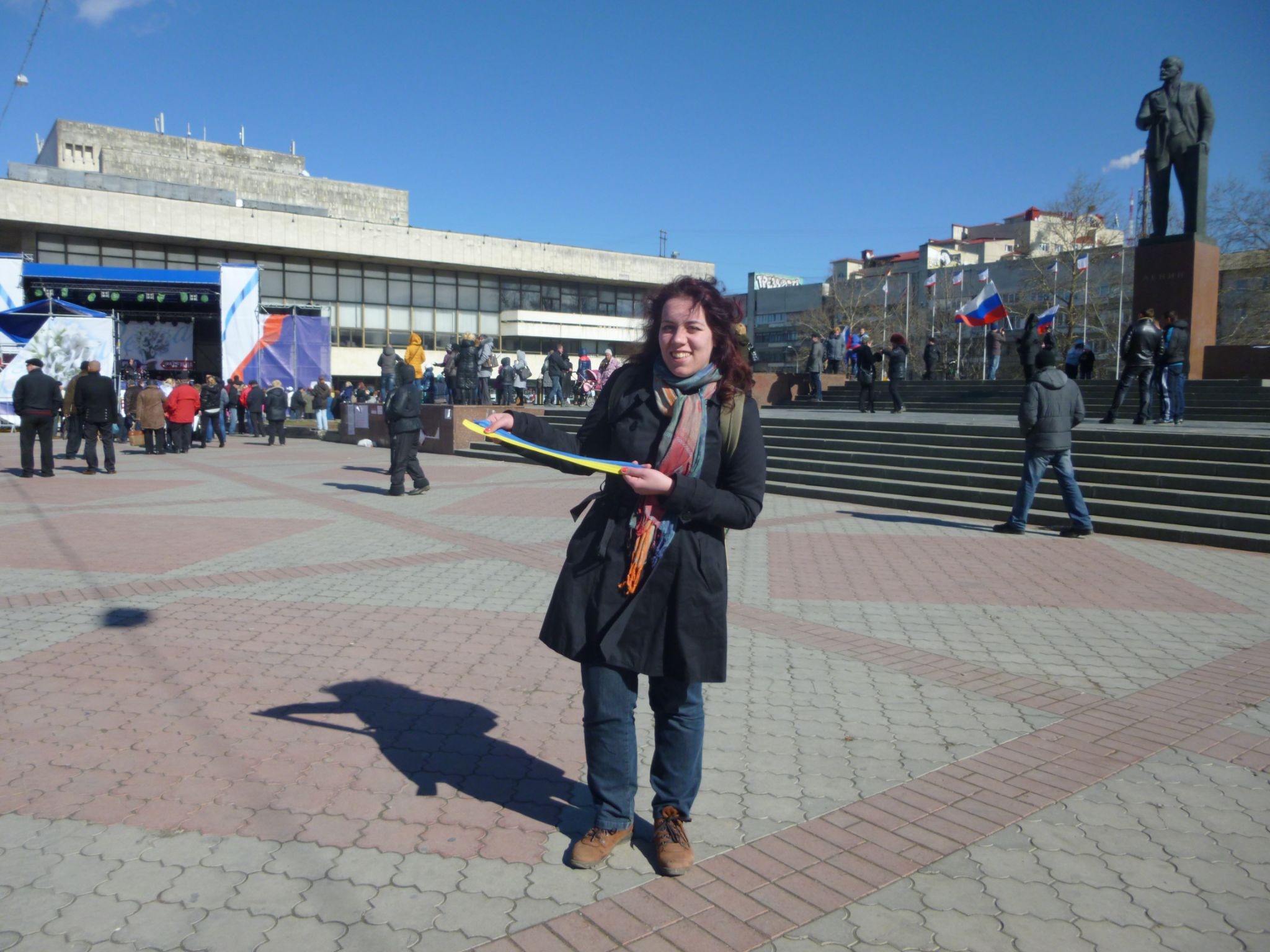
In the city center, near the Lenin monument, loud Russian music was playing and there was a small rally "for Russia".
And near the Supreme Council of Crimea, Russian checkpoints were already set up. Soldiers and Cossacks were searching the bags and backpacks of passersby, including ours. Ordinary people did not go to the "referendum" – they stood in lines at ATMs, withdrew cash, went to grocery stores to stock up, or stayed home.
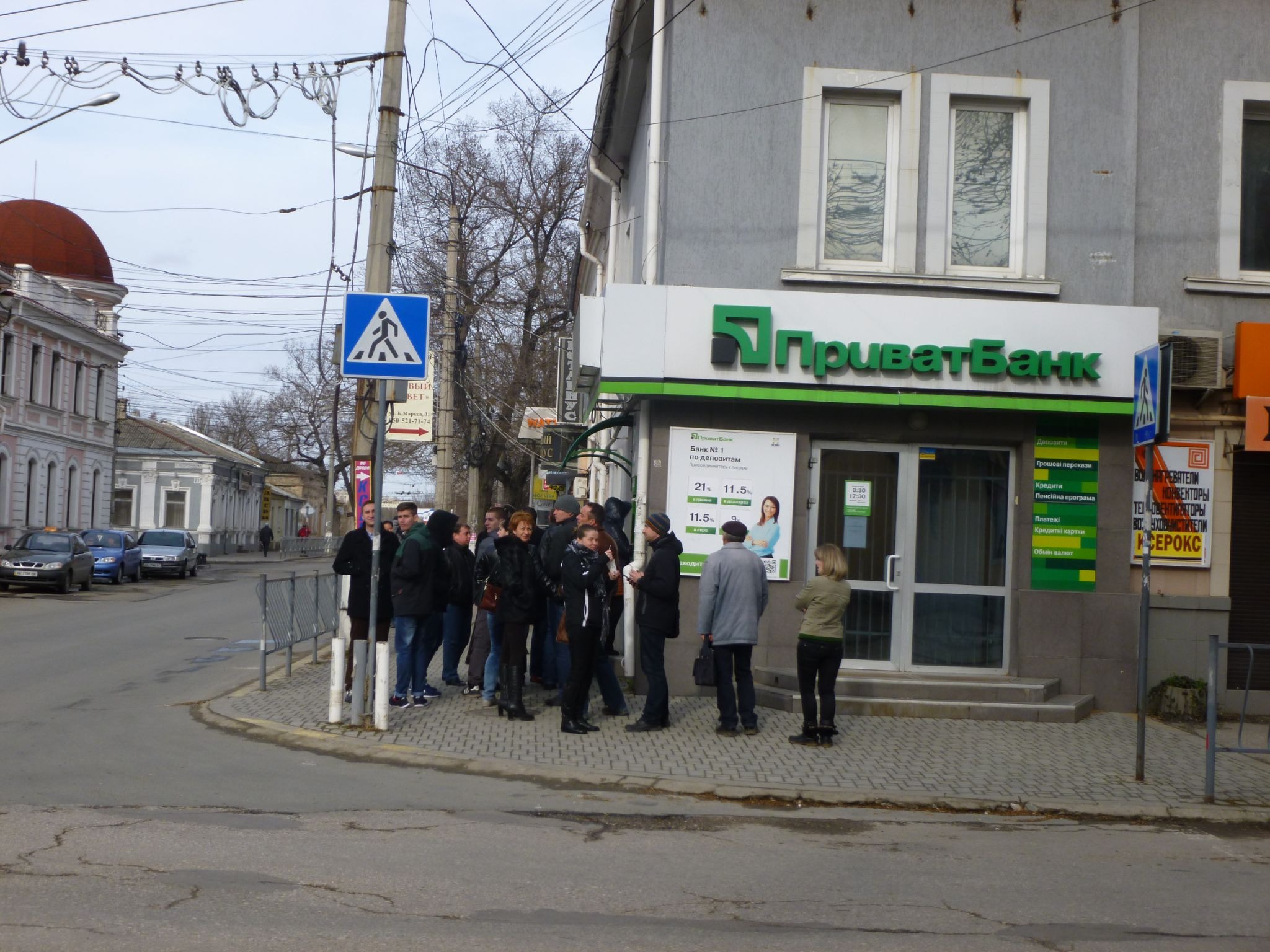
Between filming sessions, we would run to grab coffee, catch Wi-Fi, and send our photos and videos at the "Seven Fridays" cafe on Pushkin Street. At one point, I heard a loud voice: “This is our victory. We’ve already won – now everything here is ours, Russian; let’s drink to that!” I turned my head and saw it was Mitrofanov, a deputy of the Russian State Duma – a corpulent, boisterous brunette. It was disgusting.
Later, in Lenin Square, Vika, tired of the Russian tricolors, said: "Let's make our own flag, shall we?" – "Just quietly," I replied, and we ran to the "Fabrics" shop. We wanted to buy ribbons – blue and yellow. There were no ribbons. We bought two zippers – one blue and one yellow. And with them, I photographed Vika against the backdrop of all this Russian chaos.
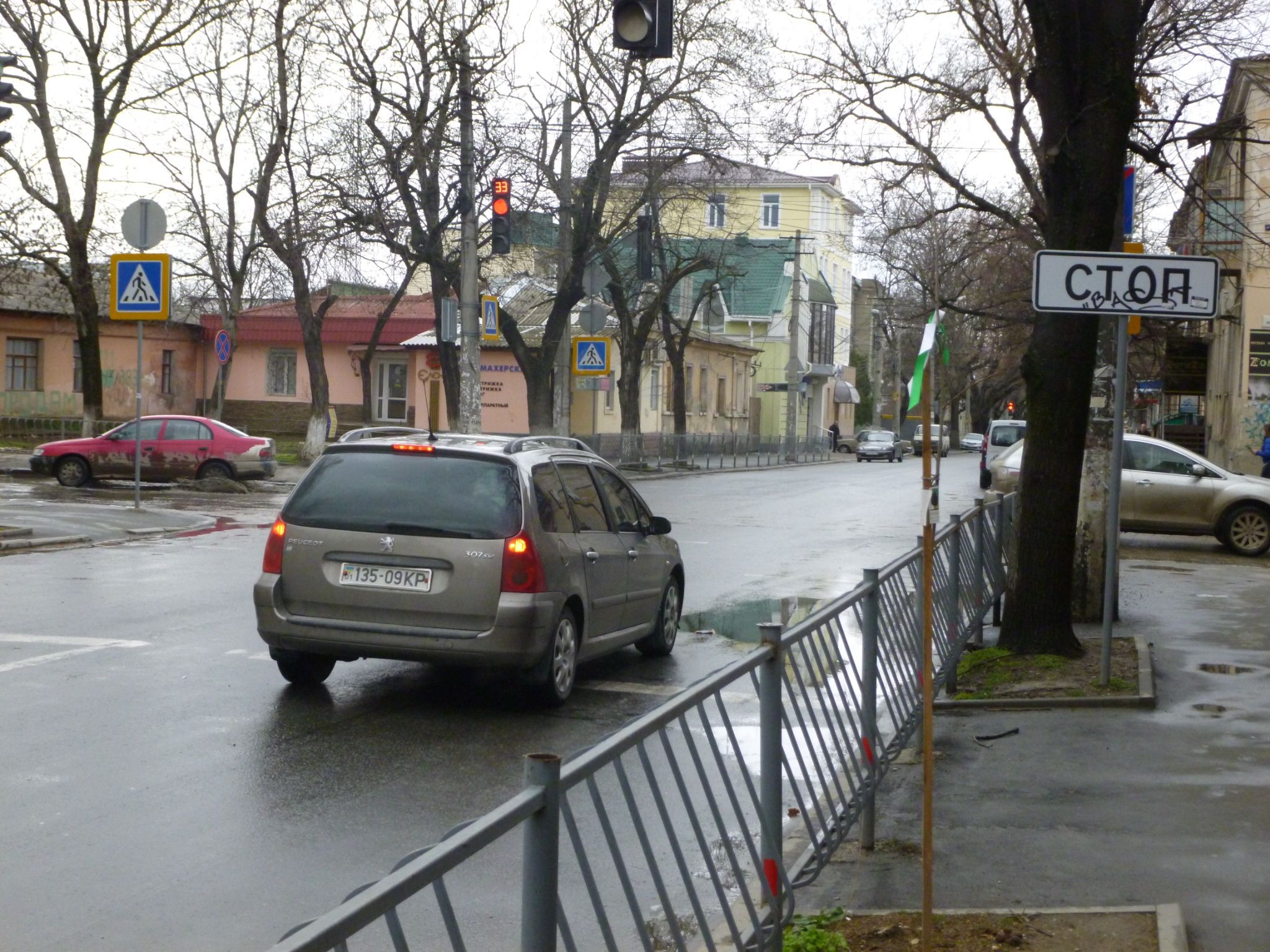
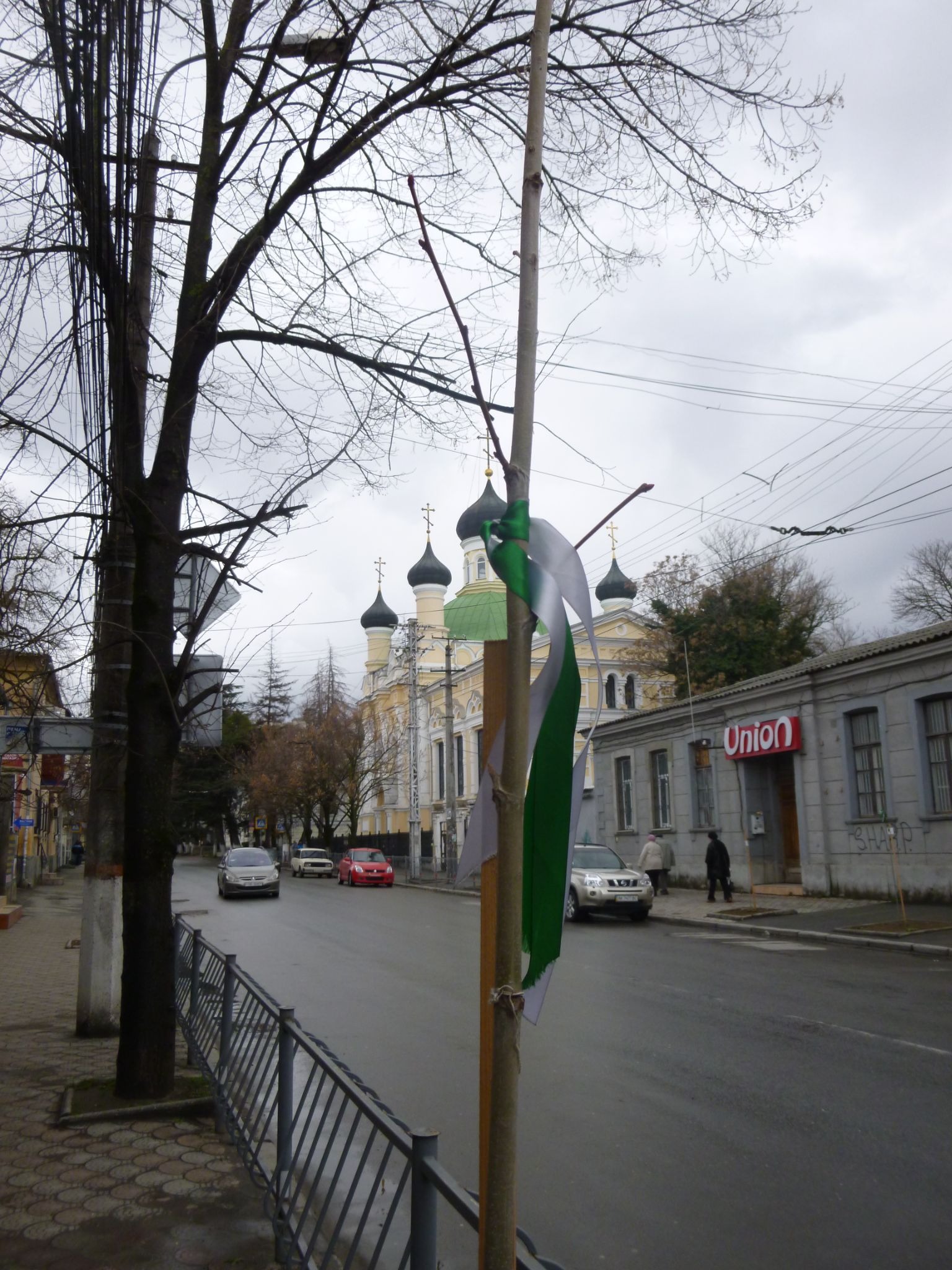
On March 17, we recorded a few more interviews, walked through the city again, filmed the surrounded military units, and documented the quiet resistance – small white and green ribbons worn by Crimean Tatars against the occupation. We almost missed our train to Odesa; we had to run and jump into the last car. Crimea didn't want to let us go.