ENG

Until recently, the term “ecocide” was used in Ukraine only by specialists in narrow fields. Today, every schoolchild knows it, because the Russian occupiers are killing not only people but all living things. In the occupied territories, it is dangerous even to say this word out loud, let alone try to calculate the damage Russia has inflicted on Ukraine’s natural environment. German biologist and Karaite activist Leo Yefetova set out to fill this gap last year. The focus of her research is the Russian oil spill into the Black Sea and the devastating impact of this disaster on the peninsula’s natural environment.
It may take me another year to complete my research. In my professional life, I work in the field of rare genetic diseases. The development of medications and improvements in treatment take decades. The environmental disaster in Crimea requires the same in-depth approach to verifying facts and hypotheses, especially given that most impartial experts do not have access to Crimea.
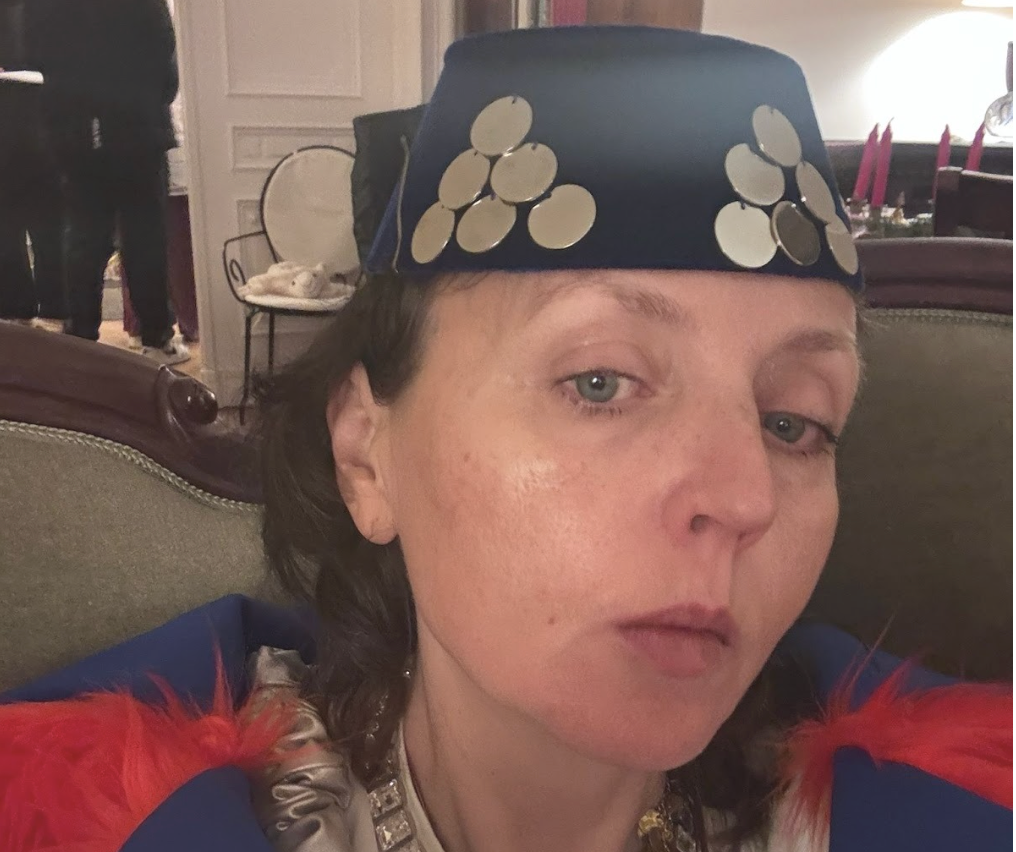
Scientific work is important, but it won’t capture the attention of the European public. And that is precisely Leo’s top priority: since 2014, she has been speaking out about Russian crimes in Crimea at every pro-Ukrainian rally in Berlin. The environmental disaster caused by the Russians in the Black Sea in late 2024 became a personal tragedy for her.
When the first reports of dolphin deaths emerged, I felt physical pain. Intelligent animals have become victims of the war, to whom, however, it is impossible to explain what they are guilty of.
Environmentalism in Germany is almost a religion. Germans meticulously sort their trash, develop “green” energy, and can argue for hours about carbon footprints. However, few people here noticed the mass die-off of Black Sea mammals, fish, plankton, and algae.
That’s how the idea for the installation came about. I tried to visually interpret five words that are common to the Crimean Tatars, Karaites, and Krymchaks: Qara deñiz (Black Sea), Ev (home), Cemaat (community, society), Tuz (salt), Su (water).
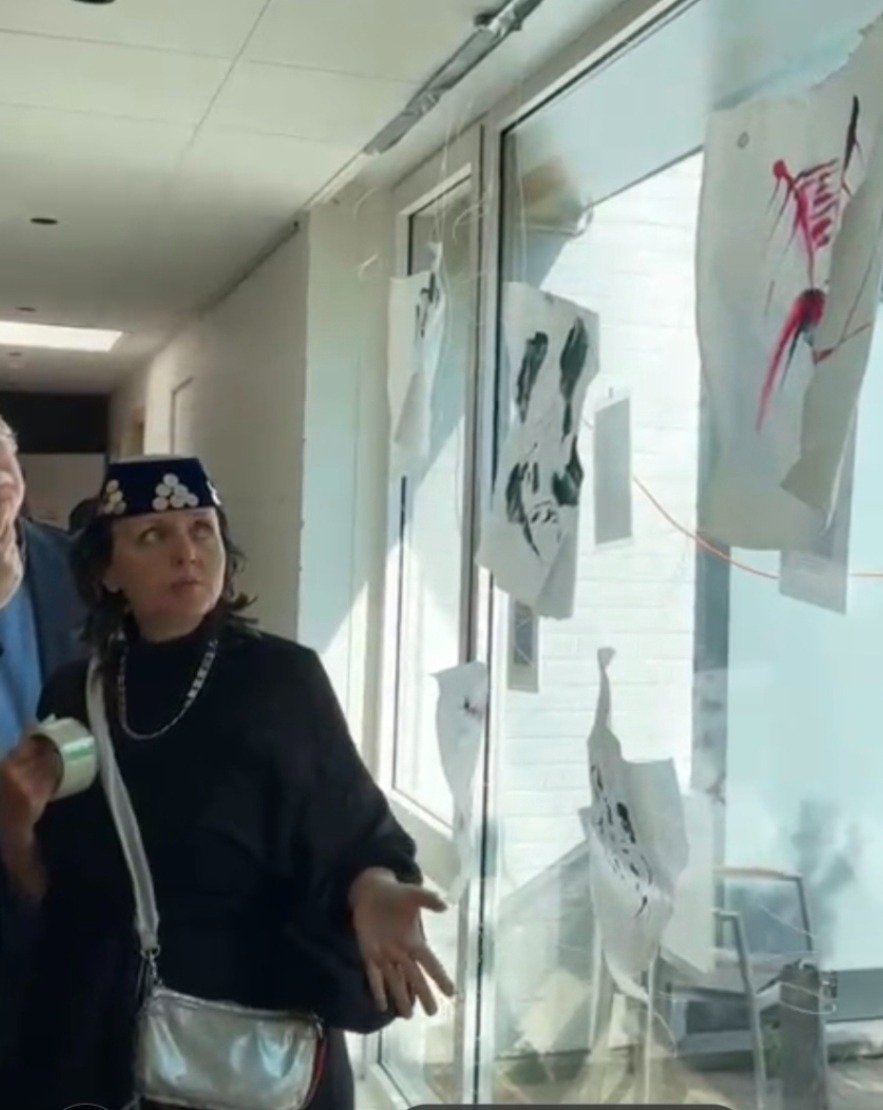
Leo’s installations have already been on display at several Crimean Tatar events in Europe. She not only displays her works but also engages in discussions with visitors and tries to capture the new meanings that emerge in viewers’ minds after viewing them.
I continue to expand my project. Everyone who connects with it discovers something new, and I incorporate these ideas into my new works.
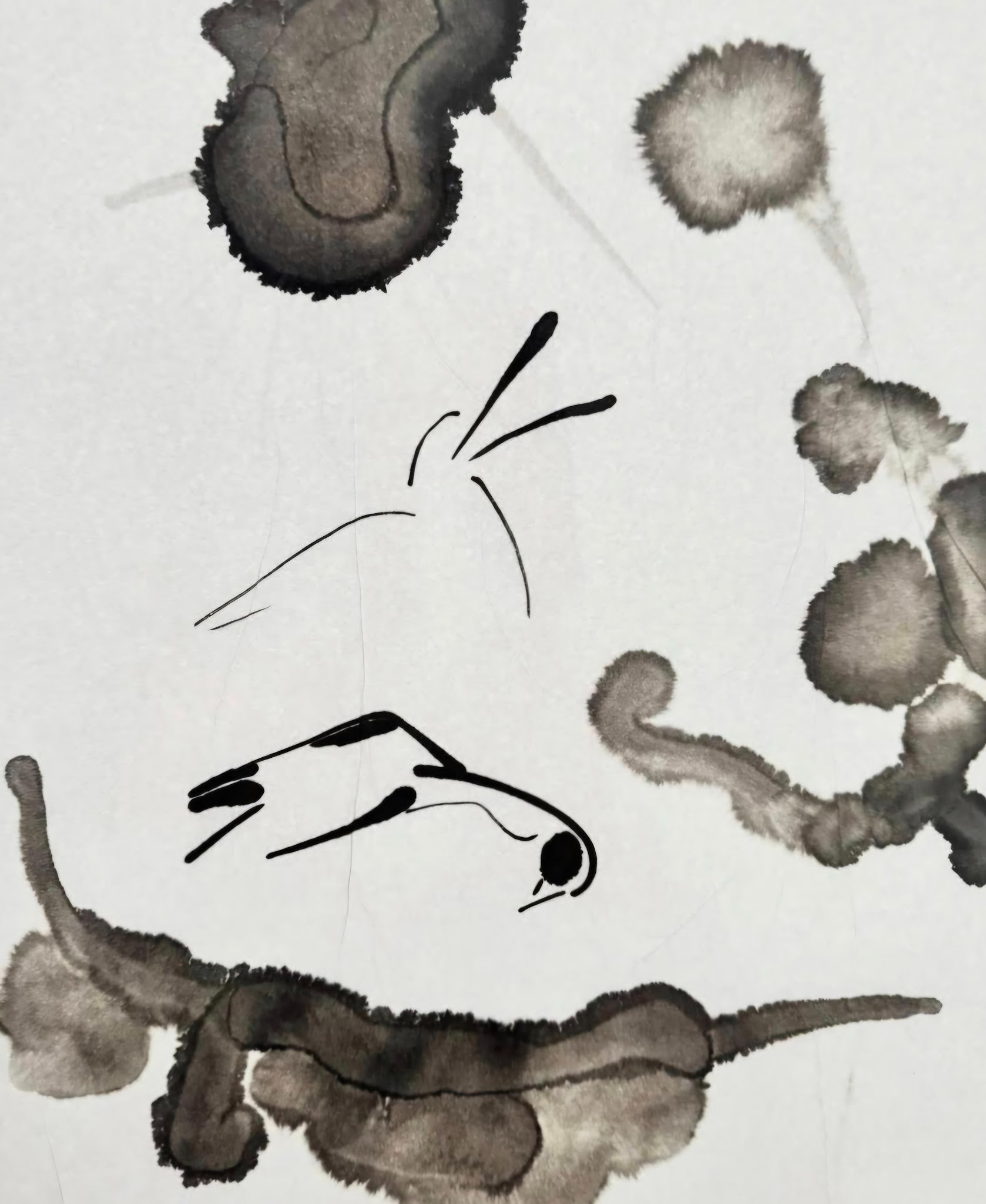
All of the project’s drawings and texts are created on rice paper, which dissolves easily in water. Leo says that in this way, she sought to convey the fragility of Crimea, its nature, and its indigenous peoples. Any European rain shower could destroy the installation in a matter of minutes. This is one of the main messages she wants to convey to Europeans.
Her works sometimes resemble Rorschach tests, which are used to assess a person’s mental state. Yefetova’s installation is also a test — of Europe’s ability to protect a European Ukraine and a European Crimea. The past 12 years have shown that most of the values defended by the free world are merely declarative. Now, the free world has reached a tipping point that will determine whether it is truly ready to fight for its survival.


.jpeg)