ENG

- Just one question: Is Crimea ours?
- That’s a provocative question.
- Yes. And when will we start offering loans to Crimeans?
- At the moment, we’re not offering loans to new territories…
- But it’s not a new territory — Crimea has been part of Russia for 12 years.
- That’s not a question for me…
This conversation takes place in Moscow in July 2026. The woman who initiated it identifies herself as a Russian citizen with a Crimean residence permit. Her interlocutor is a manager at one of the branches of Alfa Bank, Russia’s largest private financial institution.
Their dialogue is being actively discussed by social media users. Pro-Ukrainian users are delighted, while pro-Russian users are outraged. And few participants in the discussion are paying attention to the obvious.
Alfa Bank has had no branches or ATMs in Crimea since April 2014. Immediately after the annexation of the peninsula, they closed along with all Ukrainian banks and have not resumed operations since. It is not only commercial Russian financial institutions that prefer to have nothing to do with Crimea, but also, for example, Gazprombank — in which the gas monopoly holds a controlling stake — and even the wholly state-owned Rosselkhozbank.
The situation is similar in the telecommunications market. The Russian mobile operator MTS left Crimea in the summer of 2014, almost simultaneously with the Ukrainian operator Kyivstar, and still does not have its own infrastructure on the peninsula, just like the other companies in Russia’s “big four” — Beeline, T2, and Megafon. All of them operate on the peninsula — but using third-party equipment, effectively via roaming.
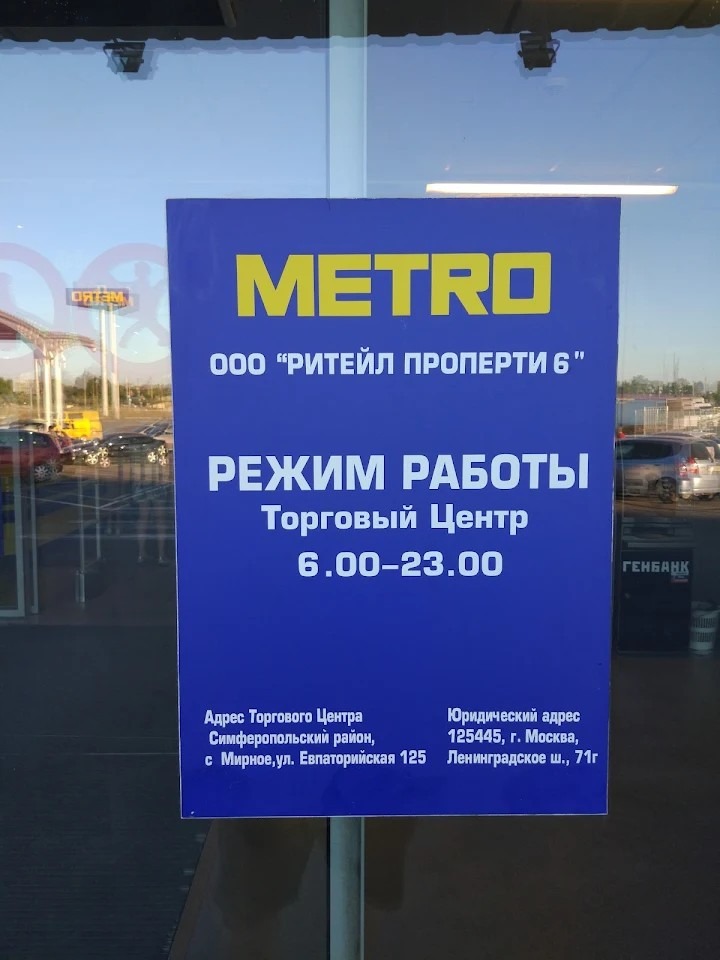
There are no “Magnit” and “Pyaterochka” supermarket chains, popular in Russia, in Crimea. Instead, the French “Auchan” and the German “Metro” remain. The Lithuanian chain “Novus” dared to enter the market just a year and a half before Russia’s full-scale invasion of Ukraine. And Ukrainian retailers weren’t in any great hurry either. “Silpo” stores operated in Crimea until 2016, while “Furshet” and “Eva” remained open until 2017. Immediately after the annexation, the “ATB” chain changed its name to “PUD,” re-registered in Russia, and continued operating until 2017, when its owners sold their assets to the occupying forces for $8.5 million.
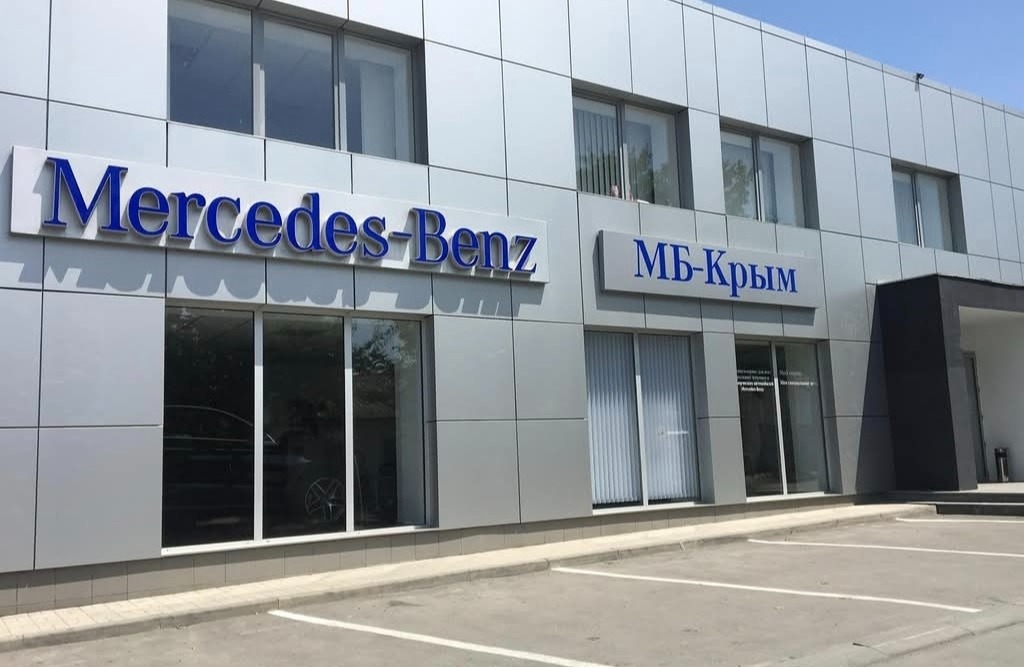
Although today you can buy a brand-new “Mercedes,” “Renault,” “Volkswagen,” or “Škoda” in Crimea, there are no official dealerships for European automakers on the peninsula. But “do you want to play checkers or go for a drive?” The Simferopol dealership “MB-Crimea” doesn’t even make buyers guess what the abbreviation in its name stands for.
Trade with occupied Crimea has so far had consequences only for the Dutch pile-driving equipment manufacturer Dieseko and four other companies from that country — all of which supplied products for the construction of the Kerch Bridge. The year before last, these firms paid a total of 1.9 million euros in fines, and their managers each performed 20–60 hours of community service. In contrast, a German court found no wrongdoing on the part of Siemens employees who sold at least four turbines worth 111 million euros to Crimea.
The Danish company Grundfos, whose pumps were found at Crimean water intake facilities, has also gone unpunished. And although in August 2022 this company officially announced the closure of its Russian representative office, its brand-new products can still be purchased on the occupied peninsula — along with the pumps from the German manufacturer Wilo. Electrical equipment from the French company Schneider Electric and the Swedish-Swiss corporation ABB is freely available for sale in Simferopol. And there are also Swiss watches and Italian pasta, German chocolate and French wine, Spanish olives and Scotch whiskey…
From all of the above, one might draw the erroneous conclusion that Russian business is more law-abiding than Western business. Nothing of the sort. That’s what business is all about — calculating profits and risks. For example, the founders of Alfa Bank, Mikhail Fridman and Petr Aven, stepped down from its board of directors back in February 2022 — immediately after the U.S., the European Union, and the United Kingdom imposed personal sanctions on them. The billionaires quickly realized that it wasn’t worth waiting for secondary restrictions: these could completely cut the bank off from the international financial system. The risk is obvious and incomparable to the potential profit from the small Crimean market.
The logic of European companies is just as sound. Yes, in theory, they too could suffer losses. But in reality… The very same “affected” company, Dieseko, paid the Dutch government 1,780,000 euros as a result of the Kerch Bridge scandal. And it earned 1,600,000 from the deal. This happened eight years before the ruling was issued, and inflation during that period was 26 percent. So the profit was clearly worth the risk. And they might have even gotten lucky — just like Siemens did.