ENG

A Crimean blogger is conducting an experiment. Armed with a 100-ruble bill, she’s visiting supermarkets in search of items she can buy with that amount of money. It turns out that, aside from a few types of bread, there’s nothing. Even a bottle of milk, a chocolate bar, or a jar of baby food costs more than that.
The statistics — even the Russian ones — are relentless. According to data from ‘The Insider’, as of July, annual inflation in Crimea stood at 15.79%. The average rate for Russia is 5.98%, which means that prices on the occupied peninsula were rising 2.6 times faster, and the price hikes continue.
“I had vacationers from Kaluga — they were very surprised, and the Muscovites were completely stunned by our prices. And that was back in June; now it’s even more expensive,” recalls Elina, the owner of a vacation rental in Alushta.
Now many Crimeans have become tourists themselves. Their trips, however, aren’t very exotic or particularly romantic — they’re just “across the bridge” to buy groceries.
“We have three teenage boys — they have a huge appetite, God bless them — and they’ll eat as much as I give them. So about once every two or three weeks, my husband and I get in the car and drive to Taman. What do we bring? Everything. Oil is half the price there, buckwheat and pasta are 50 percent cheaper, meat and chicken are about 50 to 100 rubles cheaper, and dairy products are almost a third of the price. Even with gas prices as high as they are here right now, it’s still worth it to fill up the trunk and then just buy fruits and vegetables here,” says Lyudmila from Shcholkino, sharing her experience.
Fruits and vegetables are indeed cheap in Crimea this year — and that’s a source of pain for local farmers. They haven’t been able to transport their harvest off the peninsula, so they’re forced to sell apples for 40 rubles per kilogram and grapes for 70. Some are even giving away their produce for free.
“When I was offered a wholesale price of 25 rubles for the plums, I decided I’d be better off giving them away. At least I’d be doing a good deed. But my neighbors didn’t want them — they all have their own orchards — so I posted an ad on Avito: ‘Come on over, pick them yourselves — whatever you pick is yours.’ I thought there’d be a rush of people coming to my place. But nothing of the sort happened. People around here aren’t used to kindness; they think that if something’s free, it must be some kind of scam. It wasn’t until a few families from Bakhchysarai came, took a look, and then told their relatives and friends about me that we managed to harvest the fruit. I was already thinking it would just wither away,” says Emir, the owner of an orchard in the Bakhchysarai district.
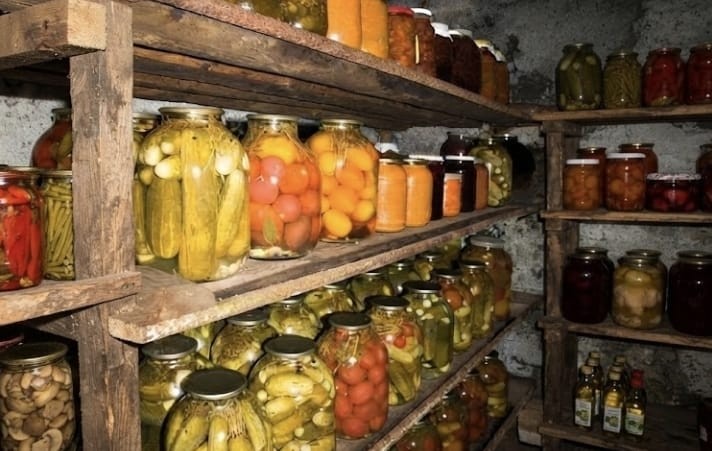
Jams, pickles, juices, and marinades — Crimean kitchens have once again turned into small canneries. Jamila, a resident of Qarasubazar (Bilohirsk), admits that at 45, she is trying her hand at canning for the first time.
“I’m learning as I go. I Google things, and the girls at work give me some recipes. But where would I have learned this? When I was little, my mom used to can everything, but then there wasn’t even a need for it: fresh fruits and vegetables are available year-round, and if you wanted some jam or pickled cucumbers, you’d just go out and buy them. But now, a carton of regular juice made from concentrate costs 250–300 rubles. And we have to stock up, because we don’t know what’s in store for us this winter,” the woman says.
Svitlana and Ihor, who live in the suburbs of Aqyar (Sevastopol), are preparing for winter even more thoroughly. In the basement of their house, there’s a stack of bottles of drinking water and sacks of potatoes and onions. On the shelves are jars of pickles, canned meat, and canned fish. Using a vacuum sealer, the couple extends the shelf life of grains, flour, dried fish, nuts, and dried fruit. Svitlana says the family is prepared for at least six months of “self-sufficiency.”
“Vacuum storage is a wonderful idea. No bugs will get in, and no mold will grow. Because I remember how my grandmother kept all that stuff in bags for years, and then threw it away. I used to laugh at her for that… I hope she can hear me from the other side as I apologize and repent before her right now. She knew what she was doing — she lived through the war. And now here we are, going through it too,” the Crimean woman notes sadly.