ENG

This case had every chance of showing the world who Crimea belongs to. When Polish law enforcement detained Russian archaeologist Alexander Butyagin last December, hope arose among the Crimean Tatars: such a valuable addition to the prisoner exchange pool would allow at least some of the hundreds of Crimean prisoners held by Moscow to be released. Those hopes proved in vain. On April 28, the Russian was exchanged for Andrzej Poczobut, an activist with the Union of Poles in Belarus, whom Lukashenko’s Belarus had sentenced to eight years in prison in 2021.
An employee of the Hermitage Museum in St. Petersburg, who played a leading role in the plundering of the occupied peninsula, felt completely safe in Europe. After giving lectures in Prague and Amsterdam, he planned to speak in Warsaw and then in the Baltic states, so his arrest at Kyiv’s request came as an unpleasant surprise to both him and the Kremlin.

Ukraine filed an extradition request, the Polish prosecutor’s office supported it, the court approved it — it would seem, what could go wrong?
However, Olena Babakova, a Ukrainian journalist and lecturer at the Polish Vistula University, had already poured cold water on the wave of nationwide optimism. She was certain: Butyagin would not be handed over to Kyiv. After all, the Polish court only decides on the possibility of extraditing the detainee. The final decision rests with the Minister of Justice. Here is what she told CEMAAT today:
“This case should not be perceived as the Poles’ desire to teach Ukraine a lesson. Public opinion in Poland currently holds that the country is doing too much for Ukraine. However, the exhumations [of victims of the Volhynia events—Ed.] are moving slowly, there is no guaranteed priority role for Polish business in the reconstruction process, and there’s a scandal in Lviv involving a Polish firm. Meanwhile, Polish citizens are suffering in Russian and Belarusian prisons; of course, they should be rescued first. If Pochobut had been exchanged in November (as planned), and, for example, Ukraine had launched a broad exhumation program — then it would have been possible to at least consider extradition in a way that could be explained to the public. But as it stands — since there was a need and public demand to bring our own people home during the exchange — I think the political decision was clear from the start.”

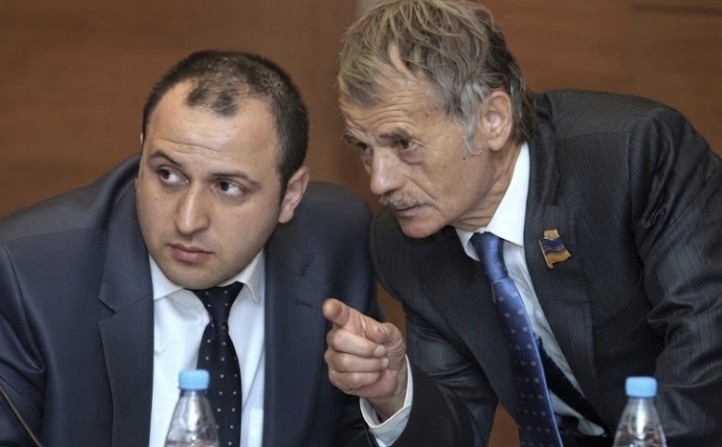
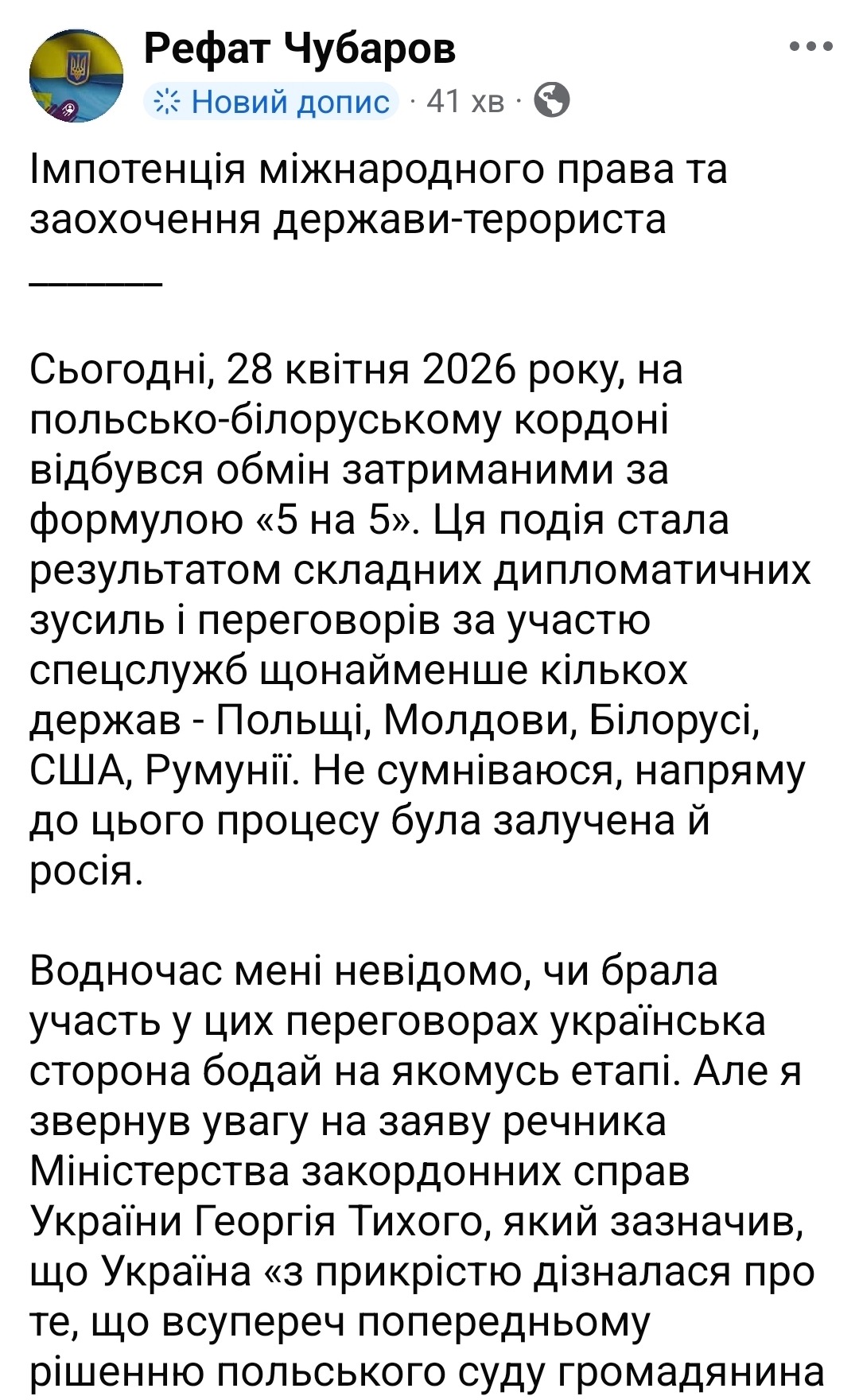
Refat Chubarov, Chairman of the Mejlis, told CEMAAT that he viewed this exchange with outrage. He believes that Poland is sensitive to these issues and likely informed Kyiv of its intentions.
On his Facebook page, the Chairman of the Mejlis welcomed the release of the Polish journalist; however, he called the international community’s disregard for the torture of over 350 Crimean political prisoners — the majority of whom are Crimean Tatars — a failure of international law.
A CEMAAT source close to the Polish Ministry of Foreign Affairs believes that the Crimean Tatar side should have been more proactive in cooperating with the Polish government. According to her, Warsaw, having recognized the deportation of Crimean Tatars as genocide, could have made a gesture toward the indigenous people of Crimea if the work had been handled properly. For representatives of the Crimean Tatars, including those who actively participate in forums of indigenous peoples around the world, Warsaw serves as a transit point on trips to New York or Geneva. In Poland, you can eat borscht and chebureki, but, according to our interviewee, no one maintains regular communication with Crimean Tatar friends in Polish politics.
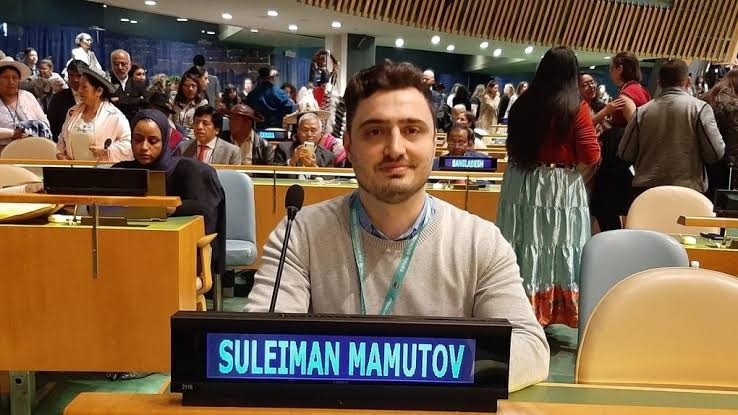
Eskender Bariev, director of the Crimean Tatar Resource Center, says that success usually has many fathers, but failure is always an orphan. Bariev heads the Mejlis’s Department of Human Rights and International Affairs. According to him, it never occurred to anyone that Butyagin’s exchange would take place without Kyiv’s involvement. When, in February 2026, two Crimean Tatars who had defended Mariupol were successfully exchanged as part of a large-scale swap, it was a major success, because Moscow had previously flatly refused to discuss exchanges involving Crimea’s indigenous inhabitants, considering them Russian citizens. Exchanges often require the involvement of foreign partners. For example, the Vatican was involved in securing the release of Nariman Celâl. However, when it comes to those convicted in the Hizb ut-Tahrir case, even Muslim countries are reluctant to get involved. And it was Butyagin who could have become the key figure through whom the Mejlis planned to secure the release of seriously ill prisoners — namely, the blind Alexander Sizikov and Lenur Khalilov, who has stage IV cancer.
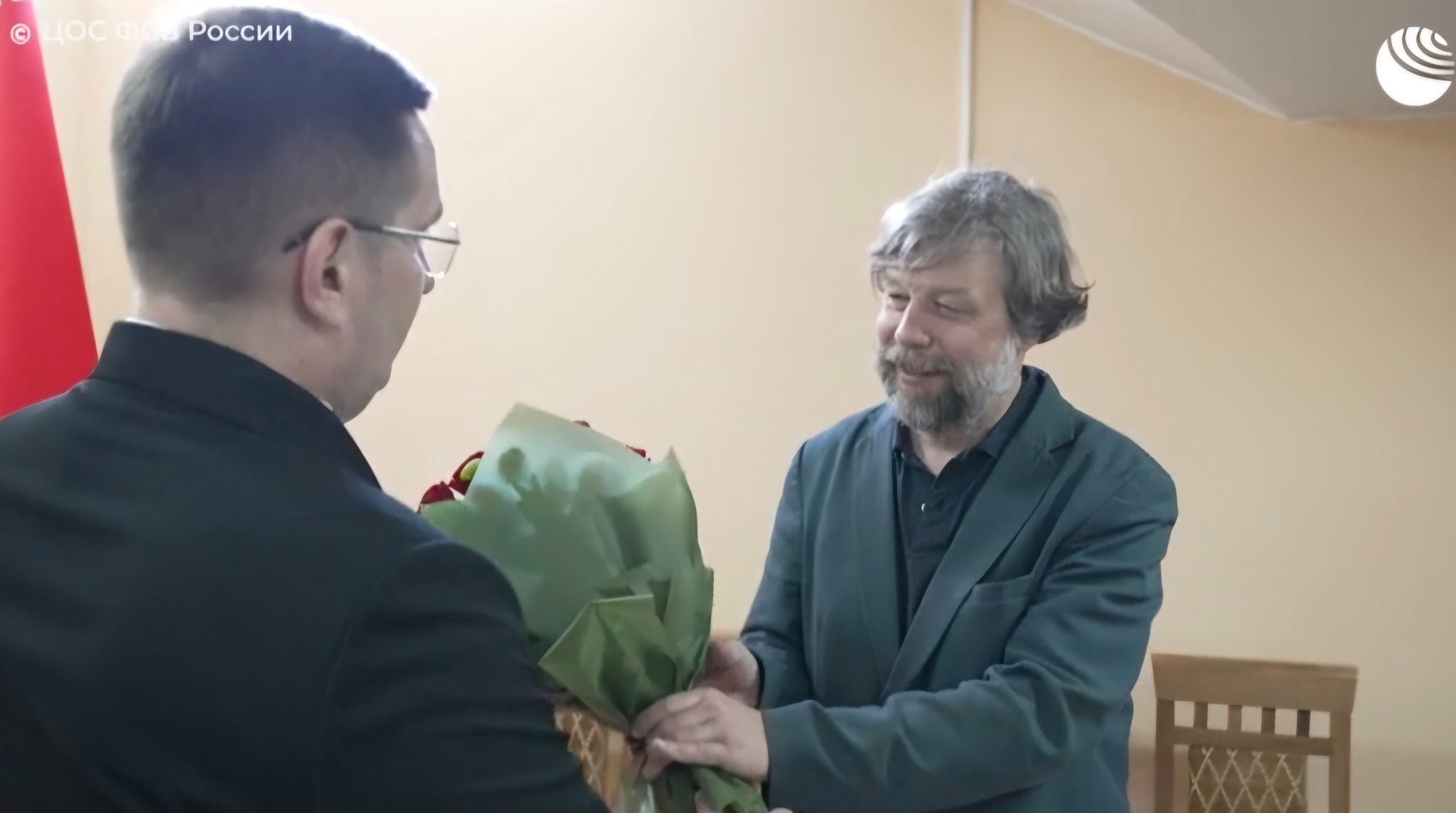
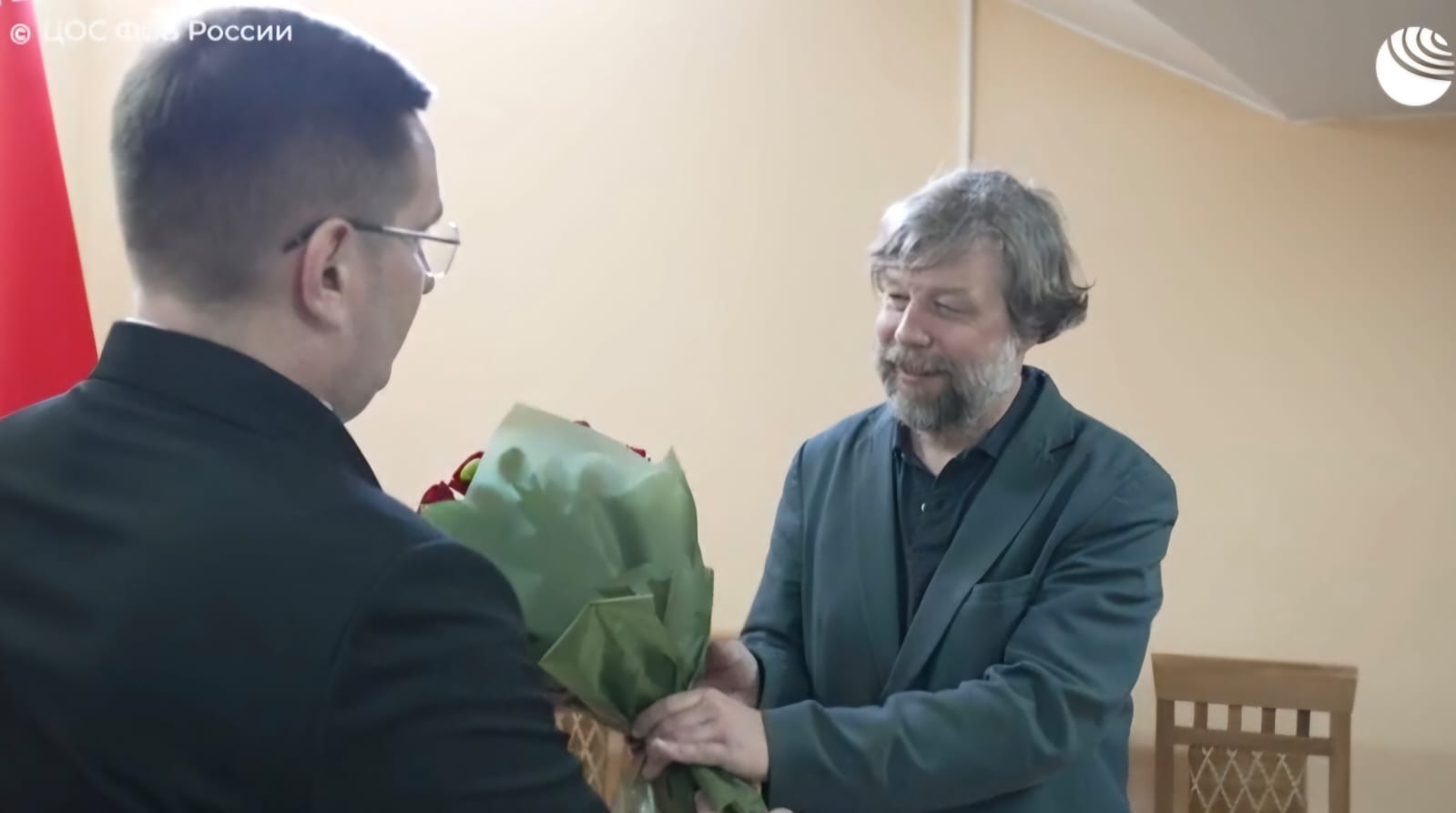
“I am feeling great,” Butyagin declared as soon as he was set free. “I still can’t believe it,” the looter admitted to the propaganda media. His exchange was conducted at the highest level with the participation of seven countries, and the United States served as the main mediator. The others were Poland, Belarus, Moldova, Romania, and it is unclear who the seventh was — Lithuania or… Ukraine. Trump’s Special Representative for Belarus, John Cole, flew to Warsaw for the exchange. In a “five-for-five” deal, two Moldovan citizens were exchanged — thanks to Romania, whose leadership has good relations with the current White House administration.
Crimea, which is the first occupied territory in this major conflict and holds the largest number of civilian prisoners, proved to be a convenient bargaining chip for the major players. For Russia, the Butyagin case was a matter of principle, as it called into question its control over the peninsula. The arrest of a professor well-known in the academic world sent a signal to the rest of the world: Crimea remains a toxic issue even decades after the occupation. Today’s exchange formula has shown that, at present, the value of a Russian, Polish, or Moldovan prisoner is greater than that of hundreds of Crimeans combined.