ENG

Photo: oboz.ua
In 2023, then-Russian Defense Minister Shoigu said that Russian troops needed 10-15,000 tons of fuel and ammo and 1500 tons of drinking water a day across the Ukrainian front. In June 2023, an epidemic of cholera spread among Russian personnel in Kherson and Crimea oblasts after Russia destroyed the Kakhovka dam and disrupted the water supply. Unable to supply them with bottled or purified water, Russian soldiers drank water from open sources and became sick. An incredible amount of supplies is needed to keep an army running.
Ukraine is trying to cut off Russia’s supply lines to Crimea. It started with an attack on the Kerch bridge in October 2022. A truck bomb destroyed a span of the vehicle bridge and set a fuel train on the railroad bridge on fire. That fire weakened the railroad bridge. In July 2023, naval drones damaged both the road and rail sections of the Kerch bridge. In June 2025, an underwater drone attacked a section of the vehicular bridge but it reopened soon after the attack.
After the 2023 attack, Russia reduced the dangerous loads on the Kerch rail bridge. There used to be 42-46 trains crossing the bridge with weapons and ammo each day. In the first three months of 2024 only one train with 55 fuel cars crossed the Kerch bridge. After that, Russia stopped sending flammable and explosive cargo across the bridge to prevent structural damage if the cargo was attacked.
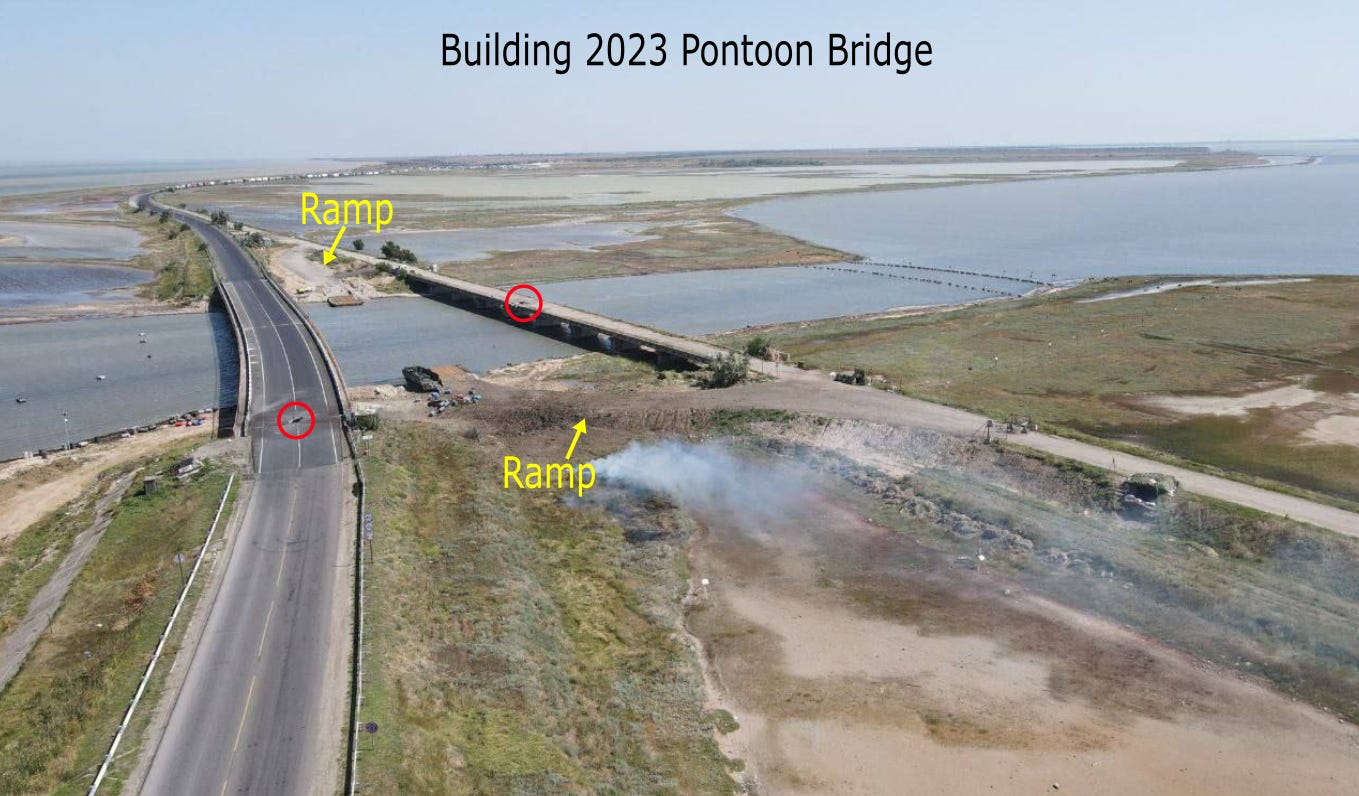
Ukraine then attacked the Chonhar vehicular bridges in the northeast of Crimea with Storm Shadow missiles in 2023, but they had a limited number of the missiles, the missiles were expensive, and Russia built a pontoon bridge as an alternative crossing. The attacks could not be sustained and Russia eventually repaired the concrete bridges.
Russia started relying on its ships to carry the fuel but Ukraine had been attacking Russia’s naval transports for years. When the railway ferries were damaged in June 2024, Russia was forced to temporarily transport dangerous cargo on the Kerch bridge for a while again. In March and April 2026, Ukraine attacked the last railway ferry working the Kerch Strait and put it out of operation. There are still smaller car ferries but they cannot carry the same loads and they operate at their peril.
Russia relied on the railroads in the occupied territories to transport supplies to Crimea, but in the spring of 2025, Ukrainian drones started attacking the trains that used them. Trucks carried fuel and other supplies on roads in the same region but now Ukrainian drones are attacking targets all the way to the Azov Sea. While this has reduced the number of trucks delivering supplies and slowed many of the other trucks that use secondary roads, it has not eliminated all the cargo from reaching Crimea. To reduce the flow of supplies to Crimea even more, Ukraine once again started attacking the bridges leading to that occupied territory.
There is an old highway bridge and a new highway bridge at Chonhar. Both have been damaged and are impassable. As with the 2023 attacks, Russia built a pontoon bridge as an alternate crossing but it was also destroyed. The Railroad bridge has been attacked multiple times. There are no reports of attacks on the dirt road causeway and bridge. That road is about 3 meters wide and the bridge may not be able to sustain heavy loads.
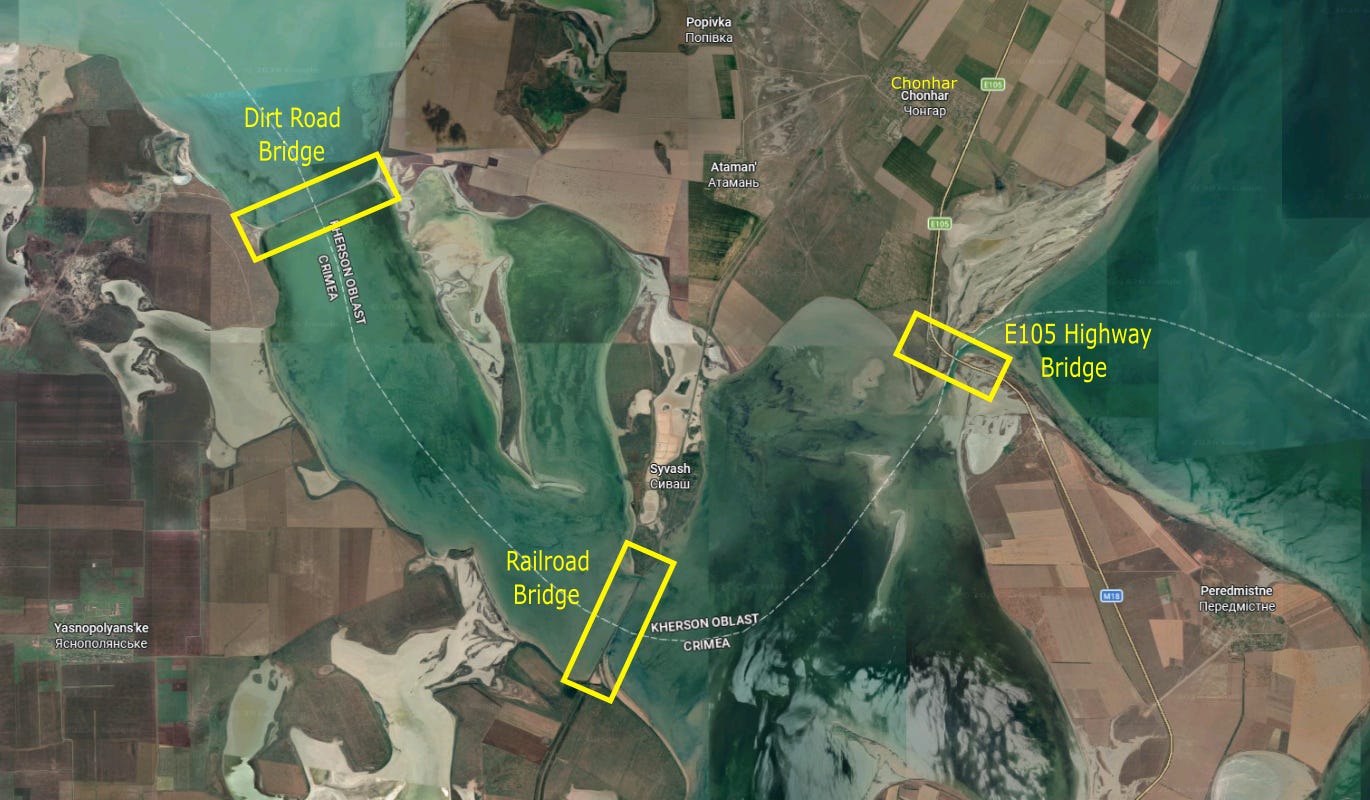
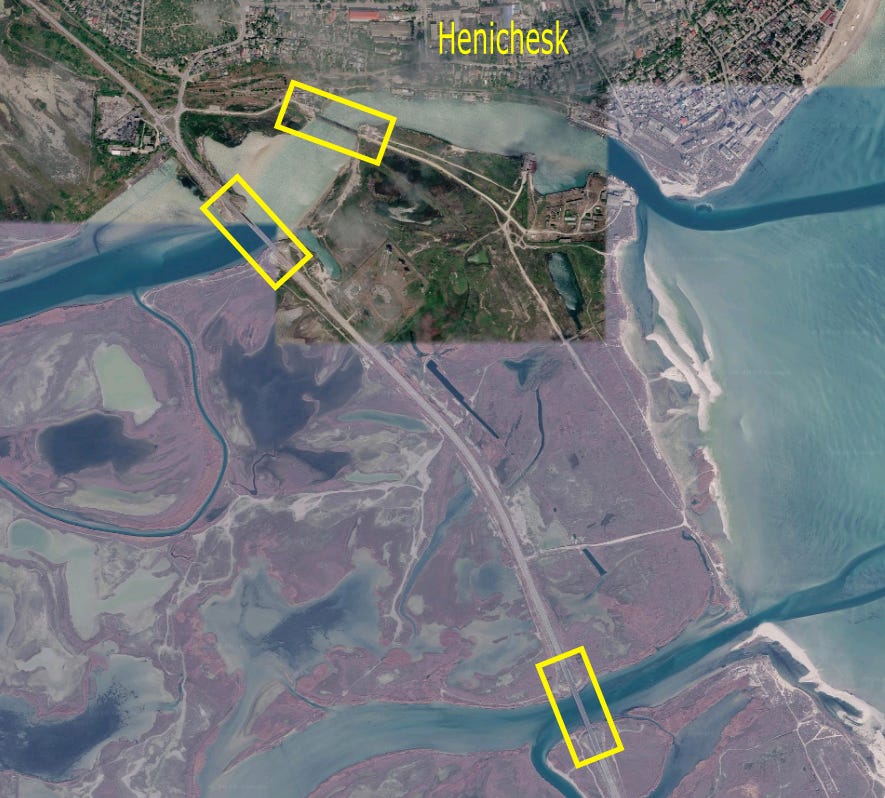
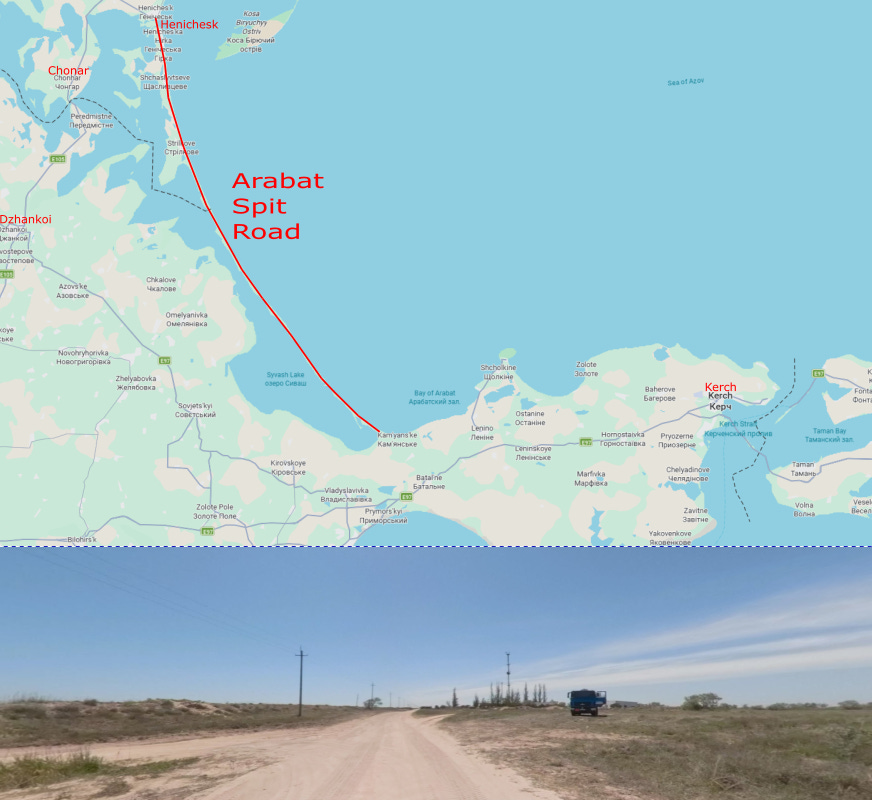
To the east of Chonhar is Henichesk, which is at the northern end of the Arabat Spit road. It’s a shorter route to Kerch but a much longer route to reach the rest of Crimea, and trucks can’t travel on that road as fast as on a highway. Henichesk is the only place where Syvash Lake connects to the ocean.
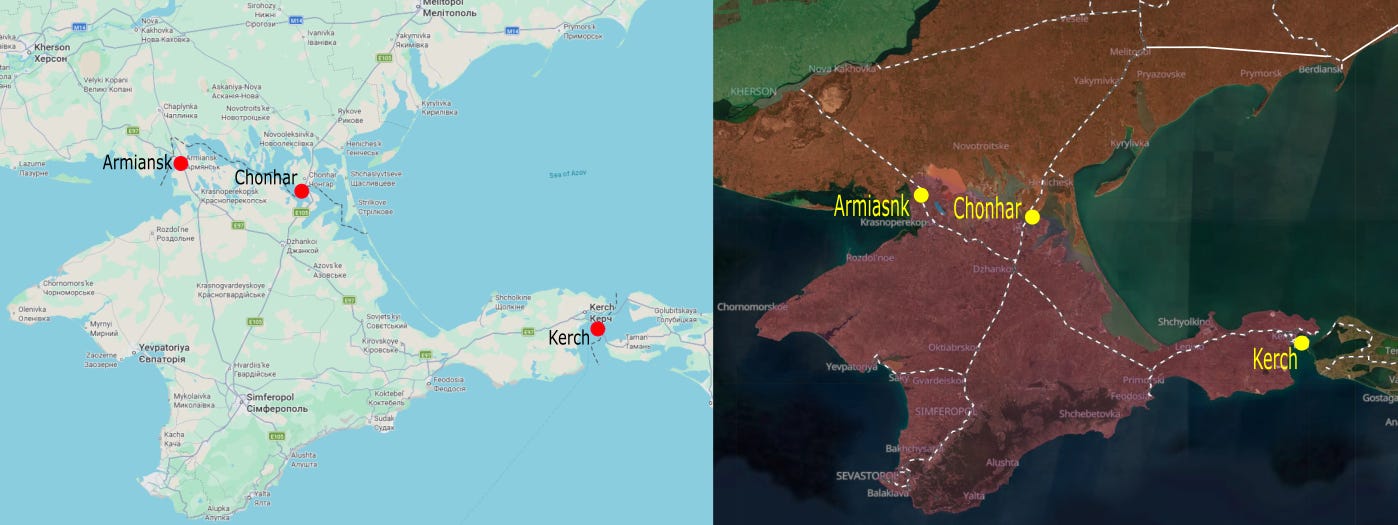
Halfway between Armiansk and Chonar is the Syvash Lake bridge and causeway. It is 2600 meters long and there is a small bridge at the northern end of the causeway. The road is narrow and the bridge may not be able to bear a lot of weight. Any vehicle using that bridge would have to travel 60 km on secondary roads before reaching a highway.
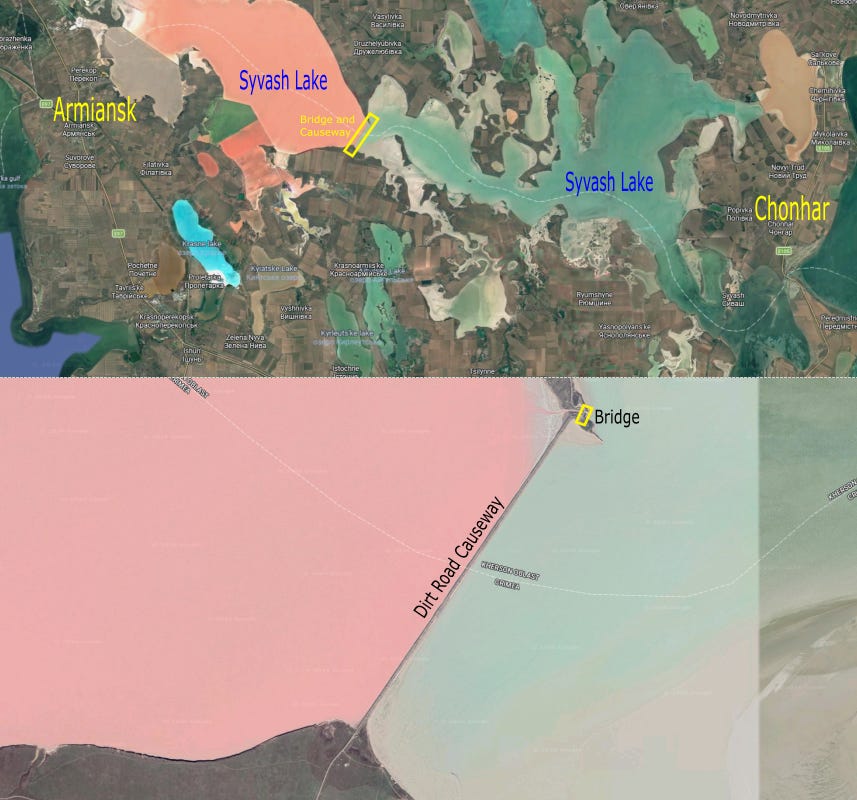
The Crimean peninsula lies between the Black Sea and the Sea of Azov. At the narrowest point, 90 km of the peninsula is separated from mainland Europe by the Syvash lake and lagoons. Only nine kilometers of solid land connects the peninsula and the continent, and Armiansk was built at that location. A hundred years ago, there wouldn’t be any bridges to bomb here, but construction on the Kakhovka dam was completed in 1956, and in that year work began on the North Crimean Canal to carry water from the Kakhovka reservoir to the Crimean peninsula.
All the bridges entering Crimea from the east cross the Syvash Lake and lagoons. All the bridges in the west cross the canal.
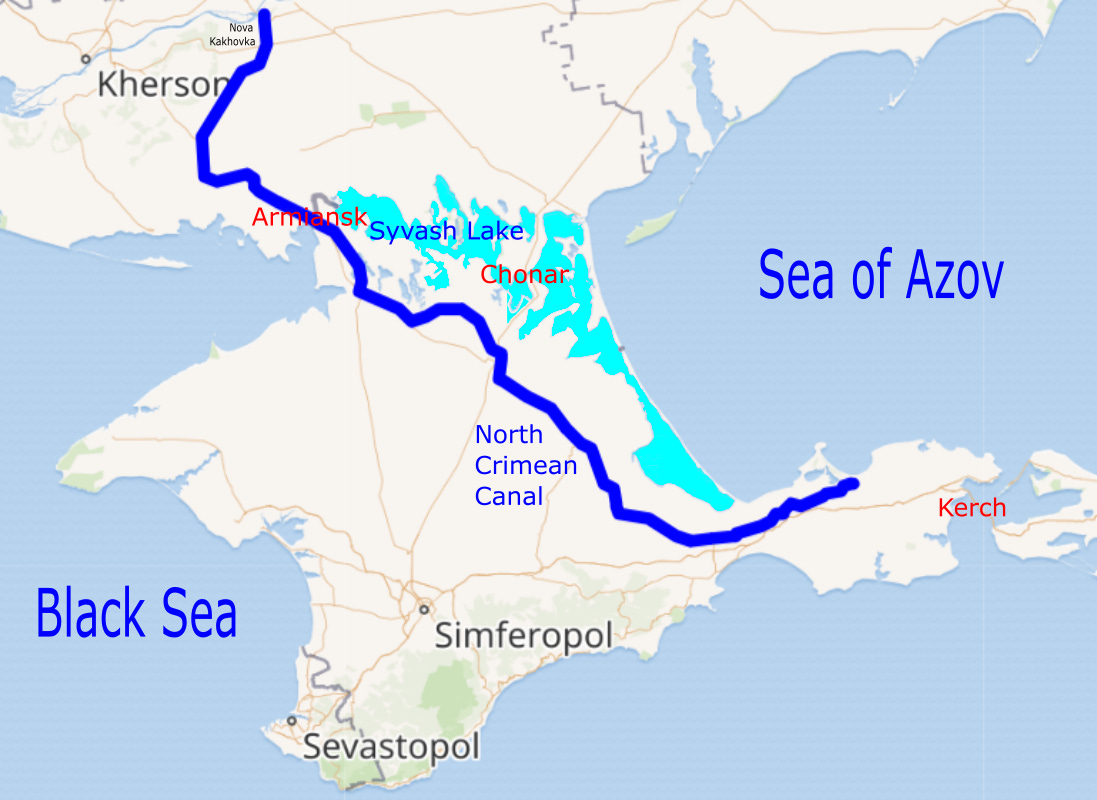
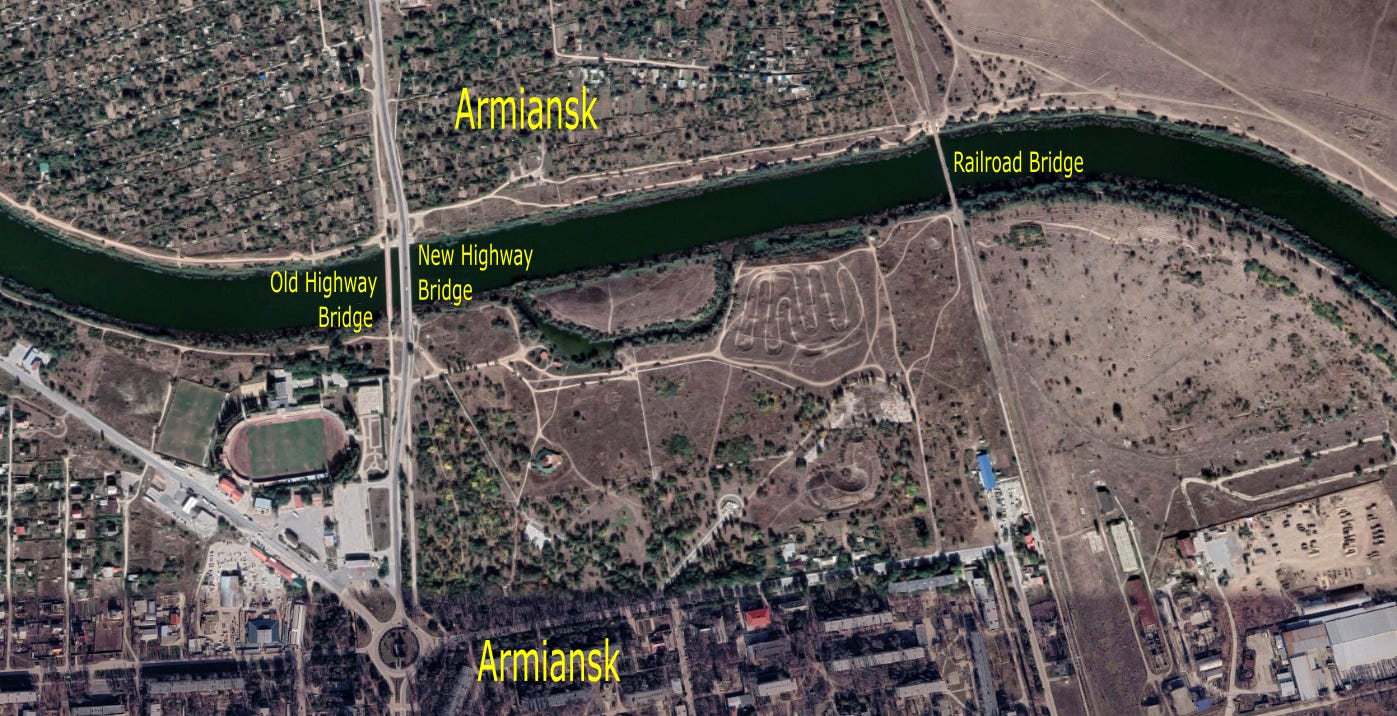
Because of the canal, there are a couple dozen bridges that connect northern Crimea to southern Crimea. 15 more bridges cross the canal in Kherson, as well. With the Armiansk bridges knocked out and the pontoon bridges being attack before or soon after they are erected, Russian trucks have to cross the canal further west in Kherson before they can head south into Crimea.
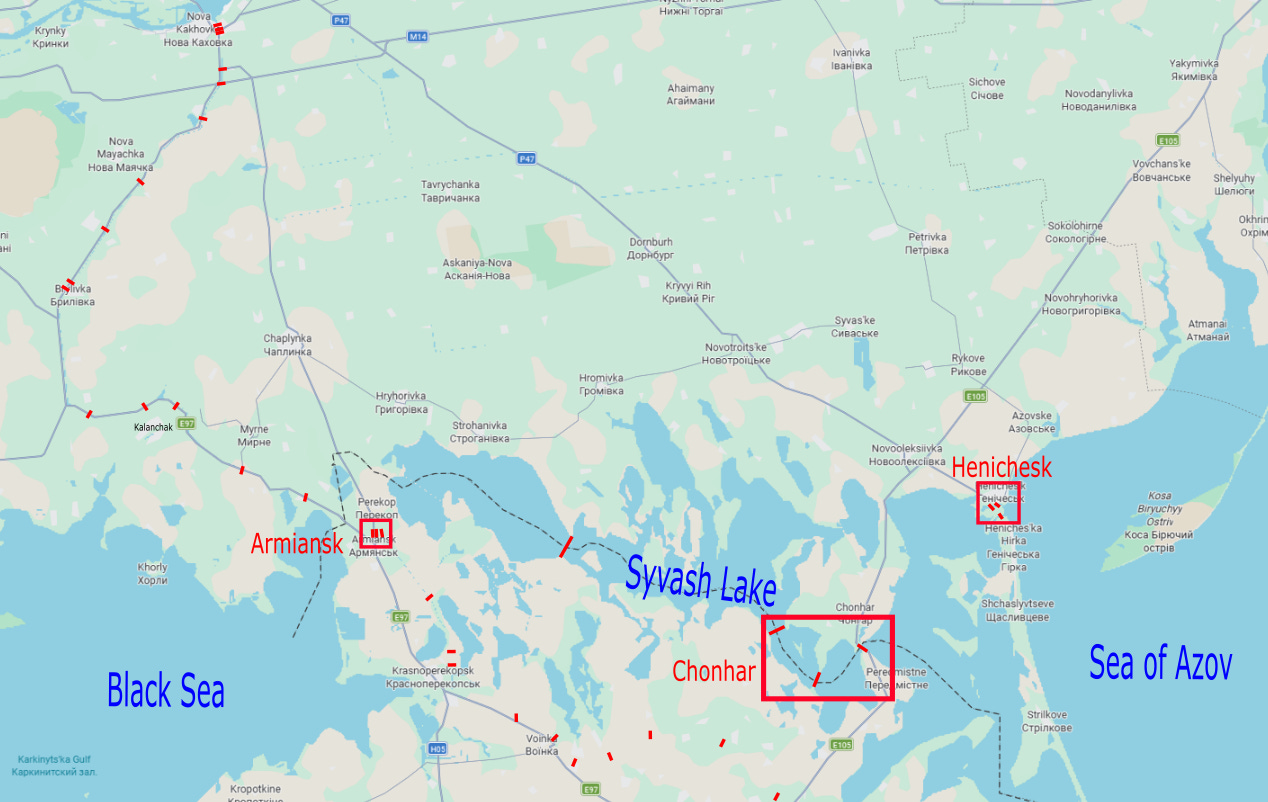
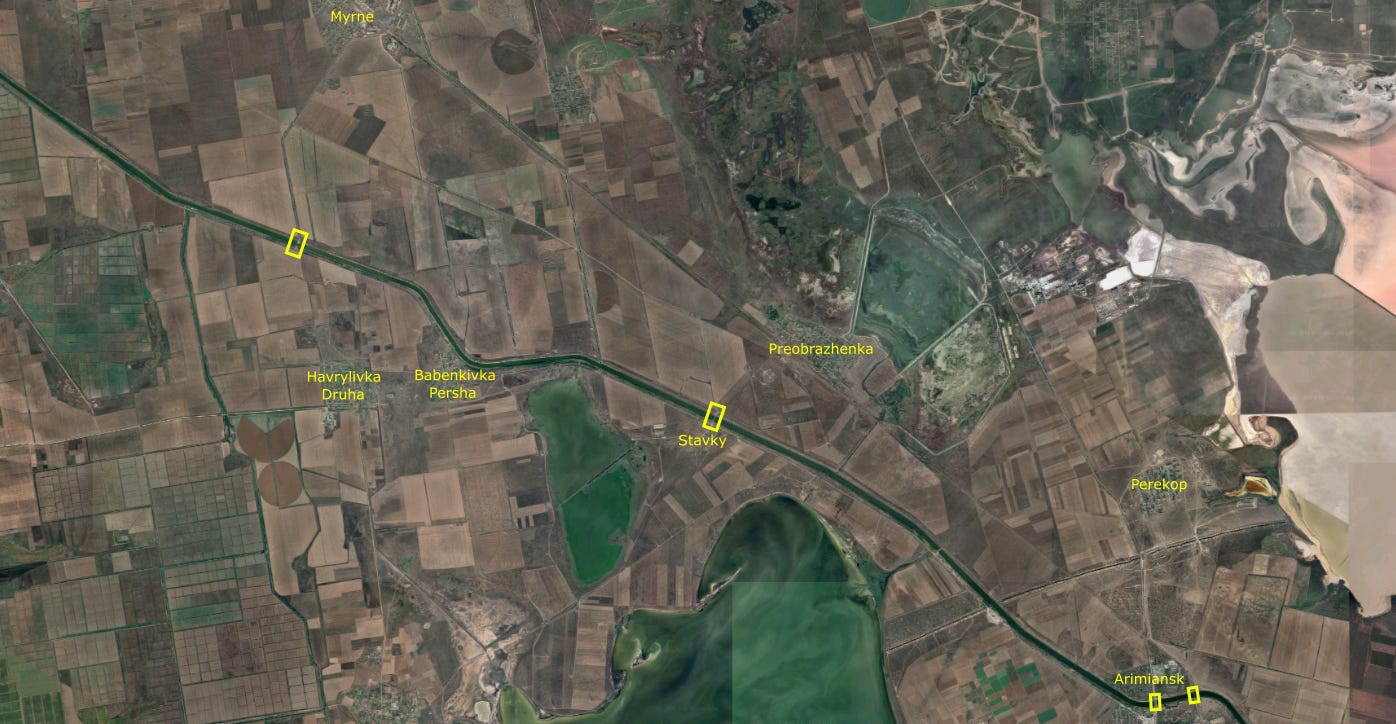
Currently, all the roads near the Azov Sea are blocked, and the highway near the Black Sea is blocked. Two of the bridges on secondary roads are blocked but 13 other bridges are unblocked. Crimea is not cut off from vehicular traffic but Russian trucks have to make a detour of several hours to enter Ukraine. This detour keeps the logistical traffic within range of Ukraine’s mid-strike drones for a longer period of time, and the closer the trucks are to the front lines, the easier it will be to detect and attack them.
The concrete bridges will be difficult to repair while Ukrainian drones can attack them. Pontoon bridges are easily damaged and easily repaired, so they will have to be constantly attacked. Each delay costs time. Trucks are vulnerable to attack while they are waiting until a pontoon bridge can be reestablished .
More of the canal bridges can be destroyed. Pontoon bridges can be set up at each of the crossings so these sites have to be constantly monitored and attacked when a new bridge is erected. Russia has a lot of pontoon bridges, but not an unlimited supply.
Any delays in logistical runs are good. The prevention of logistical deliveries is better. The destruction of the logistical cargo is best.
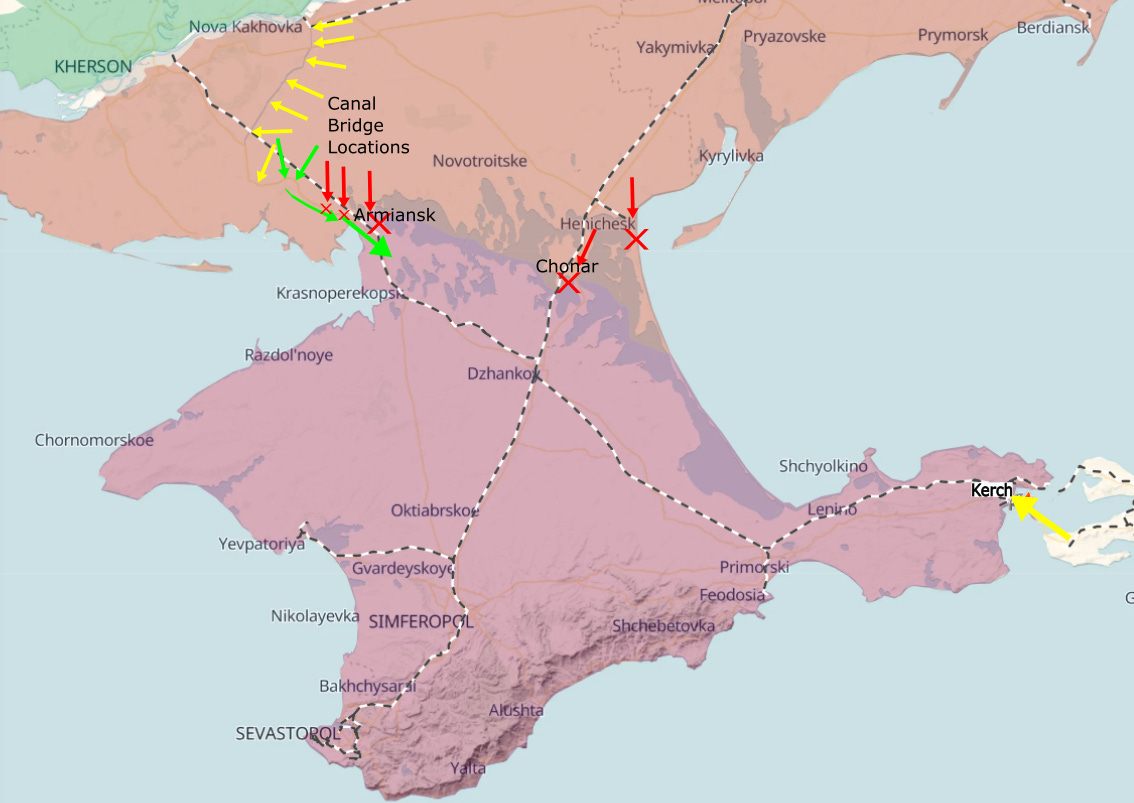
Currently, trains cannot enter Crimea from the north and trucks can only enter from the north if they use a canal bridge north of Armiansk. It is likely that Russia will spend more air defense resources to protect and open these crossings but this will also make those defenders targets, as well. Two BMPs were supposed to shoot down drones and, at a minimum, they each took at least one FP-2 out of the fight before they were destroyed. Infantry that was deployed to shoot down drones observe a strike a few hundred meters away. A Russian blogger says they are not able to stop the Ukrainian drone attacks and Crimea will be without electricity soon.
Crimea has always been a trap for Russia and they lost a lot of equipment trying to hold onto it. Now some of their military is leaving while they can. The headquarters of the Black Sea Fleet is in the process of moving to Novorossiysk.
Russia still has the option is to start using the Kerch bridge once again to transport fuel, ammo and equipment. When this happens, it will indicate that Russia can no longer sustain their forces in Crimea through the occupied territories. The Kerch bridge is 250 km away from the front lines and it is likely that Ukraine already has plans to destroy it.
This text is published with the permission of the author. First published here.