ENG


.jpeg)
“Take out your phone, unlock it, and hand it over for inspection” — this phrase marks the beginning of Crimea for everyone who enters it from the occupied Kherson region. The occupiers themselves call this checkup, which is not specified in any Russian law, “express filtration” so to speak, while Crimean human rights activists have coined the term “Armyansk anomaly.”
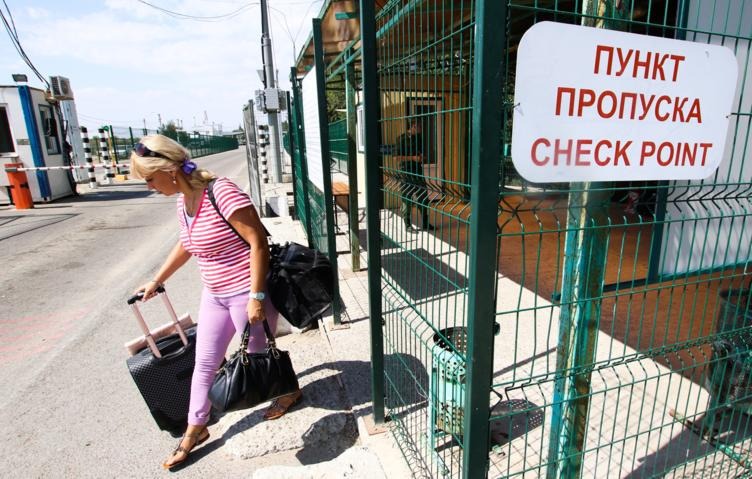
Immediately after the annexation of the Ukrainian peninsula, the Russians drew a “border” along the Perekop embankment and set up a checkpoint on the highway near the city of Armyansk. Before the full-scale invasion, this crossing was the only way to get to Crimea from the mainland. The occupiers set it up like a real border checkpoint, with scanners, passport checks, and customs. After occupying Kherson, propagandists joyfully announced that the border had disappeared! But for some reason, the checkpoint remained.
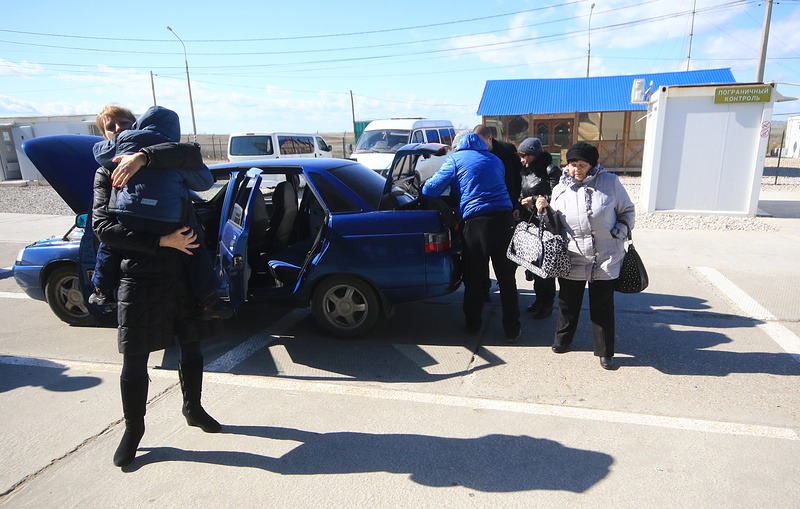
"Maybe something has changed on paper, but functionally - nothing. Here, as before, they inspect cars, check documents, search bags, and interrogate people. And much more actively than before. They explain that these are security measures at the borders with the frontline regions and that this is done not only in Crimea, but also in the Rostov region on the border with Donbas. The fact that they have no legal authority to conduct such checks outside the border control zone does not bother anyone," says the human rights organization Irade.
They add that the flow of people from the newly occupied territories to Crimea is quite significant, mainly due to the total destruction of the healthcare system: hospitals have been destroyed and doctors have left.

"My mother and I found an endocrinologist all the way in Simferopol because there is no one closer. We were warned that there would be a full check before Armyansk, but I did not expect such horror. You go into the booth and some Buryat guy orders you around contemptuously: give me your phone. And his tone and appearance make it immediately clear that if you refuse, they will just slap you right there in their booth... Of course, I unlocked it and gave it to him, what else could I do?" recalls Olga, a resident of one of the villages in the Golopristansky district.
The requirement to unlock your phone is not regulated by any Russian law: without a court order, law enforcement officers have no right to access personal information on gadgets. But for those who try to refuse, FSB officers have arguments that are difficult to argue with.
"They told me: if you don't want to show us (your phone – Ed.), it means you have photos of military equipment, our posts, and fortifications on there. So we'll call in the counterintelligence unit, and they can figure it out themselves. I had to ask them myself to look at my phone. Otherwise, I know how they'll ‘figure it out’ — you'll disappear into their basements and be gone forever," says local farmer Mykola, who risked traveling to Crimea for seed material.
According to him, they check not only the gallery on the phone, but also correspondence in various messengers, posts on social networks, and even the contact list, especially if they are Ukrainian numbers. At the same time, Russian special services use software that allows them to recover deleted dialogues in various chats.
"They found deleted correspondence from last year. There was nothing special there - I just clarified a couple of questions with the managers and deleted the chat because it was unnecessary. I had to explain to these guys in great detail why I decided to delete it. I was lucky that the number was Russian. They found a Ukrainian number in my friend's phone - the contact of some old supplier - and started saying that it was the number of an SBU agent. Maybe they were watching for a reaction. It's clear that they read facial expressions very clearly," says Mykola.
The occupiers also tried to use the “SBU employee's phone” trick on Sergey, a Crimean whose mother lives in Oleshky. In addition to rummaging through his phone when crossing this checkpoint, he is constantly subjected to detailed searches of his belongings and strip searches - the occupiers examine men for tattoos, scars, and traces of firearm recoil. Once, Sergey witnessed a young man with a tattoo that the border guards found suspicious being put into a minibus with military license plates and taken away somewhere.
The “express filtration” procedure ends with a conversation with an FSB officer on general political topics. "This jerk asked me if I had gone to the ‘referendum’ and how I felt about the ‘liberation’ and the ‘SMO’ in general. Then he asked if I had any sympathy for the ‘Kyiv Nazi junta’ and ‘Bendery’, as well as family ties in other regions of Ukraine. He asked me some other questions from the nonsense they show on TV. I can't imagine how I endured it all," says Khristina, who traveled from Kherson to Crimea for work.
Those who “can't take it” or who are found to have, say, Ukrainian music on their phones are taken to Armyansk, where the city court convicts people en masse of hooliganism, discrediting the army, insulting Russian state bodies, and other offenses.
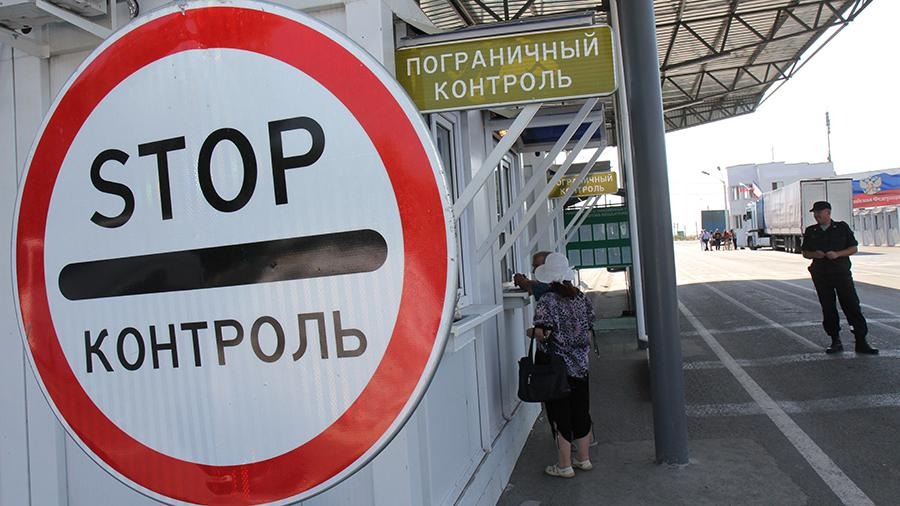
“We call it the Armyansk anomaly – one city court hears as many defamation cases in a month as all the courts in Crimea combined. And the explanation is very simple – nowhere else in Crimea are phones so thoroughly “hacked” to obtain grounds for prosecution as at this illegal checkpoint,” says the human rights organization Crimean Process.
They also note another trend: if the “filtering” reveals genuine signs of pro-Ukrainian sentiments, the person is not touched at the border. They are allowed to enter Crimea, and then, after a very short time, they are “suddenly” detained on charges of espionage, preparing attacks on collaborators, or storing explosives.