ENG

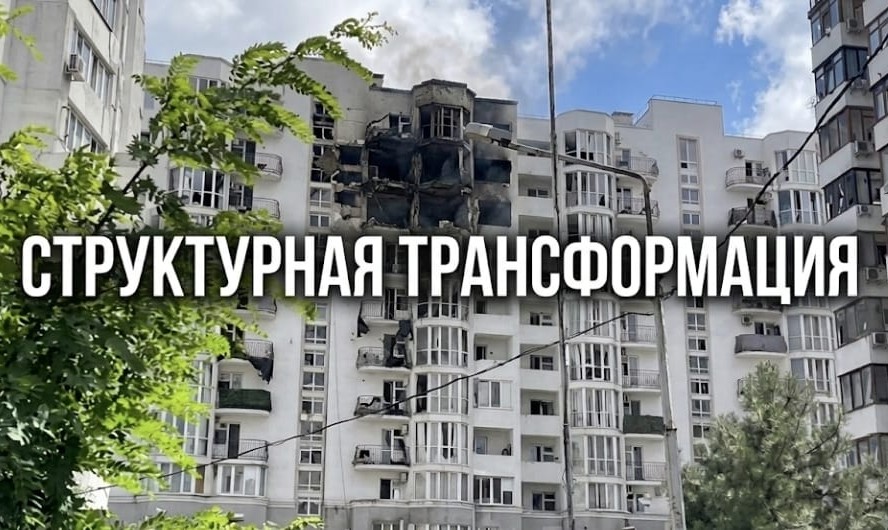
“Pops” instead of explosions, “smoke” instead of fires, “negative growth” instead of a decline. This summer, thanks to the situation in Crimea, Russia’s manipulative “newspeak” has been enriched with euphemisms. “The chaotic price surge has ended. Prices have adjusted from 180,000 to 130,000 per square meter. Crimean housing is becoming more affordable,” is how experts in the propaganda media describe the situation on the real estate market. Even ordinary agents at real estate companies prefer not to speak openly about the market collapse. But behind closed doors, they whisper that the situation is catastrophic.
“I haven’t sold a thing since spring. New buildings are practically being sold at cost — and there are no buyers. Before, the ‘mainlanders’ (Russians—Ed.) would snap up everything while it was still in the foundation phase, so they could rent it out later. Now they’ve all rushed to sell them as resale properties — but to whom? There are no tourists, no electricity, no water. There are two new buildings 10 minutes from the sea, each priced at 10 million — and nobody wants them. The owner wanted to sell them for 14 million in the spring, then dropped the price to 12.5 million, and now it’s 9,999,000 — and no one even comes to view them,” complains Seiran, a realtor from Kezlev (Yevpatoria).
In coastal regions, the peak in real estate prices has long coincided with the resort season. Wealthy tourists used to combine their vacations with investments. This year, neither has worked out. Russian propaganda, in its characteristic “search for the positive,” talks about “market stabilization” and “structural transformation” — claiming that, finally, it will be Crimeans themselves, rather than Muscovites, who will be buying homes in Crimea. Arsen, a businessman from Dzhankoy, responds sarcastically when asked if he’d like to take advantage of the opportunity to buy seaside real estate.
“Seriously, if not now, then when? It’s a great time — I’ll go sunbathe. But seriously, right now I’m counting every liter of fuel for the generators. Every new purchase is a problem. Paying the salespeople’s salaries is a problem. My wife asks for money to get the kids ready for school, and I just don’t have any. Maybe I really should escape all this to a little house by the sea?” the Dzhankoy resident quips.
“We’ve been through it all before, and we’ll go through it all again,” real estate agents try to reassure themselves and their clients. Those who’ve been in the business for a long time remember how prices skyrocketed in 2006–2007 and then plummeted due to the crisis at the end of 2008. They remember how, in the early years of the occupation, Russians snapped up seaside homes “without a second thought,” and how prices crept downward during the COVID-19 pandemic in 2020. How, at the start of the full-scale invasion, the market revived again, as Crimea became one of the few resort destinations where Russians were allowed to enter. Galina Antonivna, a retiree from Yalta, can’t forgive herself for not selling her downtown apartment back then.
“My daughter and her children left Kharkiv for the United Kingdom back in 2022. She’s a marketer; her English was already good before the move, so she found a job quickly, and everything is going well for her. And she’s been trying to convince me to move there ever since. At first, I thought the war would be over soon, but then I realized it’s not ending, and my grandchildren are growing up without me. But I can’t go there as a poor relative and be a burden on my daughter, so I decided to sell my apartment after all. And you know what they say: “Greed is the fool’s downfall.” They were offering me eleven million for my Khrushchev-era apartment, but now I can’t even sell it for eight. And recently, a drone flew into a new building nearby. “I’m standing on the balcony at night, watching it burn, and thinking: ‘Oh my God, if only I could sell it for any amount of money and get out of here as fast as possible,’” says the 69-year-old Crimean woman.