ENG

(Intro by Tom Cooper)
Hello everybody!
For today, ‘something entirely different’: a feature prepared by an US-American frequently underway in Europe. Is likely to appear ‘overly simplistic’ at first, but mind: ‘even’ on the internet, neither the authors, nor you, esteemed readers, have the time to ‘go really in-depth’. Thus, we’re all kind of ‘trying to be concise’.
As about ‘the rest’: I would like to make sure that Benjamin is perfectly aware of the fact that ‘decades-worth’ of US-administrations are bearing lots of blame for the state - of the USA and the ‘World’ in general, thus for that of Europe, too. The problems did not start with Trump: actually, they can be traced back at least to Trumman’s tour of the late 1940s (with ‘a sort of short interruption’ during the Eisenhower era): for decades, the USA were doing their utmost to destroy the European defence sector, just for example, and more than happy that Europe was reliant - because that was both destroying the competition on the international market and secured the US leverage. It could even be argued that the US has been, at times, antithetical to an ‘EU military’. In turn, while the EU as it currently stands has agency, the agency’s equation is: Agency ÷ 27 = Inaction.
If you live in Europe, you should hate yourselves more than you hate Trump. The truth hurts.
Europe keeps hedging its bets with the United States. You complain about American politics, then you structure your survival around American power. That is not independence, just dependence with commentary.
You want parity with the US. You want strategic autonomy. You want to be treated as an equal actor. Then act like one. Start with Russia, because winning that fight forces everything else into place.
War is happening on your continent. On your doorstep. Ukraine is paying the bill for Europe’s comfort, domestic divisions, and Europe’s refusal to treat defense as a real budget item.
Europe’s number one defense export must stop being summits, conferences and meetings.
The 5% goal on defense spending is not to deter Russia. It was only designed to deter the US from abandoning NATO. If you want to deter Russia, you need to spend 10% of GDP on defense for the next 5 years. You need to project force. You need to go on the offensive. 5% is the minimum to keep a distracted US attentive. This doesn’t guarantee deterrence. It doesn’t give you parity with or autonomy from the US. It doesn’t compel anyone to honor an Article 5 commitment.
The current Euro-centric Rules-Based Order worldview: A belief system that assigns the United States primary agency as global enforcer while expecting it to subordinate its own interests, then condemns it when it inevitably does not. It hopes to elevate international law and norms as constraints on great powers despite the absence of enforcement mechanisms, reflecting Europe’s preference for legal restraint over assuming the costs, risks, and responsibilities required to actually uphold that order.
Said another way: Euro-Centrics never take the risks, spend the money, and accept the responsibility necessary to be a great power who can enforce international law and norms. Or, the rules based order.
The EU is a deliberative body. It was built for negotiation, regulation, trade, and managing political friction inside the club. It was never built to defend the club.
Defense requires speed. Defense requires authority. Defense requires decisions that do not depend on a fresh round of consensus at the moment of crisis.
The EU cannot do that. And it seems neither can NATO. It cannot be redesigned into that without becoming something else.
For defense purposes, it is broken. The system invites international conflict because it signals hesitation. Adversaries do not need to guess. They can just download the meeting notes.
NATO, it is now obvious, is the military version of the EU. Without the US at the helm, it’s just another deliberative body. Need proof? There’s a shooting war with NATO’s raison d’être and we are on Ramstein meeting number 34 in February 2026.
There is no security guarantee that functions as an automatic response. Article 5 does not force a fixed military response. It permits choice. It permits delay. It permits politics. Europe built its security assumptions around American willingness to treat Article 5 as a trigger.
That era is over.
So these insights are not a plea for America to return. It is a demand for Europe to grow up.
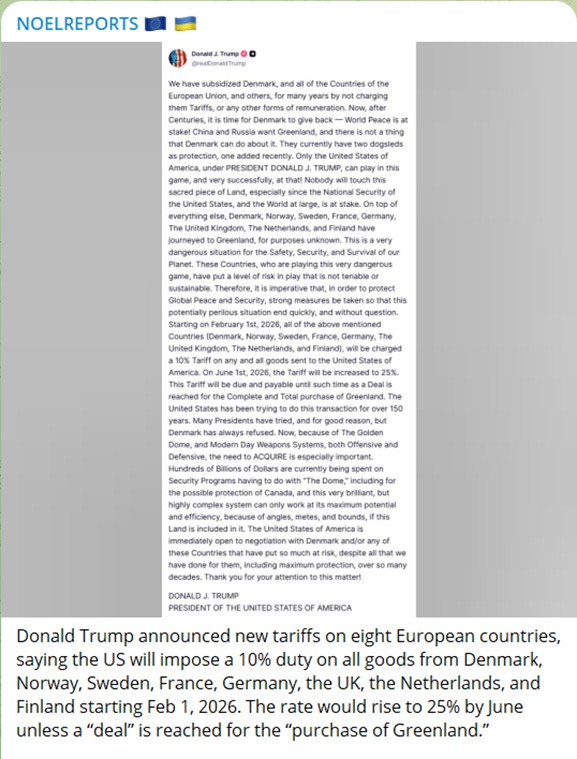
Europe needs a defense trigger. When attacked, including gray zone attacks, responses and costs must activate without another round of meetings.
Europe needs a defense council with authority to tax, spend, and act. It must sit outside normal EU deliberation and it must have standing powers during a crisis.
This cannot be optional.
If you are in the EU, you participate in its defense. States do not get to pick how much solidarity they want at the moment of danger.
This defense council must have:
● A budget fed by dedicated revenue
● A procurement mandate to build stockpiles and expand production at scale
● A crisis authority to execute predefined response packages when thresholds are met
● An operational command structure tied to military planning and execution
Europe needs unity backed by compulsion. Otherwise you get speeches and defense summits. Both of which have NO DETERRENCE VALUE.
Europe has to go on a war footing, or a partial war footing that still hurts.
This means the comfortable life gets smaller. Some people will lose the summer home in Spain. Social spending gets cut. Programs shrink. Some go away.
I’m being a bit flip, but this is the cost of deterrence. You cannot fund everything and defend everything. You choose.
Europe has been choosing comfort while outsourcing defense. That choice has now been made for you. It’s over.
But currently it seems most nations are run by people that would rather hope for a new US president in 3 years than start the work to defend and deter now.
Europeans are not wrong to criticize Trump. The problem is what you do after that criticism.
For many Europeans it has become catharsis. Complaining about the US replaces action. You treat outrage as evidence you care. But what are your actions? What nation has moved to a war footing?
You are not better than Trump because you dislike him. If you refuse to act while a war burns next door, you are in fact worse. Your values do not count if you will not pay for them. Waiting for a new US president is a bad plan. Let that burn inside you. You (the collective you) are worse than Trump.
Some European states do more, like Poland. Some do very little, like Spain. Some actively undermine defense efforts while hiding behind the collective. That has to end.
The EU structure as you know it… The NATO structure as you know it, is dangerous. Deterrence is dead. Ukraine is your current deterrence. Your enemy is otherwise engaged. This will not always be the case.
Everything starts now. Prioritized in this order.
Budgets, production, manpower policy, stockpiles, training pipelines. Start immediately. Any nation bargaining for time can leave the EU and NATO until such time as they are ready to fully participate.
End the war on terms that break Russia’s capacity to repeat it in the next decade. Europe cannot buy safety by managing this war. Europe buys safety by ending it in Russia’s loss. Everyday another Ukrainian soldier dies while the rest of Europe deliberates brings war closer to Western Europe. Give Ukraine everything you have to hit Russia. All of it. Anyone negotiating time or capability can do so from outside the EU and NATO. There has been nearly 12 years of war in Europe. There is nothing else to discuss. Give all of it. This will do more to expose your weakness to yourself than anything else. It will show you how shallow your stockpiles are. How much you must invest in property, plant, and equipment to kick start a war footing and wartime production that has real deterrence value.
Europe cannot replace the US overnight. Europe can, however, almost completely eliminate reliance on US heavy lift and logistics within two years if it treats this as a national survival requirement. You have the companies, the expertise, the engineering talent. What lacks is the urgency and political will. Europe, you do not want a defense force. “Defense forces” always have a “big brother” who they hope will come to their aid. You need an offensive force. An Expeditionary force. Force projection. This requires logistics.
European intelligence must be operationally fused. Shared ISR. Shared targeting. Shared analysis at speed. Less national stovepiping. Fewer political filters. Money spent now on SIGINT, HUMINT, IMINT, GEOINT. You must go on the offensive in these domains as well.
Deep strike is deterrence. Long range fires impose costs where Russia feels them and removes Russia’s ability to fight with sanctuary.
In all of this, partner with Ukraine. Wouldn’t it be nice if Europe had an ally familiar with Russian conflict, technically adept, battle hardened, and a standing army of almost a million soldiers. If only Europe could find such an ally, wouldn’t that be a catalyst for change at the speed of war? And it seems I might be on to something. Just today, 5 days after writing this, this article was published. Politico
So where is NATO in all of this? There. In parallel. All of this only serves to strengthen NATO. But these actions don’t depend on NATO to act immediately and in a sustained way. NATO can gather support. Can deliberate tactics and strategy. But in the meantime, Europe is on the attack. Not on the defense. This also answers greyzone attacks from Russia that are too small for NATO to defend and respond to. This new defense alliance is a much better deterrence than just NATO.
The point
Before I discuss how you get Europe to do this, let’s talk about what happens if you don’t.
When Russia attacks you in 3-10 years you get to be treated the same way you treat Ukraine now. You will be treated by the US the same way it treats Ukraine. Your success and failure will be unsure. You’ll trade your lives for time while your allies debate on if it’s best to help you. Your allies will trade the lives of your children for profits, for power, for their security over yours. They will accuse you of not being grateful because you have not said “thank you” often enough for their slow and lumbering support, all while your loved ones are dug from under collapsed apartment buildings and children’s hospitals.
How do you make this point to European domestic audiences? You admit failure. You come clean. You previously traded European security for European prosperity. Now the bill is due. Everyone will be affected. No one can hide from paying for their share. Those that can pay more will be required to pay more. To get this done, a handful of states must be willing to secede from the Union. In order to form, dare I say it, a more perfect union. The Baltics/Poland pairing with the Nords would be formidable. Add the UK as a non-voting supporter and you have enough power to force other nations to join you. You must blockade trade deals and anything else. You must bully other states to join you. The inertia of the status quo is VERY strong. I’ve written before, expanding the JEF might be an option. States like France will hate this idea. It will take power and influence from them. But in the long run it will make them safer.
This is another research topic, but it bears mentioning. Europe needs an eastern ally with the bomb. A Nordic or Polish nuclear weapon is KEY to defending Europe from Russia. And China.
Europe’s security problem is not Trump. Trump is the wake up call, the stress test. The system fails because Europe built a life that depends on someone else’s willingness to save it.
I’ll say it again…
The current Euro-centric Rules-Based Order worldview: A belief system that assigns the United States primary agency as global enforcer while expecting it to subordinate its own interests, then condemns it when it inevitably does not. It hopes to elevate international law and norms as constraints on great powers despite the absence of enforcement mechanisms, reflecting Europe’s preference for legal restraint over assuming the costs, risks, and responsibilities required to actually uphold that order.
Said another way: Euro-Centrics never take the risks, spend the money, and accept the responsibility necessary to be a great power who can enforce international law and norms. Or, the rules based order.
Deliberation must STOP being Europe’s number one defense export.
Benjamin Cook continues to travel to, often lives in, and works in Ukraine, a connection spanning more than 15 years. He holds an MA in International Security and Conflict Studies from Dublin City University and has consulted with journalists and intelligence professionals on AI in drones, U.S. military technology, and open-source intelligence (OSINT) related to the war in Ukraine. He is co-founder of the nonprofit UAO, working in southern Ukraine. You can find Mr. Cook between Odesa, Ukraine; Charleston, South Carolina; and Tucson, Arizona.
Do you need to get in front of people who influence how defense and security decisions are made?
I publish for a readership that includes:
● Media covering defense, security, and geopolitics
● Intelligence professionals and analysts
● Defense manufacturers and advanced technology companies
● Western defense and security institutions
They are high-information readers who follow developments in AI, uncrewed systems, military technology, and international security because it directly affects their work.
If that audience matters to you, details are here:
👉 https://www.passionfroot.me/benjamin-cook
This text is published with the permission of the author. First published here.