ENG

Candidates and new leaders of Iran, photo AP
Following the death of Supreme Leader Ali Khamenei, Iran is undergoing a transitional period as it elects a new leader. The most likely candidate is the late leader's son, Mojtaba Khamenei, although Tehran has not yet officially confirmed or denied this information. However, his election would indicate that Iran has decided to take a radical path of confrontation with the US and Israel to the end.
Oral Toga, an expert at the Turkish Center for Iranian Studies (IRAM), believes that the council of experts may take a far-sighted step and nominate someone from the reformist camp for the country's highest office. According to Al Jazeera, this could be former Iranian President Hassan Rouhani, the architect of the 2013 nuclear agreement between Iran and the US.
Rouhani makes no secret of his leadership ambitions, but since 2019, the reformists' influence on Iranian politics has been minimal. The Islamic Revolutionary Guard Corps (IRGC) has restricted the activities of moderate forces in Iran, increasing tensions with the Western world. The recent arrests in the reformist camp were evidence that Tehran is tightening the screws after the latest popular protests in the country, during which between 7,000 and 30,000 Iranian civilians were killed. However, the question now is the preservation of the country.
The election of anyone other than Khamenei's son would signal Iran's willingness to negotiate with the United States and stop the elimination of the Islamic Republic.
Hassan Khomeini, the grandson of the founder of the Islamic Republic, could become the wild card in the elections. A religious scholar, he has been actively involved in politics since 2008, but instead of taking a radical religious path, he has moved closer to the reformists. A descendant of Ruhollah Khomeini, he was even barred by the IRGC from participating in the 2016 Council of Experts elections.
Kurdish deck
A few days before the start of the US-Israeli operation against Iran, five Kurdish organizations in the country united in a joint coordination center. We are talking specifically about armed groups. The alliance includes the Party for a Free Life in Kurdistan (PJAK), the Kurdistan Democratic Party of Iran (KDP-İ), the Kurdistan Freedom Party (PAK), the Kurdistan Workers' Community (Komala), and the Iranian Kurdistan Struggle Organization (Sazman-ı Xebat). PJAK is recognized as a terrorist organization in Turkey and is considered the Iranian branch of the Kurdistan Workers' Party (PKK). The alliance, formed on February 22, declared that the Iranian regime had lost its legitimacy and must be eliminated, and that the Kurds must be granted the right to self-determination.
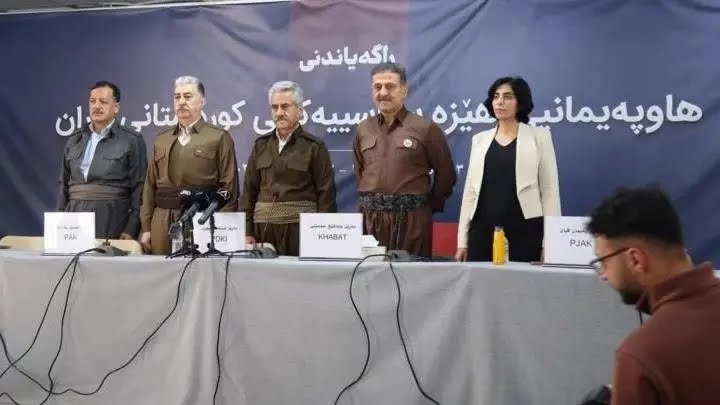
Jerusalem and Washington made no secret of their desire to use the Kurds against Tehran, and the missile strikes on areas of Iran bordering Iraq were clear evidence that the US-Israeli alliance was paving the way for the transfer of Kurdish armed groups from northern Iraq.
But the Iraqi Kurds stood in the way.
Nechirvan Barzani, president of the Kurdish autonomous region in northern Iraq, refused Trump's request to join the anti-Iran coalition. Trump put it bluntly: “Either you are with the Iranians or with us.”
Erbil (the capital of Iraqi Kurdistan) has to take several factors into account when making decisions. The first is Turkey. It is the only way out for Iraqi Kurds to the west. Oil from northern Iraq reaches international markets via Turkey, and most goods supplied to Iraqi Kurdistan come from there. Ankara is sensitive to any attempts by the Kurds to participate in the overthrow of central governments or to undermine the integrity of states.
In addition, Erbil remembers how the US did not dare to recognize the independence of Iraqi Kurdistan after the 2017 referendum. Since then, the idea of creating the first independent Kurdish state has been buried. Despite the deep contradictions between the Syrian Kurdish socialists and Iraqi Kurdistan, Erbil also saw how the US betrayed the Syrian Kurds and effectively contributed to the elimination of Rojava (the federation of Kurdish cantons in Syria) by the new regime in Damascus with the support of Turkey, although no one doubts that it was the Syrian Kurds, at the cost of thousands of lives, who were the main force that defeated the terrorist entity ISIS.
A surprise from Tehran
For almost a week, observers noted one fact: Iran struck virtually all countries that are not involved in this war but are allies of Washington. Moreover, the targets were often not military facilities, but Turkey and Azerbaijan were the only two countries that Iran had not touched until now, even though Ankara is a member of NATO and there are at least three American military bases on Turkish territory: Incirlik, Malatya, and Izmir. Azerbaijan is Israel's closest partner in the region. However, this immunity was violated today: debris from Iranian drones hit the Nakhchivan airport in Azerbaijan, and a ballistic missile was shot down in Turkish airspace, with debris falling in the Turkish province of Hatay.
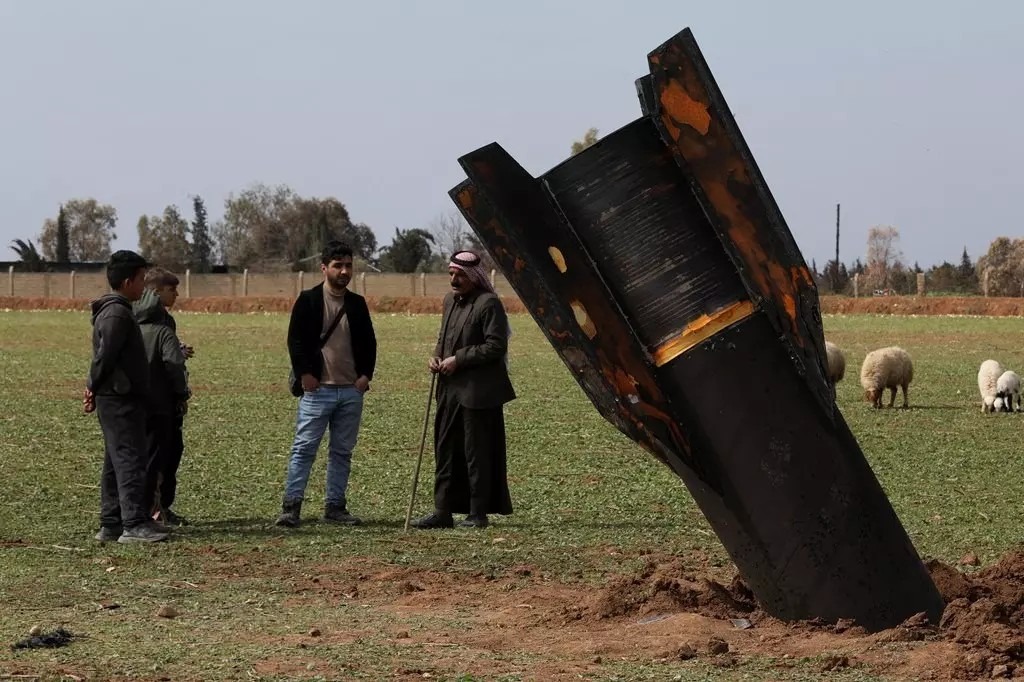
Ankara and Baku are currently responding differently to the incidents. President Aliyev is furious, the Azerbaijani army has been put on alert, and the country's Foreign Ministry says that the Iranian attack “will not go unanswered.” However, in the case of Turkey, Tehran was the first to admit its mistake and declared that it had no intention of harming the “brotherly Turkish people.” And here, there is a political and psychological factor that has its roots in history. For several centuries, the Ottomans and Persians were bitter enemies who fought continuously. But today, the border between them is considered the most stable in the world, as it has not changed since 1639. For almost 400 years, Iran and Turkey have not questioned each other's sovereignty, regardless of the regime in each country. This state of affairs can only be changed by a very unpleasant surprise.


.jpeg)
.jpeg)
.jpg)