ENG

Chinese hegemony and Russia’s recklessness are forcing Central Asian countries to seek new allies.
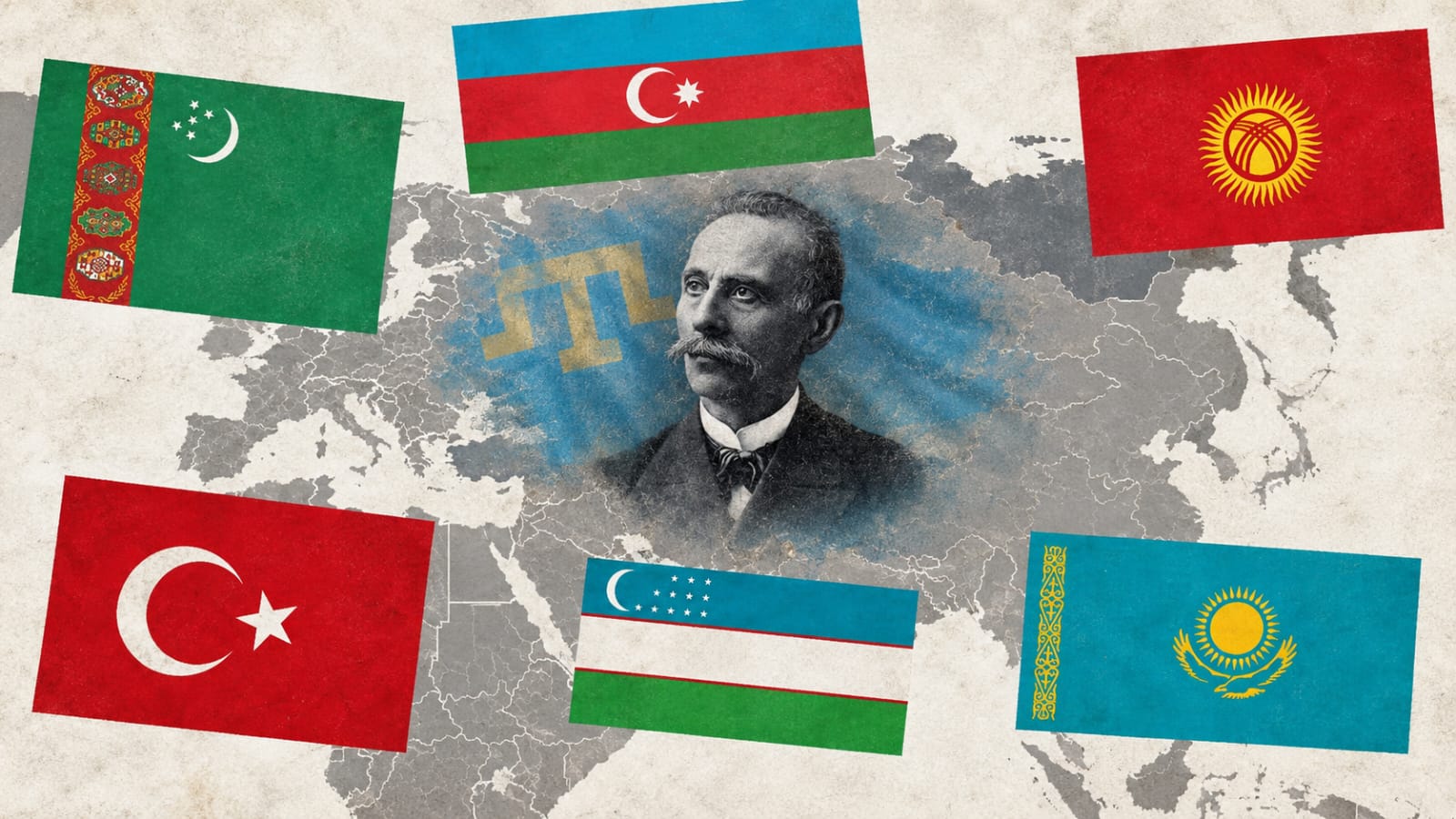
Recently, Tashkent, Bishkek, and Astana have revived the idea of Turkey’s eighth president, Turgut Özal, who, immediately after the collapse of the Soviet Union, wanted to create a Turkic Union. However, Özal died unexpectedly in 1993; at that time, Turkey was in the throes of economic and political crises, and the Turkic-speaking countries quickly turned into one-man dictatorships under Moscow’s control.
Erdogan’s rise to power in Turkey revived the country’s movement toward the EU, but the European illusion quickly came to an end. After the 2016 coup attempt, the Turkish president definitively made nationalism a part of domestic policy, while abroad he began forging alliances in which Turkey could assume a leading role. Azerbaijan’s victory in the 40-day war of 2020 and the return of Karabakh strengthened the alliance between Ankara and Baku — and Turkic unity gained new momentum.
Political slogans have resurfaced — but cooperation has not progressed beyond them. The actual areas in which Turkic peoples could unite — the economy, defense, and coordination on international issues — have not moved forward at all. Beijing and Moscow have done their utmost to ensure this. China, which exercises economic control over Central Asia, views the Turkish revival and expansion in Turkestan with suspicion. Meanwhile, Kyrgyzstan and Kazakhstan’s membership in the Customs Union with Russia and the CSTO defense alliance complicates their relations both with NATO member Turkey and with Azerbaijan, which is, in fact, no longer a friend of Moscow.
The countries cannot even agree on humanitarian issues. Last year, the creation of a common alphabet for all Turkic languages was announced. To this end, Turkey agreed to modify its own alphabet — which had remained unchanged since the time of Atatürk — and to add letters important to Kazakhs and Azerbaijanis. The partners acknowledged this gesture only in words. In reality, Uzbekistan and Kazakhstan, which have officially switched to the Latin alphabet, have not actually abandoned the Cyrillic alphabet. And Kyrgyzstan does not even dare to make a formal transition, so as not to irritate Russia. After all, everyone remembers Moscow’s hysterical reaction when Moldova reinstated the Latin alphabet in the 1990s and subsequently acknowledged that its language was, in fact, Romanian.
The situation is even worse when it comes to protecting Turkic-speaking minorities who face oppression in authoritarian countries. This applies first and foremost to the Uyghurs, whose lives China has turned into a concentration camp, as well as to the Turkic-speaking peoples of the Russian Federation. As early as the late 1990s, Moscow banned Tatars, Bashkirs, and other Turkic-speaking communities from switching to the Latin alphabet in order to prevent these peoples from drawing closer to Turkey and Azerbaijan through information exchange. Subsequently, they were stripped of what little autonomy they had left, and even the mandatory study of national languages in schools was abolished. After the occupation of Crimea, these bans were extended to the Crimean Tatars as well.
The leader of the Turkic alliance — Ankara — also finds itself in a state of uncertainty. Of all the oppressed peoples in the world, Turkish society takes notice only of Gaza. Show business stars are collecting humanitarian aid for the Palestinians; the president’s son, Bilal Erdoğan, organizes rallies of hundreds of thousands for the Palestinians; and it is only regarding the Palestinians that the government and the opposition argue over who will better protect them from the dreaded Israel. The concentration camps for millions of Uyghurs in China are not on Ankara’s international policy agenda, nor is the linguistic assimilation of two dozen Turkic-speaking peoples in Russia.
For now, the Turkic world resembles a soccer federation. The professional league includes nations that have their own states: Turkey, Azerbaijan, Kazakhstan, Uzbekistan, Kyrgyzstan, and Turkmenistan (formally, Ashgabat has not yet joined the club, but the door remains open for it). Northern Cyprus enjoys a status nearly equal to theirs, though its sovereignty is not recognized by anyone in the world except Ankara. Under pressure from the EU, the other Turkic countries have officially established diplomatic relations with Southern (Greek) Cyprus.
In the second tier are Turkic-speaking communities with recognized autonomous status within other states. Tatarstan and Bashkortostan have always been the leaders of this group. The Xinjiang Uyghur Autonomous Region and the Karakalpaks in Uzbekistan have the same status. This tier is currently under the greatest pressure. China and Russia are deliberately cutting them off from the Turkic world. By assimilating the oppressed Turkic peoples, Beijing and Moscow are ensuring that no threat to their dominance in Eurasia arises — and in doing so, they are halving the population of the Turkic world.
The only exception is Gagauzia in Moldova, but even here Moscow is currently winning the race against Ankara, as its influence over the Gagauz has proven to be unprecedentedly high. Turkey funds all projects aimed at reviving the Gagauz language and supports Moldova’s territorial integrity, but 90% of Gagauz people look to Moscow for political guidance and choose to speak Russian.
The rear ranks of the Turkic world are occupied by communities that lack even formal state characteristics but are recognized as minorities in their respective countries, as they are able to elect their representatives to parliament. These are primarily European Turks in Bulgaria, Kosovo, and Bosnia; Crimean Tatars in Romania; and Turkmen in Syria and Iraq.
And somewhere on the sidelines of the Turkic world are those communities that have “neither a flag nor a homeland.” This is precisely where the Crimean Tatars find themselves: they are simultaneously deprived of any form of autonomy, subjected to assimilation in the country that controls their territory, living under occupation — and thus deprived of the opportunity to cooperate with the free world — and have the highest number of people subjected to repression.
The “Big Six” Turkic nations turn a blind eye to the threats of de-Turkification facing other peoples for several reasons. The two main ones are security and money. All Turkic-speaking countries, except Azerbaijan, depend either on Chinese money or on Russian energy resources. The countries of Central Asia can only speculate as to which of the two giants will be the first to swallow them up, and they are trying to maintain a balance.
Here, objections will likely arise that the Turkic countries are trying to survive and avoid exposing themselves to additional danger. This argument makes sense. In recent history, the young Turkish Republic chose this course of action. To preserve the independence of what remained of the Ottoman Empire, Atatürk cooperated with Lenin and Stalin, turning a blind eye to the crushing of Azerbaijan and the Crimean Tatar movement in Crimea. And the Turkic world could very well delegate to the authorities of its own countries the task of conducting political dialogue and economic cooperation with the two dictatorships, if its countries had what has recently been so irritating to everyone — liberal democracy. It is precisely this that would enable numerous human rights movements, opposition parties, and independent observers to raise issues regarding the oppression of Turkic peoples in Russia and China.
However, it is precisely the establishment of a rigid hierarchical structure in Turkic countries that prevents a more flexible form of politics from existing, and thus turns even this “Big Six” into a colossus with feet of clay. The January 2022 events in Kazakhstan showed that even the most stable country in this club can instantly find itself under threat of occupation by its “allies.”
Therefore, it is highly likely that the “Turkic gallery” of stateless peoples — including the Crimean Tatars — will remain outside the purview of the Turkic club for a long time to come, a club whose ideology was shaped in Bakhchisaray by Ismail Gasprinsky in the 19th century.