ENG

(Intro by Tom Cooper)
Hello everybody!
It’s Monday, which means it’s time for Don’s Weekly. And it’s a day after the ‘weekend’.
Actually, it’s already since some 20 years I can’t care less about weekends. They mean nothing to me: not only because I’m working on Saturdays and Sundays, but because I’m in a position where I need not paying attention about calendars and weekends are thus ‘simply days like any others’. If there’s any kind of difference then because it’s usually ‘quieter’ on Saturdays and Sundays: I’m receiving less e-mails, less calls etc.
In turn, weekends are days when friends and contacts have more time, and we frequently end up ‘chatting’ - sometimes ‘for hours’. Very often, such chats are resulting in… shall I say ‘unusual’… or ‘surprising’ conclusions.
One that emerged from few chats of the last few weekends is… ‘sigh & oh dear’… this is now going to be sound so cynical, can’t say…. but, meanwhile, I’m feeling an urge to ‘express it in the public’.
Let me start with the start: my ‘inner circle’ - people working with me for decades - and me are used to monitor, research, analyse, cross-check and write foremost and especially about ‘little known’, ‘obscure’ military services and wars. Affairs about which ‘nobody cares’, or everybody gave up trying: for which the mass of people ‘even’ in my own ‘branch’ is first wondering how comes there are ‘sources’ and ‘contacts’, not to talk about way of obtaining serious information. For example: Syrian Arab Air Force, its operational history, especially during different wars with Israel… or the Islamic Republic of Iran Air Force and the Iraqi Air Force and their operations during the Iran-Iraq War in the 1980s… or the People’s Democratic Republic of Yemen Air Force (‘South Yemen’) and its wars with ‘North’ Yemen… or, say, Air Force of Zimbabwe during the Second Congo War (fought 1998-2003); Angolan Air Force and Air Defence Force at wars of 1975-1992 and then again 1994-2003… Ugandan, Rwandan, Algerian and/or Moroccan air forces, ZIPRA, ZANLA, SWAPO… or the Royal Nepalese Air Force… or, to mention one of most obscure topics I’ve ever got in touch with: coups and wars in Suriname (now think about finding/positioning that country on a map of the world in your mind - without help from the internet, and you’re going to know what I mean).
…it’s topics about which researching is a tedious, complex, problematic, even a process outright dangerous for one’s personal safety, often lasting decades, and where finding info necessary to really understand them is like extracting snake’s sweat. Alone finding enough authoritative info to figure out the backgrounds and context is usually… not a ‘fight’, but an outright ‘battle’.
In comparison to this, ‘Ukraine’ and/or ‘Russia’ appears so ‘easy’, can’t say.
For most of the ‘basics’ one needs no first-hand contacts, for example: there are literal shiploads of publications available. One is almost oversaturated with all the info flying around. Establishing necessary contacts to get ‘first hand info’, is ‘easy’, too. Actually, the biggest problem is working oneself through all of the information collected and finding out what’s really informative - which is a matter of ‘separating wheat from the chaff’. Of experience.
What am I talking about, and why?
Understanding the Russian way of thinking about wars and military services? Easy. There are fantastic books, ‘murdering’ this topic, tenfold. Understanding the way Pudding thinks? Easy, too. Understanding the Russian chain of command: no problem, is a well-researched topic and there are plentiful of first-hand-contacts ready to discuss it… Therefore, drawing conclusions about core purposes and aims of Pudding’s invasion of Ukraine is ‘easy’. As easy as finding out how is the VKS operating over Ukraine and why.
That with ‘understanding Kyiv’ - the way the government and top brass of the armed services ‘work’ - was a notch more ‘difficult’. Actually, it became a matter of necessity in order to understand - and explain - why so many things on the battlefields of this war since early 2023 are ‘going south’. Definitely not comparable with the time and effort spent finding out who was the gent that first-flew what became known as the ‘Cobra’ manoeuvre, put on display since various airshows of the early 1990s (‘but’: on a MiG-21F-13, back in 1965-1966, ‘or so’).
A notch more complex is finding out who exactly is in charge of specific operations and what units - on the Russian side. For Ukraine, this is next-to-always ‘crystal clear’. Even more so because - thanks to Zele & Syrsky - the ZSU lacks both strategy and serious operational-level of thinking: it has a (grotesquely misguided) strategic-level of decision-making, and then the tactical-level of thinking and considerations, with (absolutely) nothing in between. Or if, then it’s two corps-commanders and a few sergeants doing that part (mostly in wain, because nobody listens to them). ‘Believe’ it or not, but as far as I can say: the nascent People’s Army Air Force (of the PR China) in the 1950s was more advanced and more innovative in this regards, than the modern-day Ukrainian armed forces.
The only thing seriously ‘hard’ to follow are latest developments in regards of technology and tactics in regards of unmanned systems. Or who and where is doing what in this regards. However, once one gets the basic clues (usually: from first-hand sources), even that is doable: ‘an update once a month’ is perfectly enough to remain ‘current’…
With other words: yes, I’m starting to suffer from something like ‘a massive mission creep’ when it comes to this war. Call me high-nosed, arrogant, an asshole and everything else coming to your mind, but to me: the only thing still making it interesting is to wonder why so many appear to still have such massive problems with following- and understanding it. Oh, sorry. It’s slightly more. Two, or even three things. The second is countering the completely nonsensical volumes of PRBS about it. The third is helping Ukrainians caught in the middle of this brawl with no outlooks to get out. Which is what, to me, is making this war so similar to the one in Syria and/or the ‘Arab-Israeli conflict’. Which, in turn, and sadly, is what’s making the task of explaining this war - the endemic idiotism and incompetence, corruption, and most primitive forms of chauvinism, (quasi-)religious fanaticism, and greed driving and making it, and that again and again - so tiresome, can’t say. Precisely because, actually, things are so damn clear, I’m lacking words.
Over to Don.
The number and intensity of Russian attacks was lower last week. In many places there were no reported advances.
Sumy
Ukraine drops a bomb in Yunakivka. A Russian Lancet strike on a gas station in Sumy damaged six cars. 20 km from the front, a Russian Zhitel EW system is destroyed.
Vovchansk
10 km from the front, a Russian ambush drone rises when a car appears. An elderly couple and a small dog run out of the car, one falls over and doesn’t get up. The drone hovers until it spots a police car down the road and it attacks that vehicle.
14 km from the front, a Russian Borisoglebsk-2 was destroyed. That was the 15th known example of this system confirmed as destroyed in this war.
Kupiansk
While the Ukrainians have, finally, destroyed two groups of Russian troops holding out in the centre of the town since November, Russia keeps trying to move troops into Kupiansk where they still control several buildings.
An assault in the city from over a month ago.
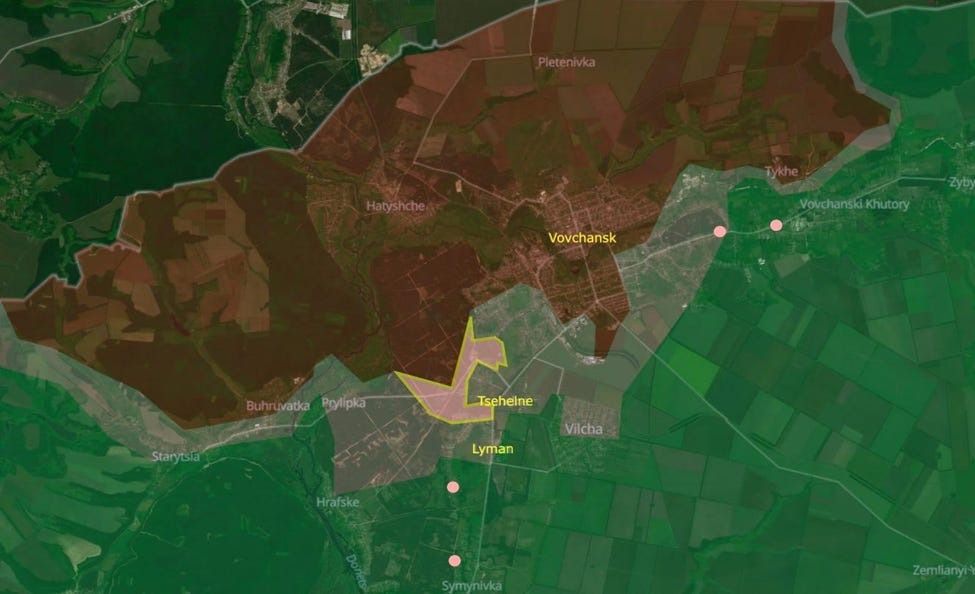
Lyman
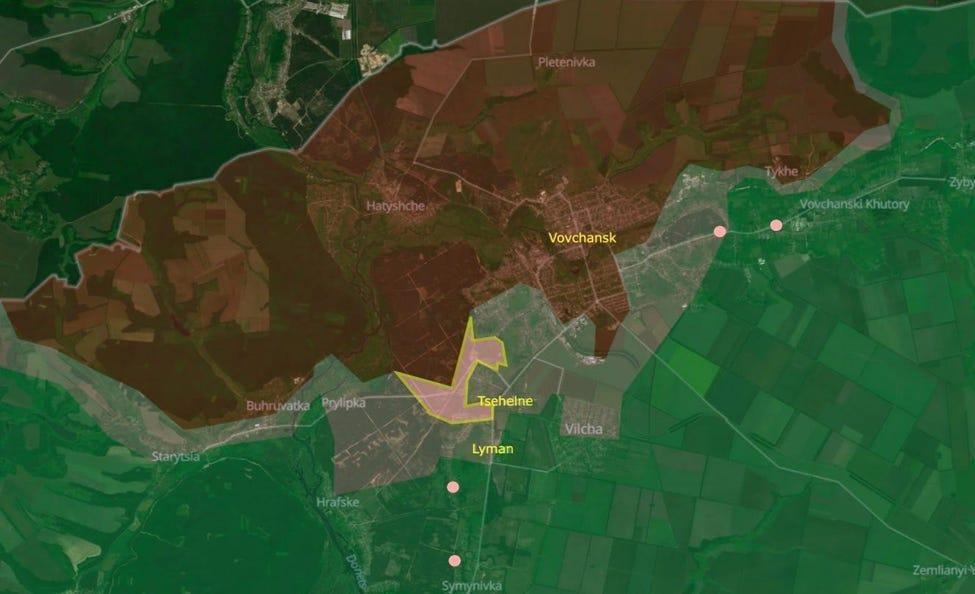
The 63rd Brigade took three prisoners outside Lyman. That happened because the Russian forces are are advancing on this town, once again.
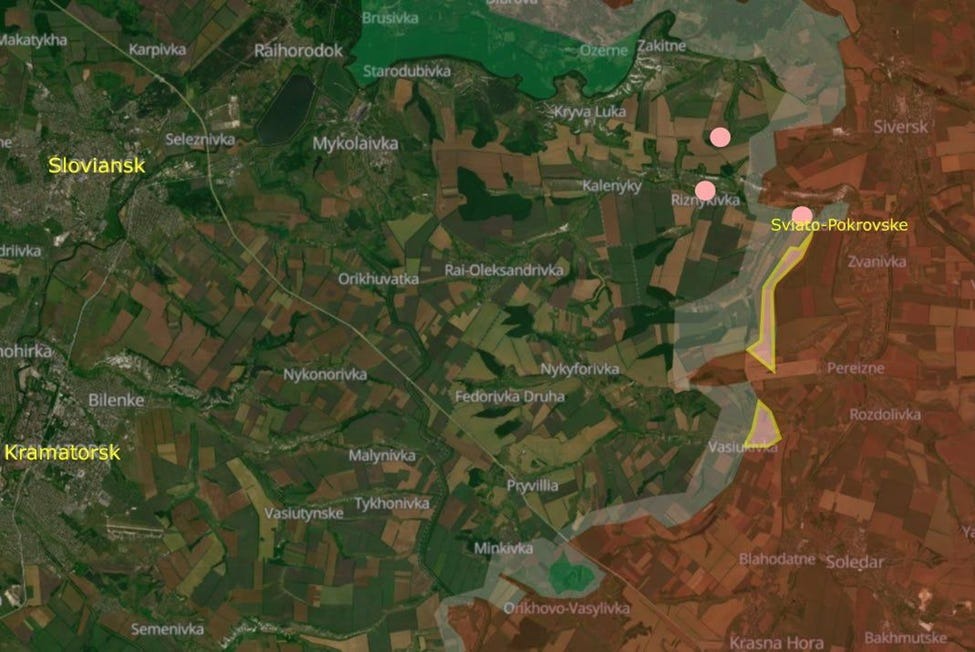
Sloviansk
Russians throw explosives into the basement of a house in Sviato-Pokrovske. Russia is 15 km from Kramatorsk and 25 km from Sloviansk.
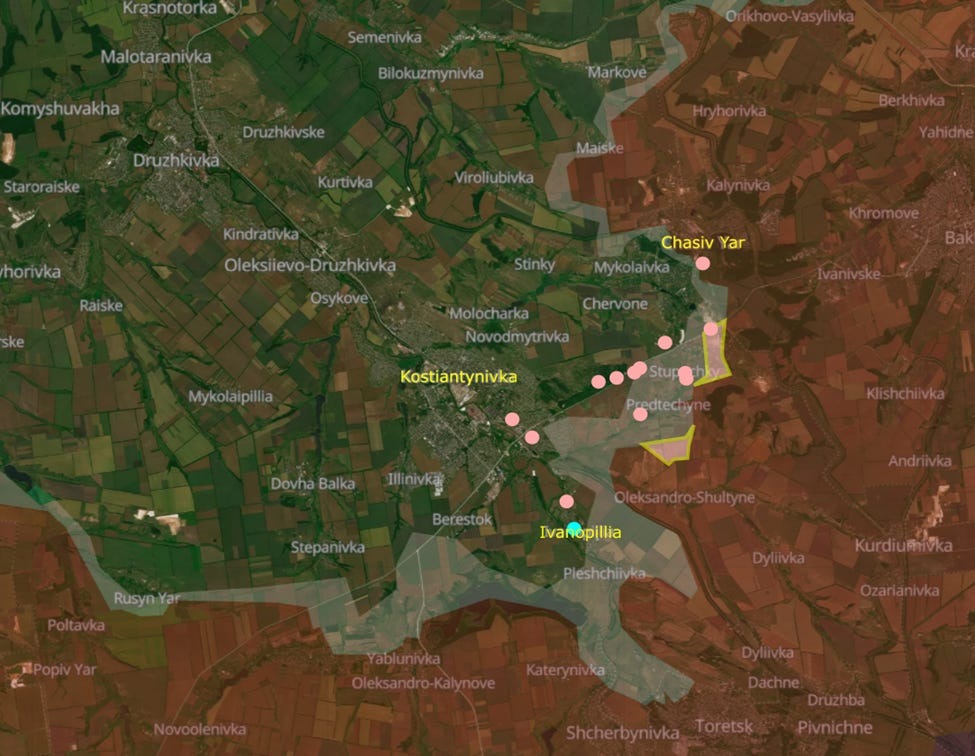
Kostiantynivka
While the Russians continue roaming and infiltrating around the flanks of the town, a Ukrainian in Ivanopillia is attacked by a drone at night. A Russian is attacked on his way to Kostiantynivka from the northeast.
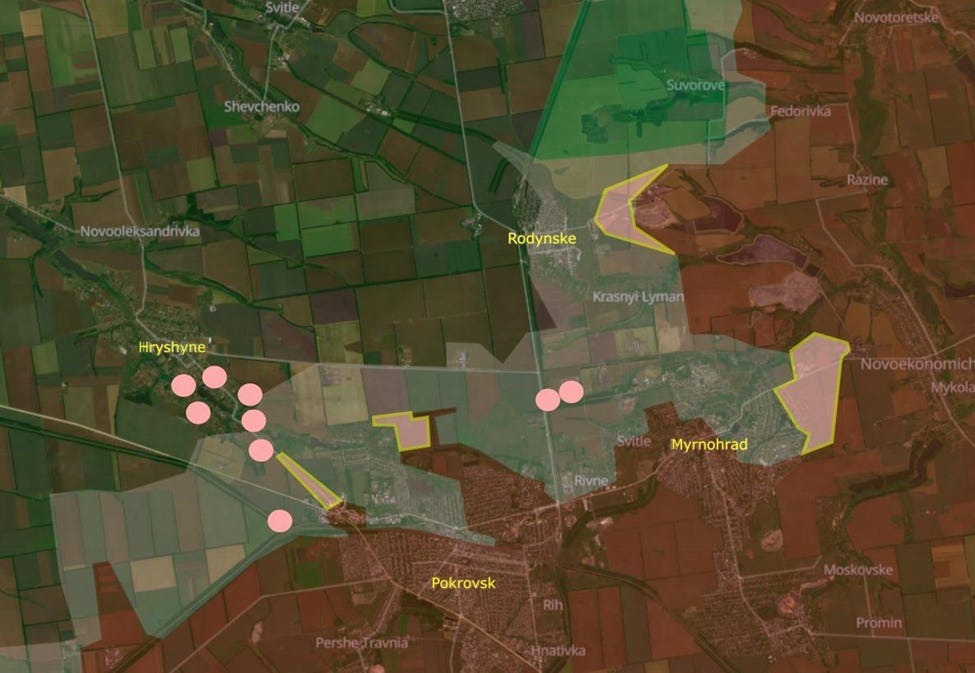
Pokrovsk
Skala counterattacked the Russians in western Pokrovsk and Hryshyne. The 155th Brigade hunts Russians near Hryshyne.
Novopavlivka
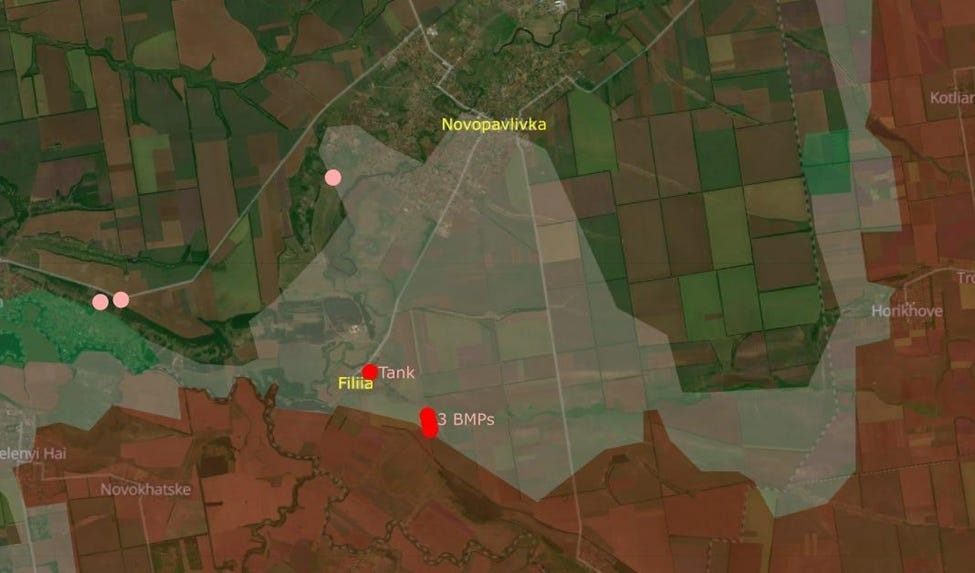
On an overcast day, a Russian tank and 3 BMPs were eliminated east of Filiia, and then the infantry that dismounted was attacked. Russians in southern Novopavlivka were hit.
Russian infantry appear to be eliminated when they move towards Novopavlivka, but they are being engaged over wider and deeper territory as the weeks go by.
Huliaipole
A Ukrainian T-72 is detected and destroyed 12 km from the front. The 110th Brigade destroys a truck carrying Russian infantry.
The 413th detected and destroyed the first Artikul-S electronic station reported. This Russian system is capable of detecting Ukrainian communication and control networks over a wide range of frequencies.
Zaporizhzhia
Special Forces cleared Russians from buildings in Stepnohirsk a month ago.
Occupied Territories
This two minute video shows attacks by Alpha Special Operations during 2025 on 4 S-400 radars, 2 S-300 radars, an S-350 radar, 3 Buks, 2 Pantsirs, 3 Tors, an S-350 launcher, 2 S-400 launchers, a Gamma-D radar, a ZU-23-2 AA cannon, 3 Nebo-M radars, an ST-68 radar, 5 Nebo-U radars, a P-18 radar, a Niobium-SV radar, a Nebo-SVU radar, and a Protivnik-GE radar.
A substation in Melitopol was knocked out. The Starobeshevskaya power plant in Novyi Svit was hit. A depot in Debaltseve was destroyed. The control tower at Dzhankoi airfield was attacked.
Ukraine’s Special Operations Forces (SOF) was created in 2016, and with them, the organized resistance movement in occupied territories began. Civilians are trained to use small arms and explosives, and they also use non-violent methods to disrupt enemy operations and intimidate both the Russians and their collaborators. Some civilians were trained before the full-scale invasion and remained behind to carry out their missions. Other civilians were trained and sent into the occupied territories when it was still possible to move across front lines. The SOF does not work with minors or people that are ill, and those selected must pass a vetting process, including extensive interviews..
Unknown Location
It makes sense to hide from a drone in a building, unless the building contained barrels of fuel.
This text is published with the permission of the author. First published here.



.jpeg)