ENG

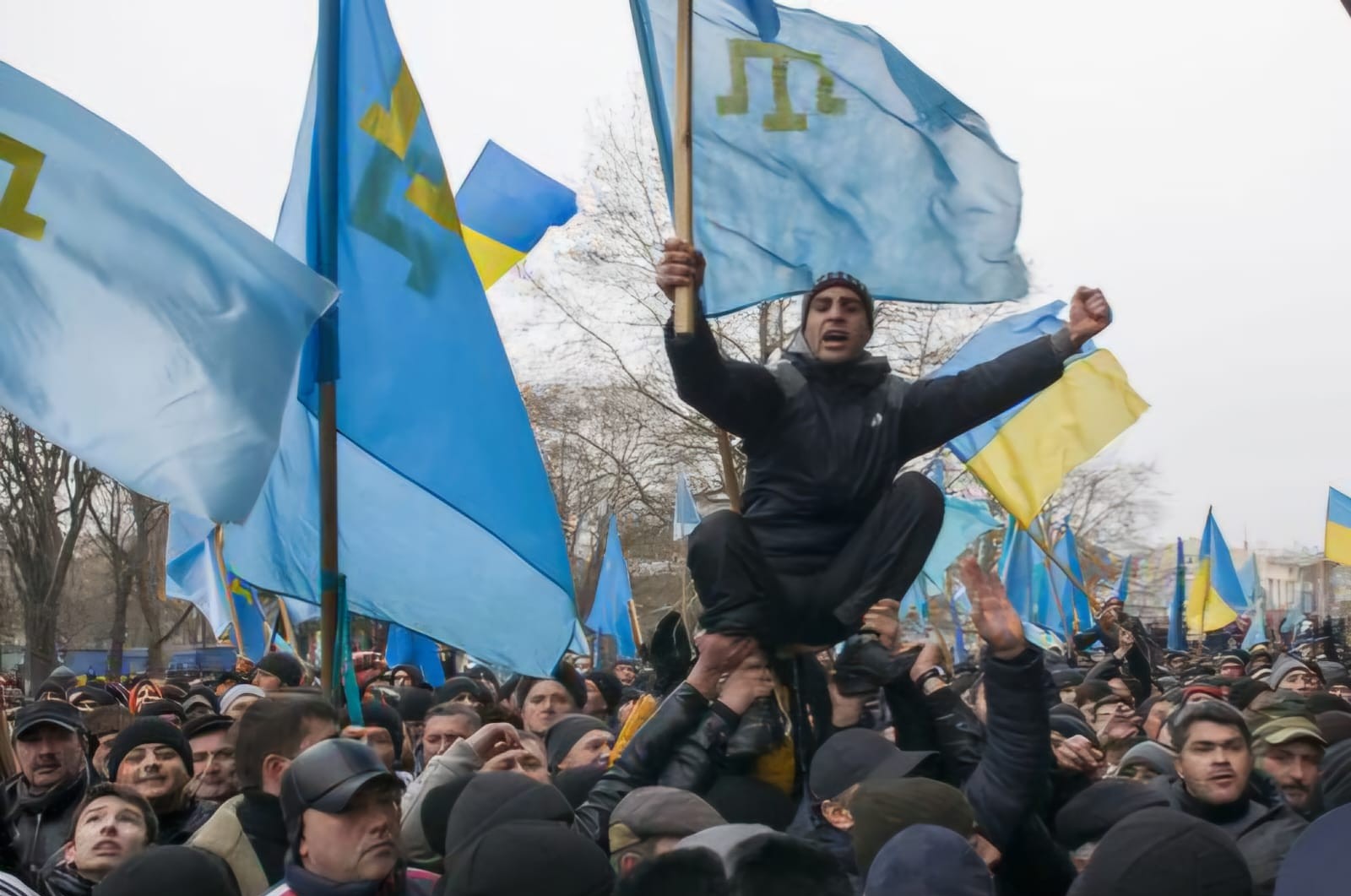
It has been twelve years since Russia occupied Crimea. On the anniversary, February 20, as usual, many mournful, indignant, and mostly insincere words will be spoken. Because, let's be honest, the world increasingly perceives the annexation as a fait accompli. The US president has made a particularly noticeable contribution to the normalization of the occupation over the past year. Donald Trump openly talks about his willingness to recognize Crimea as Russian, and his henchman Witkoff eats chebureks from the hands of Russians. European leaders are competing in their willingness to “talk to Putin,” and the Ukrainian government is close to shifting the responsibility for recognizing the occupation onto the entire population. Talk of a referendum greatly exacerbates the feeling of hopelessness. Back in 2014, a false opinion formed in Ukrainian society: that Crimea was so pro-Russian that its population actually became complicit in the annexation. Once a year, they try to refute this “comforting” lie by reminding people of February 26. On that day 12 years ago, the Mejlis and pro-Ukrainian forces on the peninsula called people to a rally outside the Crimean parliament. Ten times more participants came to this gathering than to the pro-Russian rallies, even though the latter were attended by agents who were everywhere on the peninsula, the entire Black Sea Fleet, and even “Cossacks” brought in from Kuban. Ukraine won the information battle, but lost the power struggle: on the night of February 27, Russian troops seized the parliament and government buildings. Ukraine left the peninsula. The Crimean Tatars remained. “This is our homeland, we will not have another,” — now, under shelling, in darkness and cold, this opinion is understood by many of those Ukrainians who did not share it at the time.
However, the existence of independent media in the occupied territory became impossible, and the key ones were forced to leave the peninsula. In particular, the ATR and Lâle TV channels - both broadcast in the Crimean Tatar language. The owners and most of the employees (with a few exceptions) did not tarnish themselves by cooperating with the occupiers. But along with the broadcasters, the language is leaving Crimea. The statistics are grim: in 12 years of occupation, the number of Crimean Tatar speakers on the peninsula has decreased by a quarter. The catastrophe is happening so quickly also because, as a result of half a century of life in deportation, Crimeans have almost no natural islands of living language. The only effective way to save it is to create quality content for children and young people: original films, cartoons, and series in Crimean Tatar or adaptations of popular international hits. News, articles, or translations do not work — they do not attract the younger generation.
In free Ukraine, there is no systematic production of such content. Certain steps taken by Public Broadcasting in 2019 could have been a breakthrough if not for the full-scale invasion. Other smaller projects and initiatives that appeared between 2014 and 2022 also died. The state does not have the resources in wartime. And in 2025, USAID, the main donor to many Crimean Tatar media projects, was liquidated. Non-systemic support from British and Turkish foundations does not solve the problem. Moreover, Turkey's policy on the Crimean Tatar language is similar to Russia's policy on the Ukrainian language: it is considered a “dialect” of its own. Therefore, no money is allocated for the production of Crimean Tatar content.
The Russians, on the other hand, traditionally spare no expense when it comes to television. They have many years of experience in this area and, as everyone has already seen, are very successful. In 2016, the occupiers created the state-run Crimean Tatar channel “Millet” on the ruins of ATR. Its first management, headed by Seiran Mambetov, embezzled the budget and left for the United States. Then the management changed three more times, but the channel never took off. Now, “attempt number 5” is in the works: the Russians have appointed Susanna Khalilova as director and are actively trying to lure well-known specialists — the doyen of Crimean Tatar journalism, Shevket Memetov, the editor-in-chief of Radio Meydan Najie Femi, and showman and editor-in-chief of ATR's morning block, Ridvan Khalilov. According to my information, at least two of them have declined the offer, while the decision of the third is still unknown. And it is precisely the refusal of the majority of Crimean Tatar media professionals to cooperate with the occupiers that is the main reason for Millet's failure.
Twelve years later, Crimeans are still managing to resist the alliance with the colonizers. This resistance, however, is not eternal. The global normalization of the occupation significantly undermines it. If Trump recognizes Crimea as Russian, Ukrainians will “give it away” in a referendum, and European leaders will continue their “dialogue” with Putin, even those who have been silently resisting all this time will begin to have doubts. Questions are already being asked in Crimea: if the world, with Kyiv's silent consent, recognizes Crimea as Russian, why should Crimean Tatars remain “main Ukrainians”? However, whether Crimean Tatars will be able to remain Crimean Tatars is no less pressing a question. Without preserving the language, assimilation is inevitable. To prevent this from happening, understanding and awareness of the problem, independent funding, and a focus on children's and entertainment content are needed. And all this is needed “yesterday” — because time is working for the enemy.