ENG

(Intro by Tom Cooper)
Hello everybody!
Here we are: the next Don’s Weekly is here, after all.
Now, from my point of view, can add very little to what I’ve expressed in an interview for the Ukrainian TV, few days ago:
- which promptly earned me the prestigious Medal of Russian Propagandist with Gold Star - from many of (quasi) viewers: from Hero-Zele-fans with preferences for PRBS and illusions. I promise to wear the same with pride.
Meanwhile, the essence of my message remains the same as expressed in that interview: Russia is fighting this war all out. With all the means at its disposal (short of nuclear weapons, though including the ‘occassional’ deployment of ‘light chemical weapons’).
By the virtue of its own government, Ukraine is fighting this war with one hand tied to its back. No amount of sweet-talking, no ignorance and brigading around the mainstream- and the social media can cover-up all the mismanagement, strategic errors, blunders and incompetence by the Zelensky government and its military ‘leadership’.
Even more so because Ukraine’s other hand is tied to its back, too - by systemtic incompetence of its ‘allies’ in ‘the West’.
Sure, one can now discuss how there is lots of corruption in central- and eastern European countries that have meanwhile joined NATO and the EU, and how this issue is unlikely to be properly solved even in two generations. However, the cold fact is that the countries in question are not (yet) facing a Russian invasion and a war of extermination. On the contrary: Ukraine simply has no time for that. It must sort out the corruption at it top right away.
This is why I’m insistent on critique of the Zelensky government: this must stop ignoring- or being involved in corruption, it must stop covering up its corruption, and it must start serious reforms right away, right now.
Or it must quit.
Even more so considering the next corruption affair involving Zelensky is de-facto pre-programmed. Because his government is corrupt. Should there be any doubts, check this: Ukraine’s shell and explosives production collapse in 2023-2024.
Therefore, dear Ukrainians - and Hero-Zele-fans around the social media, in particular: get real. Pronto. Or go down - but don’t expect anybody to support you while you’re going down.
…and, if you think I’m the only one thinking this way, well, here you are: in Don’s own words.
***
My View
Ukraine only has two choices: Live under Russian rule or fight. 63% are willing to fight as long as it takes to expel Russia. Three quarters aren’t willing to cede any land or reduce Ukraine’s military capabilities by treaty. It is a rational choice.
In order to win, Ukraine needs to survive as a state. There’s every indication that they can do so. The frustration I feel is that there are very basic military practices that are not being utilized that lead to unnecessary losses in equipment, territory and lives. The reason I constantly report on these deficiencies week after week is because they haven’t changed, they are degrading Ukraine’s military capabilities, and lives are still being lost without an acceptable reason.
It amazes me that there isn’t a larger public protest over these issues like there was over the attempt to restrict anti-corruption agencies. I am not Ukrainian and recognize there are many things I do not understand, and I certainly have no say in the matter. But right now, it’s a race between degrading Russia’s capability to conduct war and Ukraine’s ability to survive. Ukraine should be working to maximize force multipliers. It should not be voluntarily reducing their own military capabilities. If Ukraine’s ability to fight is reduced at a faster rate than Russia’s ability to fight, then the risk of losing the Ukrainian state increases.
The time to make these changes was three years ago, at least.
***
Biletsky’s View
There are others that feel this way and have been speaking about it for quite a long time. The commander of the 3rd Corps is just one of those voices. Nothing he says is new.
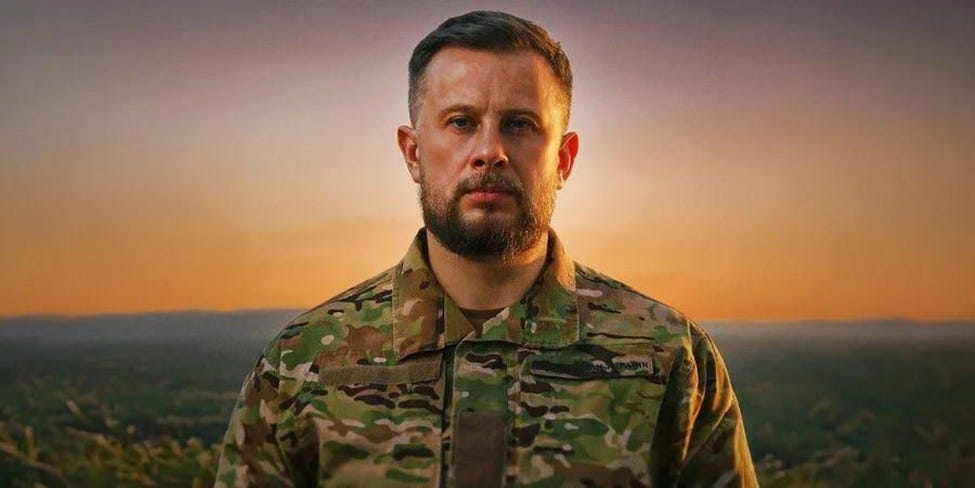
Andriy Biletsky once again calls for a coherent strategy, a common goal that every unit can work towards. While it is true that the offense has the initiative and the defense has to react, Ukraine’s senior leadership is often reacting very slowly. There have been plenty of opportunities to disrupt attacks and seize the initiative. Effective brigades have conducted such operations at a local level, yet this is rarely done at the higher levels. Kursk had the potential for being a useful operation on a larger level but the only objective was to take as much land as possible with little planning or coordination on how to do that. As executed, the objective was unsustainable. The units involved had to coordinate amongst themselves and, inevitably, the entire force was left in a bad situation too long.
Instead of focusing on strategy, which can only come from the General Staff, the General Staff micromanages the deployment of subordinate units, down to the squad level on at least one occasion. Syrsky needs to stop micromanaging, establish a strategic objective, and provide the resources for the corps to do their jobs.
Beletsky calls for high-quality training of troops, three years after the open invasion. Individual troops need to learn about how to function and survive on the current battlefield. Take the time to keep them alive.
An army is more effective if everyone understands the objective and uses their initiative to achieve it. This applies not just for officers, but for enlisted, as well. For that, you need a strong non-commissioned officer corps. Biletsky says that without it, the old men die faster than they can pass on their experience, and inexperienced reinforcements cannot hold their positions under pressure.
Beletsky then says that most of today’s generals were colonels and lieutenant colonels in 2014 and never participated in front line fighting. They don’t understand what soldiers can and cannot do. Some of them are competent but they all lack practical experience. He would like to purge the paper generals and promote those that have combat experience and functional knowledge. He says the his most effective commanders are captains and majors that are performing the tasks of colonels and generals and says barriers to their promotion must be removed.
In his own words: “2026 should be the year of sobriety — because there is no other choice in Ukraine.”
***
What Competence and Accountability Looks Like
Back in September, the repair battalion of the 125th Territorial Defense Brigade announced their intentions to desert when their commanders planned to send them untrained to assault units as replacements. After a public backlash, the order was canceled.
In October, there were reports of the battalions of the brigade being split up and subordinated to different brigades in Zaporizhzhia. There was little command and control in the sector. Units retreated without notifying other units to their left and right. No help came to evacuate the wounded. Fallback positions that were promised didn’t exist. In one battalion of 350 soldiers, three were confirmed dead and 46 were reported missing in action. When relatives asked for the status of their loved ones and an explanation of events, the leadership of the 125th said they didn’t know and referred the relatives to the brigades that had command of the different battalions. Those brigades didn’t provide any answers.
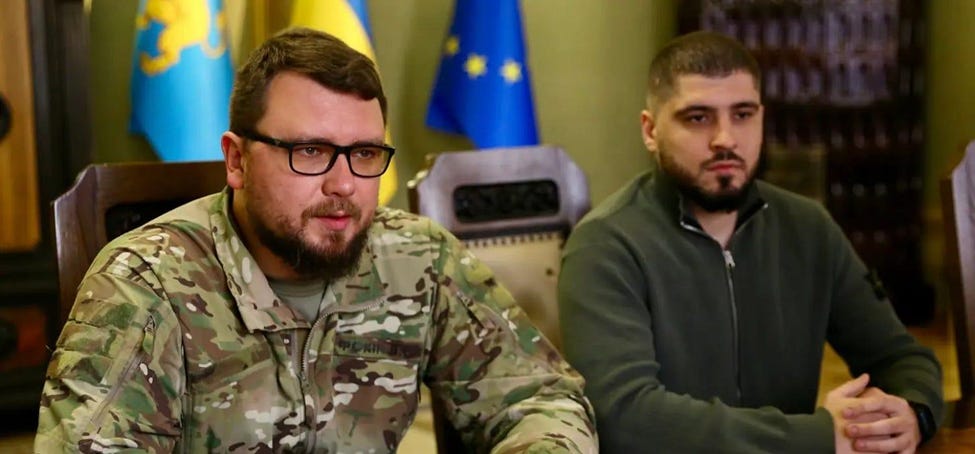
The 125th Territorial Defense Brigade was later converted to the 125th Heavy Mechanized Brigade and assigned to the 3rd Corps. Its original commander was relieved and replaced by Volodymyr Fokin. Fokin started his career as a machine gunner in 2015 in the Azov Regiment and rose through the ranks to become a battalion commander. He is one of the people Beletsky was talking about performing the role as a colonel while only being a major.
One of the first things Major Fokin did was organize an officer’s meeting where he explained his expectations and gave them a month to demonstrate their abilities. Some officers showed a high level of training and responsibility. Others did not meet the standards. Fokin sent them to Kupiansk where they performed patrols under supervision so they could learn the jobs of the soldiers they were supposed to be leading. Presumably, those that learn will be sent back to lead their units while those that do not make progress will no longer be an officer in that unit.
He also published a video detailing the steps he took, and he also provided a telephone number for families to contact the unit and he organized two online meetings with families to answer their questions, listen to their needs and inform them of their plans. This might seem like a small detail at first, but it’s not just a humanitarian gesture of decency, it builds trust between the unit and the families. This translates to trust between the leaders and the soldiers, which increases morale and motivation and reduces the chances of desertion. The last commander’s refusal to determine the status of his troops and convey that to the families played a role in his dismissal.
As part of its transformation from a territorial defense brigade to a heavy mechanized brigade, Fokin oversaw the addition of an aerial drone battalion, a ground drone platoon, an EW company, a tank battalion, a repair and restoration battalion, a medical unit and a self-propelled artillery battalion. Based on the experiences of the 3rd Brigade, the headquarters was reorganized, the rifle battalion was disbanded as that type of unit was deemed ineffective two years ago, and the 125th now has their own recruiting center.
This is the first brigade to undergo a transformation since being assigned to the 3rd Corps and there are plans to do the same for other brigades.
If the leader in charge of an organization is competent, then eventually all the leaders underneath him will be competent. This would also be true for the commander-in-chief.
This text is published with the permission of the author. First published here.