ENG

Elvira Kemal is a researcher of Crimean Tatar history who lives in Germany. We are publishing her new article for the Turkish publication Yenidevir.
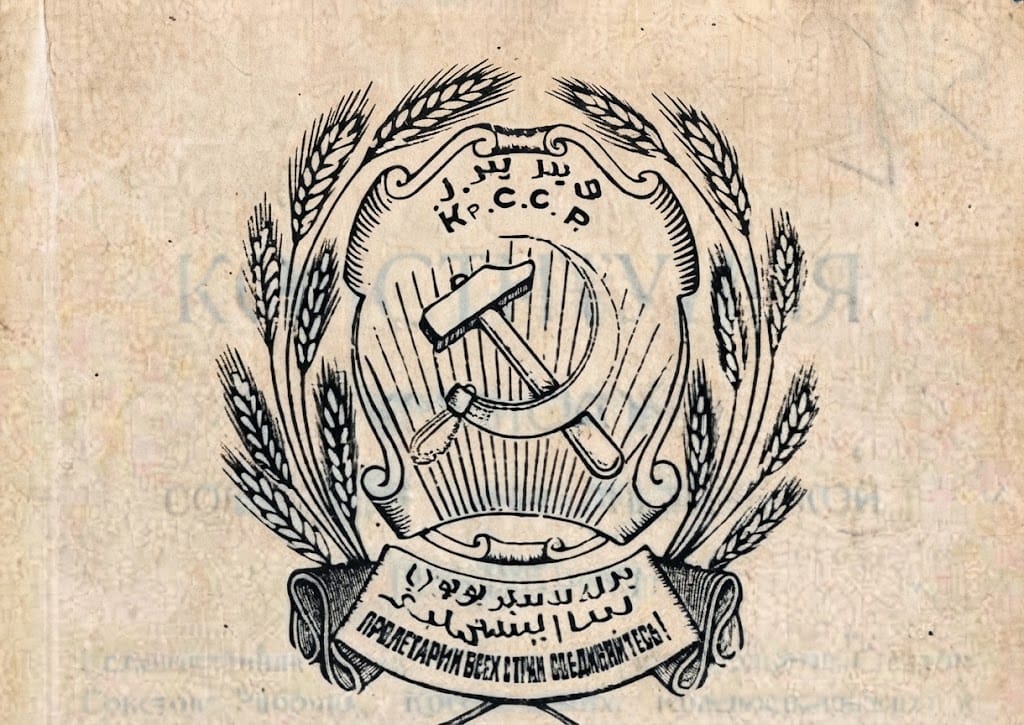
By February 1922, it was no longer possible to conceal the famine in Crimea — the death toll was in the thousands. The Bolsheviks, who had taken Crimea by force, ordered delegations to be sent to various countries and regions to request aid. In particular, to Turkey — which at that time was itself waging a grueling war for independence.
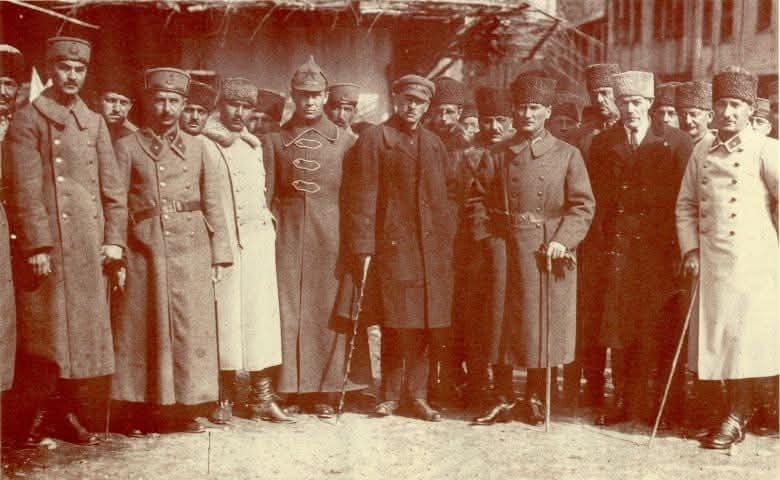
In March 1922, the government of the Crimean Autonomous Soviet Socialist Republic decided to send a delegation to Turkey. It was to be led by the experienced politician Asan Sabri Ayvazov — one of the key figures in the Crimean Tatar revolutionary movement. He was fluent in Russian and Turkish and had experience serving as an ambassador under a previous Crimean government, back in imperial Turkey. This pillar of the Crimean Tatar revolution, a comrade-in-arms of Noman Chelebidzhihan, had to come to terms with the new authorities and take up a position in Soviet Crimea. Along with Ayvazov, Mamut Nedim — a prominent figure in Crimean Tatar journalism and a follower of Ismail Gasprinsky’s ideas — was sent to Turkey.
Even before Ayvazov’s public report on the famine in Crimea, the “Tatar Charitable Society,” established by the Crimean Tatar diaspora in Turkey, began collecting aid for the starving in collaboration with the Turkish Red Crescent. In April 1922, according to Ayvazov’s own records, high-ranking Turkish government officials and journalists gathered at a theater in Ankara, where he delivered a report to them. The speech made such an impression that the decision to establish a Central Committee to aid those starving in Crimea was made on the spot. A fundraising campaign was launched in all the vilayets and districts of Turkey — and, as historian Hakan Qırımli writes, it was not only Crimean Tatars who helped, but also Turks who had no Crimean roots. For people whose very lives in those years were a struggle for the survival of the young Turkish state, it was unthinkable that on the other side of the Black Sea, their brothers in blood and faith were dying of starvation. Therefore, they gave their last shirt to help Crimea.
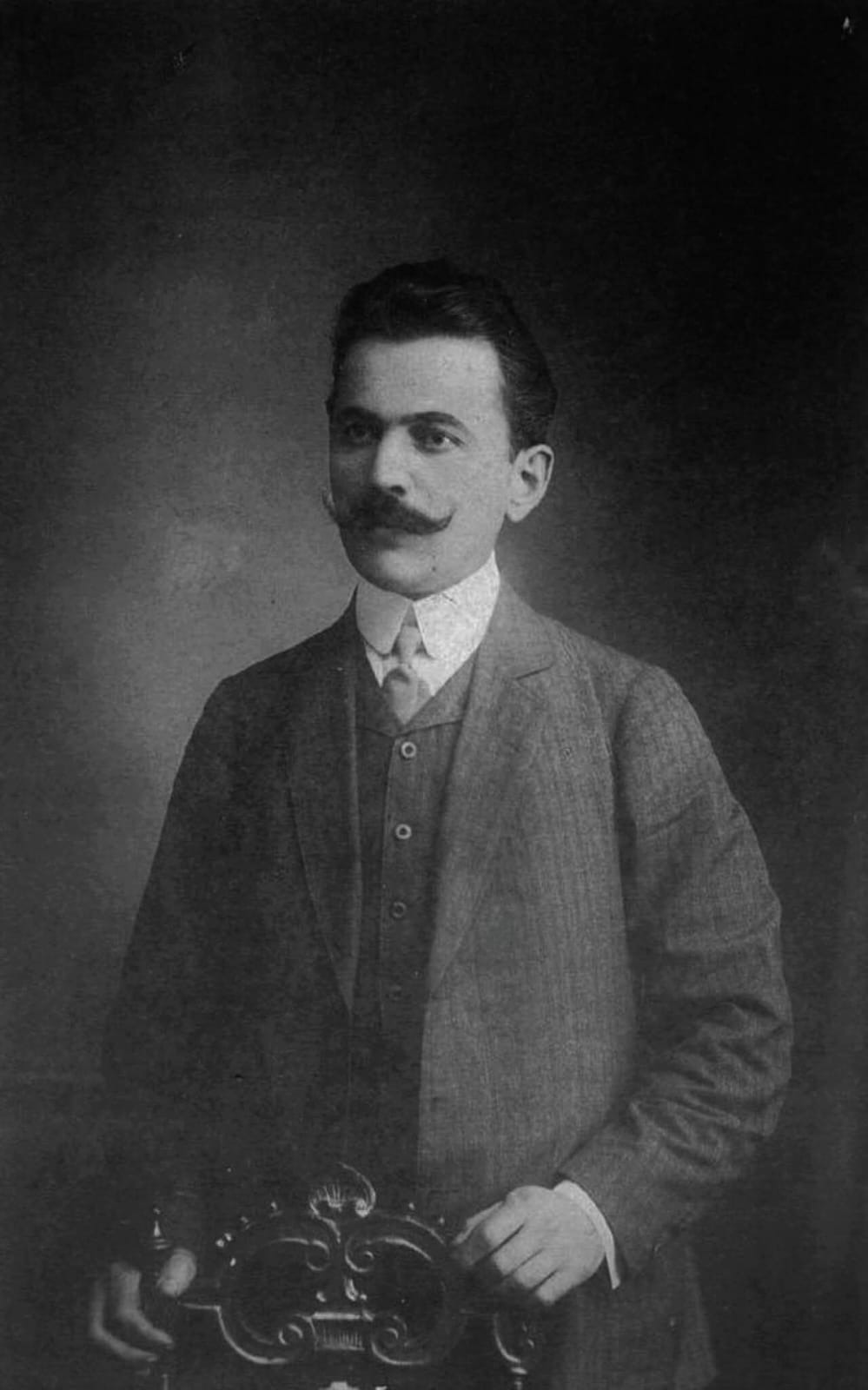
Asan Sabri Ayvazov
A Personal Tragedy in the Shadow of High Politics
No less interesting events were unfolding behind the scenes during those very days, hidden from the eyes of party “colleagues.” Here, one man’s personal story intersects with a national tragedy. Upon learning from the newspapers of Ayvazov’s arrival, Jafer Seydamet — another leader of the 1917 revolution and Ayvazov’s colleague in the Kurultai government —arrives in Ankara. He checked into the same “Tash-Khan” hotel. After Chelebidzhihan’s death, he continued to fight against the Bolsheviks in Crimea for some time and only in the fall of 1918 went into exile to continue the struggle for Crimea from beyond its borders.
The meeting between the old comrades turned out to be tense: Seydamet tried to convince Ayvazov that the Soviet authorities would use him and then kill him, and urged him to leave for Europe together. Ayvazov refused — unaware of what the consequences would be…
While Mustafa Kemal welcomed Ayvazov warmly — they met on more than one occasion and discussed politics, among other things — Seydamet himself was denied a meeting with Mustafa Kemal. Their differing political stances determined their different fates: Seydamet, rejected by Ankara, would soon find another way to help Crimea — through Rome, rather than through Turkey.
After completing his mission and working as a translator for the Soviet diplomat Aralov, Ayvazov returned to Crimea at the end of 1922. According to OGPU documents — on a submarine. Greek and British ships patrolled the Black Sea, and communications between Turkey and Soviet Russia were kept secret, with diplomatic mail, gold, and key personnel transported precisely this way — underwater. This infrastructure was managed by none other than Aralov — the founder and first head of Soviet military intelligence. In the fall of 1922, he himself reported on Ayvazov and secured his recall to Crimea, suspecting him of ties to the counterrevolutionary underground.
In Crimea, Ayvazov was immediately placed under surveillance, and in 1930, he was recruited by the OGPU, which forced him to inform on his comrades. Unable to withstand the pressure from the Soviet secret services, he secretly passed a letter to Seydamet — written in a chemical pencil on a piece of cloth and hidden under the lid of a compact mirror — asking for help. But Jafer Seydamet was unable to rescue his friend from the trap. In 1938, Ayvazov was executed.
From Words to Action: Flour Reaches the Crimea
While both envoys remained in Turkey, the first humanitarian convoy carrying flour arrived in the Crimea as early as the end of May 1922 — it was distributed not only among the Crimean Tatars but also among the other peoples of the peninsula. The supplies were not simply unloaded at the port: the Turkish emissaries personally escorted them onward through the war-ravaged Crimea — from Ak’yar (Sevastopol) to Bakhchisaray and Aqmescit (Simferopol), where they met with local representatives. They took a genuine interest in the situation of the Crimean Tatars, spoke with the local population, and took notes on what else the people needed.
A telling detail: the Crimean Tatars themselves, among other things, asked for books in Turkish to be sent — there were almost none left on the peninsula. In the fall of that same year, before the Eid al-Adha holiday, a second, even larger shipment arrived — thousands of sacks of flour and other foodstuffs — and these were again distributed to specific districts rather than handed out all at once.
Aid from Other Countries
It wasn’t just the Turks who helped Crimea. The American Relief Administration (ARA) played the largest role — although the first ship carrying grain that arrived in Crimea was not destined for the peninsula’s needs but was transiting to the Volga region — while cases of scavenging and cannibalism were already being reported in Crimea itself.
The second-largest aid shipment came… from the Pope — apparently thanks to the efforts of Seydamet, who spent the entire year of 1922 writing appeals to everyone he could reach. He secured a personal meeting with Pius XI and told him about the horrors unfolding in Crimea. As Hakan Qırımli writes, the Pope, deeply moved by what he heard, ordered his Secretary of State, Cardinal Pietro Gasparri, to organize the delivery of aid to the starving in Crimea — and soon it did indeed arrive.
The mission from the Pope fed 2,000 children and 26,000 adults every day. In addition, Crimea received assistance from the International Committee for Workers’ Aid (Mezhrabpomgol), the “Verelf” Society, the Jewish “Joint” (which collaborated with the ARA and provided aid primarily in areas with concentrated Jewish populations), the Fritjof Nansen Mission, German Mennonites, the Dutch Red Cross, American Quakers, as well as Crimean Tatar and Muslim charitable societies abroad.
The Price of Silence
Foreign humanitarian aid significantly alleviated the plight of those starving — after all, at various times, the Soviet authorities were able to feed only 200,000 to 300,000 people, while the rest were left to fend for themselves. Some received aid thanks to the efforts of concerned activists who sought it from a wide variety of sources. Those who had the necessary documents and money were able to leave — though even that was far from easy. In essence, the residents of Crimea found themselves cut off from the rest of the world.
Over the course of those two years, 15% of Crimea’s population perished. The areas with the highest death tolls were those predominantly inhabited by Crimean Tatars: Qarasubazar, Staryi Krym, Feodosia, and Sudak. Perhaps if the Soviet authorities had not concealed the scale of the famine, more people could have been saved. But endless wars and changes in government always hit the most vulnerable hardest — children, the sick, and the elderly.