ENG

Elvira Kemal is a researcher of Crimean Tatar history living in Germany. We are publishing her new article for the Turkish publication Yenidevir.
In Crimean Tatar folklore, there is a song called “Port Arthur.” It emerged during the Russo-Japanese War of 1904–1905 and is dedicated to the fiercest battles that took place near Port Arthur. The Crimeans were drawn into this war on another continent, and they did not compose any heroic marches about it. Their song is about young men who had to leave their families and risk their lives in places many had never even heard of. This was neither the first nor the last war in which the fate of the Crimean Tatars was decided far from Crimea.
“Keçtı baar, keldı kuz
Ağlamaqtan şıştı koz
Port Arturğa ketemız
Sız sağlıqnen qalınız”
“Spring has passed, autumn has come,
Our eyes are swollen from tears.
We’re leaving for Port Arthur,
Farewell, stay well.”
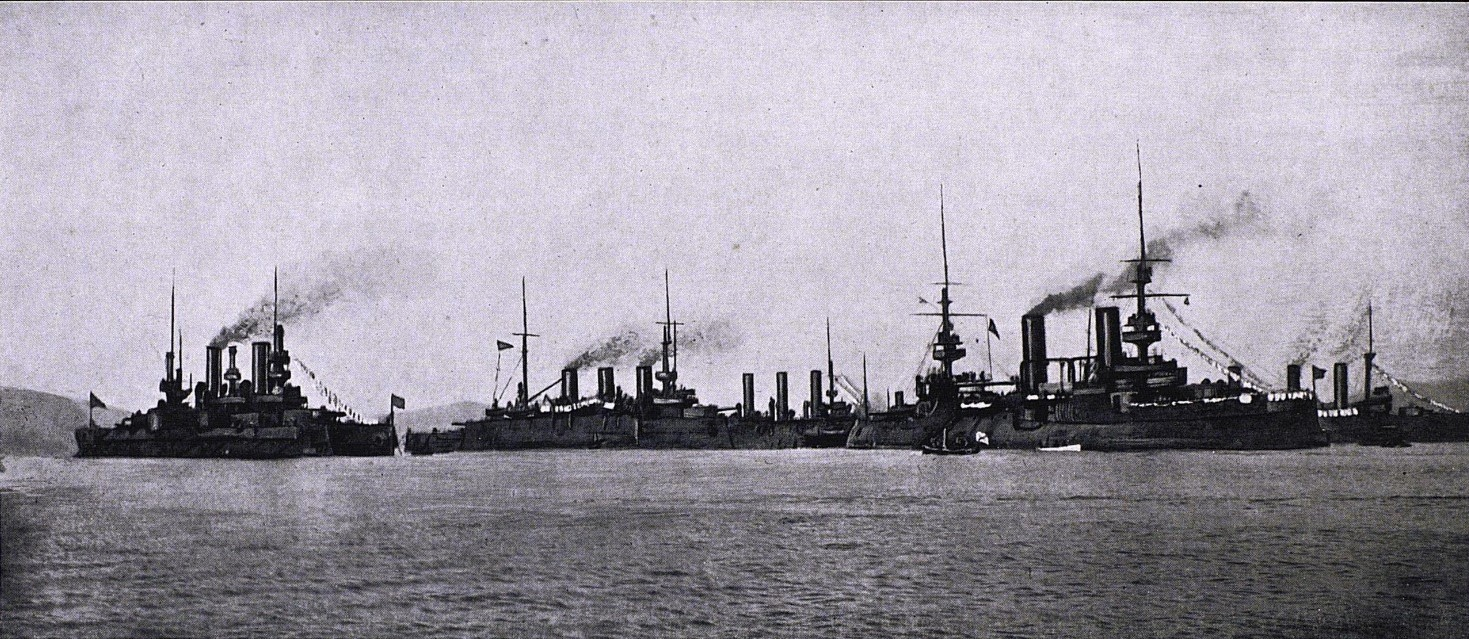
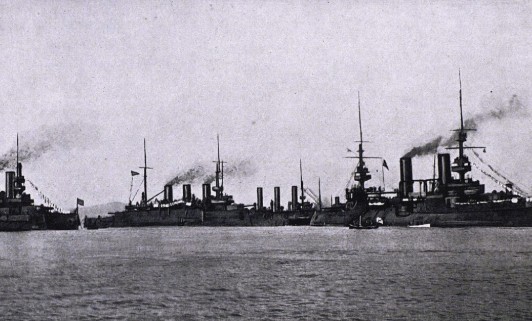
The Russian squadron in Port Arthur. From the album of M. F. Shulz
But in Crimea itself, wartime propaganda was in full swing at that time. In the newspaper “Terciman”, the Japanese were portrayed as “hardened pagans,” and mobilization was presented as a duty. The newspaper was published under imperial censorship, and its voice did not always reflect the sentiments of the people. This is also reflected in a song in which the conscripts bid farewell to their families without any enthusiasm. It is known that on a single day, December 14, 1904, 900 Crimean Tatars were drafted into the Russian army.
The Russo-Japanese War served as a catalyst for internal changes throughout the empire. It proved to be one of the causes of the 1905 Revolution, and socialist ideas also began to spread among the Crimean Tatars. Young people inspired by these ideas began publishing the newspaper “Vetan Hadımı” in Crimea. The difference between the ideology of this publication and that of “Terciman” is well conveyed in Shamil Alyadin’s novella “Iblisnın ziyafetine davet” (“An Invitation to the Devil’s Feast”), which depicts a discussion between the teacher and playwright Usein Tokhtargazı and the educator Ismail Gasprinsky. The newspaper did not last long: after the revolution, increasingly strict censorship shut it down. But the seeds had already been sown. A generation of young, bold, and active leaders, imbued with new ideas, had emerged among the Crimean Tatars: Noman Celebicihan, Cafer Seydamet, and Asan Sabri Aivazov.
On the eve of World War I, Crimean Tatar society split along ideological lines, but for the empire, all Crimeans remained nothing more than a military resource. To be sure, the authorities did take political risks into account: their shared faith with the Ottoman Empire made the Crimean Tatars “potentially unreliable,” and so they tried to avoid sending them to the Caucasus Front to fight the Turks. Instead, they were sent en masse to the Southwestern and Western Fronts to fight against Austria-Hungary and Germany.
According to contemporary accounts, they served bravely. The Russians used to say, “Crimeans know no cowardice.” The Crimean Tatars took part in the Brusilov Offensive of 1916 and distinguished themselves during the assault on strategically important heights held by German and Austro-Hungarian troops.
After the February Revolution, a wave of unrest reached the front lines, and society became divided once again. Shamil Alyadin has another interesting work, “Tesseli”. Translated from Crimean Tatar, this word means “consolation,” but the story itself is bleak and complex. It recounts the events of the Civil War and the tragedy of an ordinary Crimean Tatar family from the village of Bademlik (“Almond Grove” — a village invented by the author).
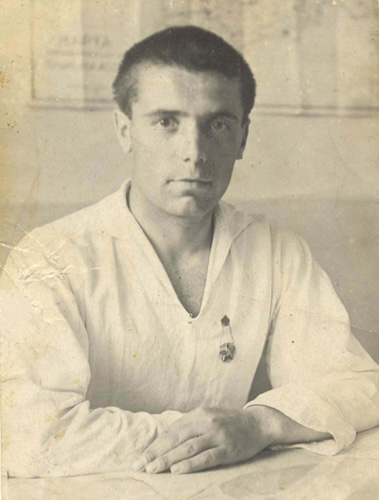
Shamil Alyadin, 1935, photo from shamil-alyadin.com
The brothers find themselves not merely on opposite sides of the barricades: one kills the other. Ideology proved stronger than blood and family ties.
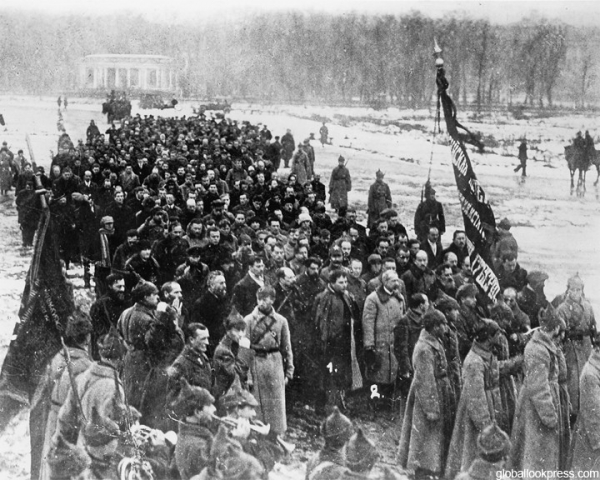
The Red Army in Crimea
Did even a single ideology deliver the promised benefits? Those who called on people to follow them were, in reality, coming for resources. Some took people; others took bread.
In April 1918, the Karabiberovo Uprising broke out in southeastern Crimea: the population could no longer endure the policies of “war communism” and the food requisitioning campaign. And in 1919, in Bakhchisaray, Denikin’s Volunteer Army forcibly conscripted Crimean Tatar youths, and 25 of them, who refused to enlist, were beaten to death. After this event, the song “Şompol” emerged among the people.
Fifteen years passed between the creation of “Şompol” and “Port Arthur.” People sang both of these songs in 1944, during the deportation. Both were banned by the Soviet authorities: singing them was punishable by up to 25 years in prison. Nevertheless, Crimeans still remember and sing both songs to this day.