ENG

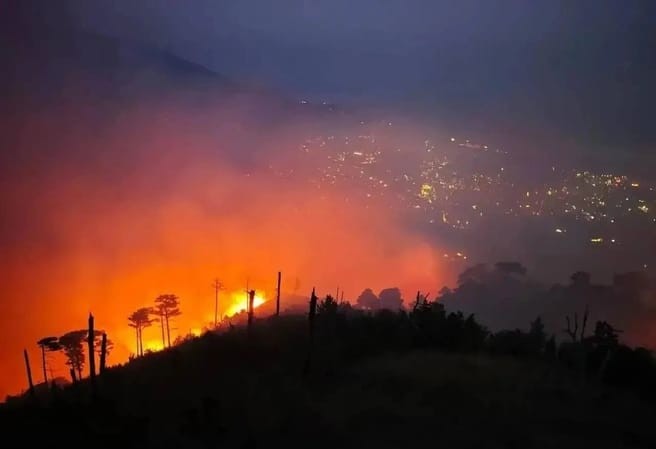
For the second week running, the sky over Yalta has looked like the backdrop to a disaster film. At night, it seems as though a huge volcano is erupting above the resort. The Yalta Mountain and Forest Nature Reserve caught fire on 19 August. Rumours immediately began to circulate amongst locals that this was due to the incompetence of the Russian air defence forces. And judging by the fact that the occupying administration declared the fire a ‘regional state of emergency’ but has still not named its cause, that is precisely what happened. Initially, three hectares of forest caught fire, but within a day the area affected had increased 17-fold. Only then did the air force join the fire-fighting efforts. As if to mock the Crimeans, Russian television reported that very same day that Moscow had dispatched a fire-fighting aircraft to Serbia – at the very first request of President Vučić. Meanwhile, it was mainly volunteers who were tackling the blaze in the Yalta Nature Reserve. They are still there to this day. Across all Crimean social media groups, calls go out several times a day: they need owners of motorbikes and off-road vehicles, or simply physically fit men – to head into the mountains on foot carrying rucksacks full of fire extinguishers. Alexei, a former firefighter and now a pensioner from Akmesdzhit (Simferopol), says: all this is incredibly spectacular, yet just as incredibly pointless.
“A backpack is a very effective tool, but only for putting out isolated pockets of fire. And we can see in the photos how people are spraying a wall of fire from them. Because, after all, they have to show the heroes. I agree, they are heroes – because the risk is enormous. But as for effectiveness – it’s zero. All this made sense in the first few hours after the fire broke out. Now only the air force can cope,” says the experienced firefighter.
Steep slopes without a single river or even a stream, 30-degree heat and strong winds – nature is doing absolutely nothing to help put out the fire. The smoke and stench stretch 140 kilometres from the source of the blaze, and people with respiratory conditions have been feeling the effects almost from day one. The damage to the environment has not even begun to be assessed, but environmentalists are literally in despair. The Yalta Mountain and Forest Reserve is home to a wealth of relict and endemic species. Unique Crimean pines and junipers grow here, alongside deer, wild boar and mouflon, as well as rare birds, reptiles and insects. Animals are dying not only from the fire itself, but also from the smoke and carbon monoxide. It will take decades for the vegetation to recover, and given that the fire is being extinguished mainly with seawater – centuries.
“Everyone is watching in awe as the helicopters scoop up water from the sea, whilst I’m almost in tears. You see, when salt gets into the soil in such quantities, it spells death for young trees and grass, even if the fire hasn’t touched them. I understand that the fire brigade’s options are limited, but the damage caused by this method of firefighting is roughly the same as that caused by the fire itself. It’s just that plants die quickly from a fire, but slowly from soil salinisation,” says Natalia, a biology teacher from Yalta.
However, what worries Crimeans most right now is that even those helicopters, which are currently trying in vain to put out the Yalta fire, will be sent off to tackle another one. On 25 August, the “Utrish” nature reserve near Anapa caught fire. The cause of the blaze is the same: “falling UAV debris”. And just as in Crimea, no aircraft were dispatched in the early hours, so the fire is now raging across 70 hectares of forest