ENG

On January 8, 2026, Oral Toga, an expert at the Turkish Center for Iranian Studies, published his observations and conclusions regarding the mass protests currently taking place in Iran. We offer you the full text of this article in English translation.
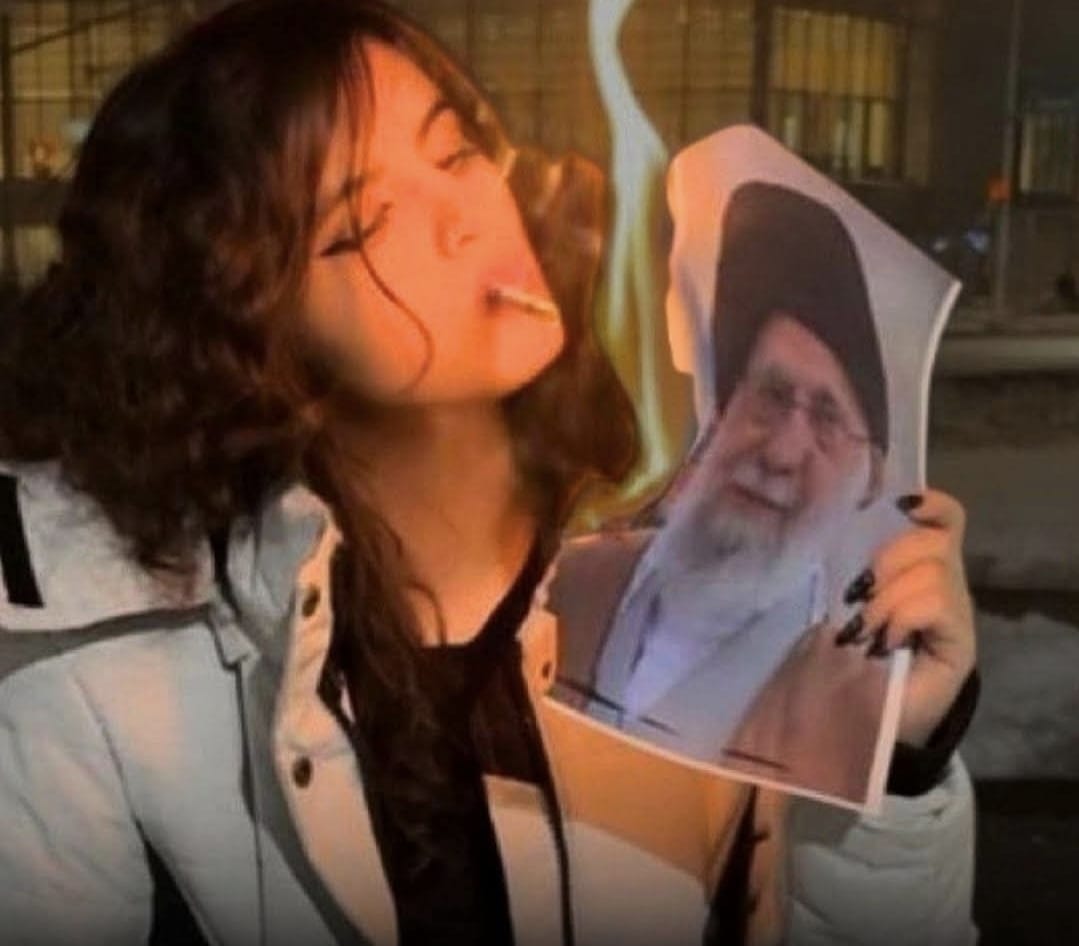
The protests, which began on December 28, 2025, in the Iranian capital Tehran against the backdrop of an economic crisis and quickly spread throughout the country, led to a large-scale mobilization of the Iranian opposition in the diaspora. From the very first days of the protests, Iranian communities in the US, Canada, and Europe began to organize coordinated actions. Particularly prominent was the group that rallied around the exiled Crown Prince Reza Pahlavi, who emerged as the most visible opposition voice.
Immediately after the protests began, Reza Pahlavi launched an intensive communication campaign on social media and in the Western media. In his first detailed statement, published on January 1, 2026, on social network X, he described the Iranian regime as being “in the weakest, most fragmented, and most vulnerable state in its history” and called on the international community to “support the Iranian people not only in words but also in deeds.” On January 2, following statements by US President Donald Trump addressed to Iran, Pahlavi posted a message of gratitude. In a video address in Farsi, he called on Tehran residents to go to the city center in “small, coordinated groups of friends.”
January 5-6 marked the peak of Pahlavi's media visibility in Western media. In an interview with the Wall Street Journal, he took a position different from his rhetoric during the 12 days of fighting, stating that “change in Iran is ultimately in the hands of the Iranian people” and speaking out against external military intervention. At the same time, he noted that “the regime is collapsing and no special operation is needed for this.” In an article published in the Washington Post, he claimed that protesters were chanting his name alongside slogans of freedom and national unity, but stressed that he perceived this “not as a demand for power, but as a profound responsibility.” In the same article, he mentioned the “Iran Prosperity Project,” a plan for the transition period, as well as the “Emergency Guide” prepared by more than 100 experts. All this shows that Pahlavi took into account the criticism of his previous calls for uprising during the bombing of Iran and adjusted his strategy.
On January 6-7, Pahlavi moved on to his first concrete calls to action. He proposed a coordinated chanting of slogans at 8 p.m. on January 8 and 9 – “in the streets or from your homes, but at exactly that time.” In a separate address to the security forces, he asked, “Whose side will you be on in history?” stating that “thousands of representatives of the regime” had already joined the National Platform for Cooperation, created in the last six months. In an interview with Fox News (Hannity program), he said, “In all these years, I have not seen such an opportunity for Iran as there is now.”
These calls have been met with mixed reactions within the diaspora. Some groups have described them as “irresponsible,” pointing to the risk to the safety of protesters. They cited past cases where Iranian security forces used social media posts to detain protesters, sometimes with tragic consequences.
Organizational infrastructure and media network
Behind Pahlavi's calls is an institutional structure that has been formed over the years. The Iranian National Council (INC), founded in 2013 in Paris and with an office in Woodland Hills, California, functions as his political platform. Project Phoenix (referring to the mythical bird Simurgh) was launched in 2019 at George Washington University as a think tank and is developing plans for the post-regime period in the areas of energy, economy, security, and agriculture. The National Union for Democracy in Iran (NUFDI), a Washington-based non-profit organization, is engaged in lobbying activities. The organization, which has 105,000 followers on Instagram, published an “Emergency Transitional Government Plan” in July 2025, in which Pahlavi was designated as the “leader of the national uprising.” It is also alleged that the organization runs a large network of trolls.
The London-based Iran International TV channel and Los Angeles-based Manoto TV, which broadcast in Farsi, played a key role in the media plan. Pahlavi said that in the event of an internet shutdown, communication would be maintained through “hundreds of thousands of Starlink terminals in Iran” as well as through these TV channels. The American non-profit organization NetFreedom Pioneers, which received about $150,000 in funding from the US government, played an active role in distributing Starlink terminals. Former NASA chief Firouz Nader called on the diaspora to raise $600,000 for 1,000 terminals. As of January 2026, there are estimated to be more than 100,000 users in Iran.
Geography of the diaspora protests
After the protests began, the diaspora organized demonstrations around the world, but most of them were held in groups of 50-100 people and did not come close to the scale of the 2022 protests in Berlin following the death of Mahsa Amini. On December 31, 2025, in Washington, D.C., the Iranian-American Organization of Communities (OIAC) held a rally in front of the White House demanding regime change. On January 1, in Richmond Hill (Greater Toronto), several hundred Iranian-Canadians, with the participation of Pahlavi's advisers, took part in a demonstration.
January 3 was a day of coordinated action: in London, about 100 people gathered at Downing Street, chanting “Javad Shah” (“Eternal Shah”) and “Woman, Life, Freedom,” with some participants from the Jewish community carrying Israeli flags. In Berlin, supporters of the People's Mujahideen Organization of Iran held a rally at the Iranian embassy. In Washington, about 500 people gathered at the Iranian diplomatic mission.
The protests continued on January 4 in Cologne, Stockholm, Copenhagen, and Oslo. In Canada (Vancouver, Winnipeg, Toronto), joint actions by the Iranian and Jewish communities became noticeable. In the second week, on January 6, supporters of the NCRI/MEK held a rally in Oslo. In the US, the key centers were Los Angeles, Washington, and San Francisco. Beverly Hills Mayor Sharon Nazarian said, “Beverly Hills is home to one of the largest Iranian communities outside of Iran. We see you, we hear you, and we support you.”
Israel offered its open support: the Mossad stated, “We are with you not only from afar and in words, but also on the ground,” and Prime Minister Netanyahu noted that Israel “identifies with the struggle of the Iranian people.”
Different positions within the diaspora
Various opposition factions emerged within the diaspora. Monarchists chanted slogans such as “Long live the Shah” and “This is the final battle, Pahlavi will return” and waved flags bearing the emblem of a lion and the sun.
The Iranian People's Mujahideen Organization (MEK/NCRI) took a separate position, refusing to recognize Pahlavi as leader and presenting its “resistance units” as the basis of the protests.
The Kurdish opposition issued a joint statement demanding federalism and distancing itself from Pahlavi.
Republican and secular groups put forward the slogan “Neither Shah nor Mullah,” rejecting both theocracy and monarchy.
Conclusion
All opposition factions agreed in condemning the regime's violence and supporting the protesters, but the question of leadership remained a key line of conflict. Reza Pahlavi became the most prominent opposition voice in the Western media, but deep divisions within the diaspora (monarchists, MEK, Kurdish groups, republicans) prevented the formation of a unified leadership. According to a 2024 GAMAAN poll, Pahlavi's level of support as an individual leader is 31% – the highest among opposition figures, but far from a majority.
As a result, the Iranian diaspora responded quickly and in many ways to the protests on December 28, but its fragmented structure remains a serious obstacle to the development of a unified strategy.