ENG

“In any uncertain situation, buy gas” — over the past six months, virtually every resident of the occupied peninsula has taken this rule to heart. That’s why, on Tuesday, even before dawn, lines were already forming at Crimean gas stations.
“I just read Nevzorov’s article about the bridge, immediately jumped behind the wheel, and raced to the gas station. I was driving and thinking: what if this is fake news, and I fell for it — and now, like a fool, I’m driving out in the middle of the night to fill up? But when I got there, I realized there were so many of us. I also heard stories about how they’d hidden a pipeline under the bridge that was used to pump gasoline into Crimea, so now there won’t be any for a long time,” says one of the Simferopol taxi drivers with a smile.
Contrary to the rumors, fuel reappeared at some gas stations on Wednesday morning, but the lines for it aren’t getting any shorter. The occupying authorities and the bloggers under their control rushed to quell the panic, but as usual, they only made the situation worse.
“I watch these guys trying to dispel the crisis, but for some reason, they lack enthusiasm. They say on camera that they’ve been through worse, that ‘everything will be Crimea.’ But their eyes betray sorrow and panic. With expressions like that, they’ve only made things worse. No one believes them — that’s for sure,” shares an employee of an advertising agency in Yevpatoria.
However, there are many victims of Russian propaganda on the peninsula. And they eagerly repeat the claim that the bridge will be repaired quickly.
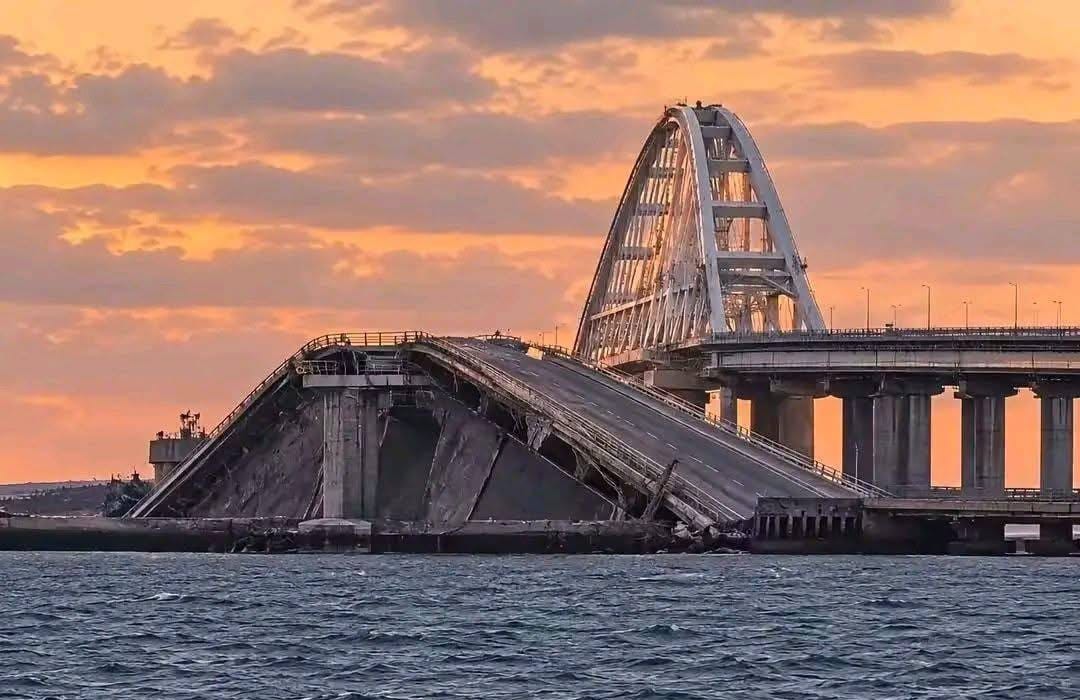
“Well, yes, they destroyed the arch and collapsed a span. But that’s just in one spot — not the entire nineteen kilometers of the bridge. So they’ll restore everything there quickly, just as they’ve done before. There’s really no need to worry about this,” a retiree from Bakhchisaray reassures his neighbors.
Russians who had planned to visit the peninsula in the near future are far less optimistic. Reservations for the New Year’s holidays are already being canceled,” complains an employee of one of Simferopol’s travel agencies.
“Just as things were starting to get back on track after the summer slump, here we go again. And the main thing is that everyone is demanding refunds. Do you even know what ‘force majeure’ means? When you bought your tour package, wasn’t there a war? One guy tells me: ‘There was no risk of a drone falling on my head.’ Seriously? And what was falling from the sky before — rose petals? In short, these ‘cheapskates’ are driving me crazy — they wanted to take a cheap trip to Crimea, taking advantage of the fact that prices had dropped, and then suddenly realized that, turns out, there’s a war, and they might lose their money,” the travel agent says irritably.
Crimean hotels are also confirming this trend. They, too, had barely had time to rejoice that the tradition of spending winter vacations in Crimea was being revived.
“It’s not that we were already fully booked for New Year’s, but we were gradually accumulating a significant number of reservations. Now I see that two have already canceled. I don’t know what will happen next, but we shouldn’t expect anything good from this situation — neither now nor next summer,” notes the owner of a small hotel near Sudak.
However, joy over yet another defeat of the occupiers sometimes outweighs pragmatic considerations. Showing it is extremely dangerous, but Crimeans are inviting relatives and friends “for festive coffee” without explaining exactly what they’re celebrating.
“Of course, we’re happy, even without fireworks. Some people sent their children across the bridge to school for safety’s sake and now don’t know how they’ll get home. Others bought plane tickets to Turkey to visit relatives and now don’t know what to do. Some used to transport goods from Taman, but now they have to either drive along the ‘death highway’ or starve to death. The tourist season is once again in serious doubt, and this is the sole source of income for many people along the entire coast. So even those who are in a decent position are happy, but they’re thinking more about what new problems all this will bring them,” says a resident of the Dzhankoy District.
For many Crimeans, the destruction of the bridge did not come as a sudden surprise. For some, it became clear as early as six months ago: it was only a matter of time.
“The fact that the bridge would be ‘dismantled’ — if not today, then tomorrow — became clear back in the spring, when tankers and energy facilities were attacked. I remember a video that surfaced back then showing a drone flying unimpeded over the bridge’s entrance and continuing on its way. Even then, I noticed that no air defense systems were interfering with it, and all it would take to strike the bridge was simply to turn right. So even back then, it became clear: they’ll keep attacking until they destroy it,” says one Kerch resident.
When you’ve been waiting for something for a long time, you eventually come to accept it as a matter of course,” shares another interviewee from CEMAAT. A resident of Simferopol admits: despite all the efforts of Russian propaganda, the destruction of the bridge came as no surprise to her.
“Only one thing surprised me. We’d been waiting for this for so long. We wondered — would it happen or not? They kept telling us how powerful it was, how well-protected. But when it finally collapsed — there was no excitement at all. It was as if another factory had been burned down. Just business as usual. I even thought that when the Ukrainian Armed Forces start entering Crimea, the reaction will be the same — like, ‘Yeah, finally,’ but without any ‘wow.’ As if it were a matter of course,” says the Crimean woman.