ENG

Elvira Kemal is a researcher of Crimean Tatar history living in Germany. We are publishing her new article for the Turkish publication Yenidevir.
For many, their understanding of the events of the 1917 Revolution in Crimea ends with the assassination of Noman Çelebicihan — a Crimean Tatar leader, mufti, and one of the organizers of the first Qurultay. But the history of the revolution and the civil war did not end there.
While working with archival documents, I have repeatedly come across references to this uprising in the investigative files of people who were repressed twenty years later.
At the same time, there are discrepancies in the descriptions of the uprising itself — regarding dates, the name of the leader, and the circumstances of individual clashes. To make sense of this story, it is necessary to compare the memoirs of participants, scholarly works, and investigative documents.
The establishment of Soviet power in Crimea in the winter of 1917–1918 was accompanied by mass terror — arrests, extrajudicial executions, and murders. These events are described in detail in the studies by Zarubins.
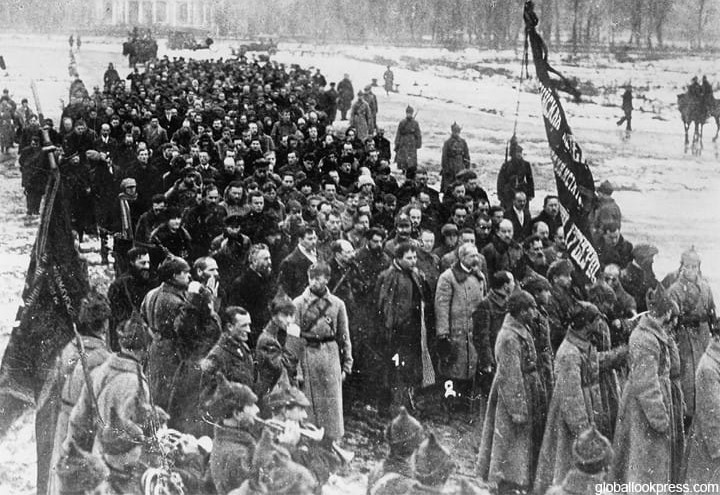
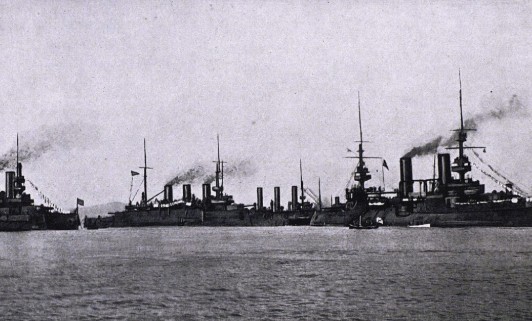
In January 1918, warships began approaching Crimean cities, and sailors went ashore. Among them were supporters of the Bolsheviks, Left Socialist-Revolutionaries, and anarchists; at the same time, local councils and revolutionary committees were far from always able to control the armed detachments.
One of the most horrific episodes was the massacre in Yevpatoria. After occupying the city, the Reds began conducting mass searches and arrests. They detained officers, wealthy residents, and people labeled “counterrevolutionaries.” Those arrested were taken to the ships "Truvor" and "Romania", where they were killed. Subsequently, the massacres continued on land: people were taken outside the city or killed right outside their own homes.
In February, a new wave of mass violence swept through Sevastopol. People were killed on the streets, in apartments, at the pier, and in prison. According to the testimony of Yuri Gaven, as cited by historian Puchenkov, at least 250 people were killed on the night of February 22–23 alone. The bodies of those killed were dumped into the sea.
During those same days in February, Noman Çelebicihan was killed. For the Crimean Tatars, his death meant the loss of a religious and political leader. After the Bolsheviks’ victory, the Qurultay and the Directorate were dissolved, and the national press was shut down.
In Sudak, the first months of Soviet rule were marked by searches, arrests, confiscation of property, and forced collection of money. In a letter dated February 3, 1918, writer Adelaide Gertsyk described a nighttime search of her own home and reported that money had been taken from her acquaintances under threat. Meanwhile, in the Taraktash district, the local council — which brought together influential representatives of the Crimean Tatar and Russian communities — continued to wield influence. Coercion and the new authorities’ interference in everyday life created a breeding ground for discontent, which escalated into an armed uprising in April. It spread throughout the Taraktash district and the areas surrounding Sudak, Meganom, and Koktebel. The rebels were led by Seydali Qarabiberov — also referred to in documents as Seyt-Ali — a former village head of the Taraktash district and a deputy to the Feodosia Zemstvo Assembly, who enjoyed great respect among the people.
In April 1918, the rebels captured Sudak. According to the memoirs of Yevgeny Shevchenko, the commander of the local Red Guard, his unit was dispersed, and some supporters of the Soviet government were arrested and killed. The number of rebels is estimated at approximately three thousand, though this figure cannot be considered accurate.
The Bolsheviks sent Pavel Gapon’s detachment, equipped with an armored car driven by sailor Matveev, against the rebels. The expedition failed. According to one account, the rebels overturned the armored car by pelting it with stones; according to another, it hit a section of road that had been dug up and got stuck.
However, on April 27, Makar Chizhikov’s Bolshevik detachment drove the rebels out of Sudak. The Bolsheviks’ return was short-lived: German troops were already approaching Crimea, and holding the city soon lost its military significance for the Reds.
“So, a few days later, the destroyer "Steregushchy" of the Black Sea Red Fleet entered the port of Sudak; its mission was to pick up all the remaining sailors near Meganom. I, too, was taken to Feodosia. Upon arrival there, I immediately went to Comrade Fedko’s headquarters and asked for help in defending Sudak, to which he replied that it was already too late, since they themselves had to flee in light of the Germans’ advance and occupation of the entire Crimea. I did not travel any further; I remained in Feodosia” (A.A. Bobkov)
The next tragic chapter in Qarabiberov’s life is linked to the restoration of Soviet power in November 1920. For five days, he headed the Taraktash District Military-Revolutionary Committee, but was soon arrested.
According to researcher Leonid Abramenko, after Qarabiberov’s arrest, residents of the Taraktash district and Karasubazar submitted petitions for his release. These petitions bore dozens of signatures. People spoke highly of Qarabiberov and disputed the charges of bandit attacks in 1918. Representatives of the local revolutionary committees also spoke out on his behalf.
But these appeals did not save him. On December 13, 1920, a troika of the Cheka’s Special Department issued a decree ordering the execution by firing squad of a group of 32 people, among whom was Qarabiberov.
In archival files from the 1930s, the story of the uprising resurfaces. Among the documents I found is the case file of Grich Emir Asan, who was convicted in 1937 and mentioned in connection with the uprising (according to archival materials, he was Qarabiberov’s personal bodyguard). Such documents allow us to trace the fates of the participants, but they require particularly careful reading: charges and testimonies recorded during the years of mass repression cannot automatically be taken as an accurate account of events.
The Qarabiberov Uprising is an important part of the history of the Crimean Tatars’ resistance during the Civil War. For the people who rallied around Seydali Qarabiberov, the struggle against the new authorities was, above all, a defense of their families, their property, and their right to determine the fate of their community independently. They stood up against the arbitrariness they faced. The death of Noman Çelebicihan did not put an end to the resistance: there are other leaders whose names and fates deserve to be restored to historical memory.