ENG

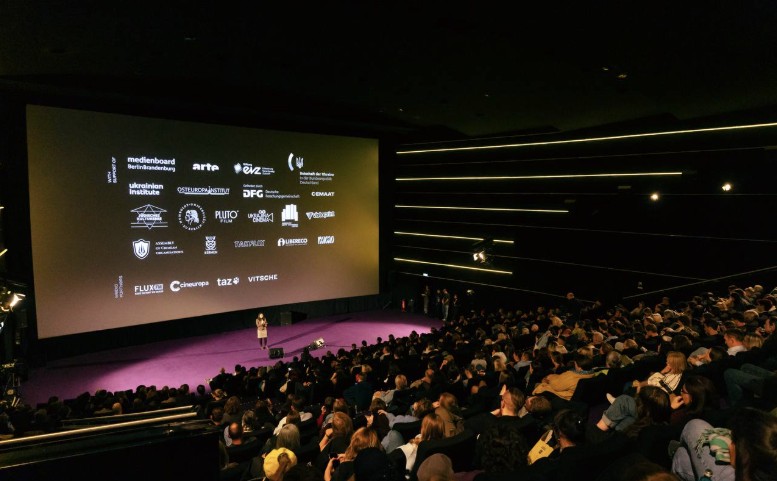
There are more and more Crimean Tatar events every year. The number of outlets claiming to be Crimean Tatar media has surpassed several dozen. There is even a Crimean Tatar film festival now. But the Crimean Tatar language is heard less and less frequently around the world.
I was talking to a colleague the other day, and she shared her impressions of the Turkic Film Festival in Istanbul. Hundreds of films were brought to Turkey not only from Turkic-speaking countries, but also from other countries with Turkic-speaking communities.
Each delegation spoke in its own language. It turned out that, until recently, Russian-speaking Kazakhs and Kyrgyz no longer use Russian at all; this had been the case for the Uzbeks from the very beginning, and the Azerbaijanis followed them through the process of de-russification. These peoples have one advantage: they gained their own states in 1991. Only the contestants from Russia, who brought films in Tatar and Bashkir, seemed like an outsider element at the festival. The Tatars and Bashkirs met the main requirement of the competition: their films were shot in their native languages. But off the set, they communicate only in Russian. Let’s be honest — the situation is the same for the Crimean Tatars. A director from Crimea, who brought his work to another film festival — one dedicated to Crimean Tatar films — spoke Russian on stage in Istanbul. We’re talking about a director who has made dozens of documentaries and feature films and has been working exclusively within the Crimean Tatar community for the past 20 years.
Or here’s another event vying for the title of Crimea’s premier music award. The journalist conducted all her backstage interviews with the performers in Russian, and only three artists stood their ground and responded to her in Crimean Tatar. The paradox — one that many Ukrainians also understand well — is that for most Crimeans who are now between 30 and 50 years old, the Crimean Tatar language is not their native language. In our language (as in most European languages), there is no concept of a “native language”; there is the concept of a “mother tongue.” That is, the language your mother spoke to you in during childhood, the language in which you listened to fairy tales and lullabies.
A language learned as an adult never truly becomes your native language, and in moments of stress, joy, or uncertainty, your brain switches to the language it mastered to the point of automaticity between birth and age 5.
The Crimean Tatar language has been reduced to a mere ornament — like Latin, which is used to conduct Mass but not to express thoughts and feelings. This erosion is particularly evident among the diaspora. In Crimea or on the Ukrainian mainland, Crimean Tatar families don’t even notice that Russian or Ukrainian is becoming their children’s native language. And only when children begin to speak English, German, or French not only at school but also in everyday life does it become clear to parents: the Crimean Tatar language is truly dying out.
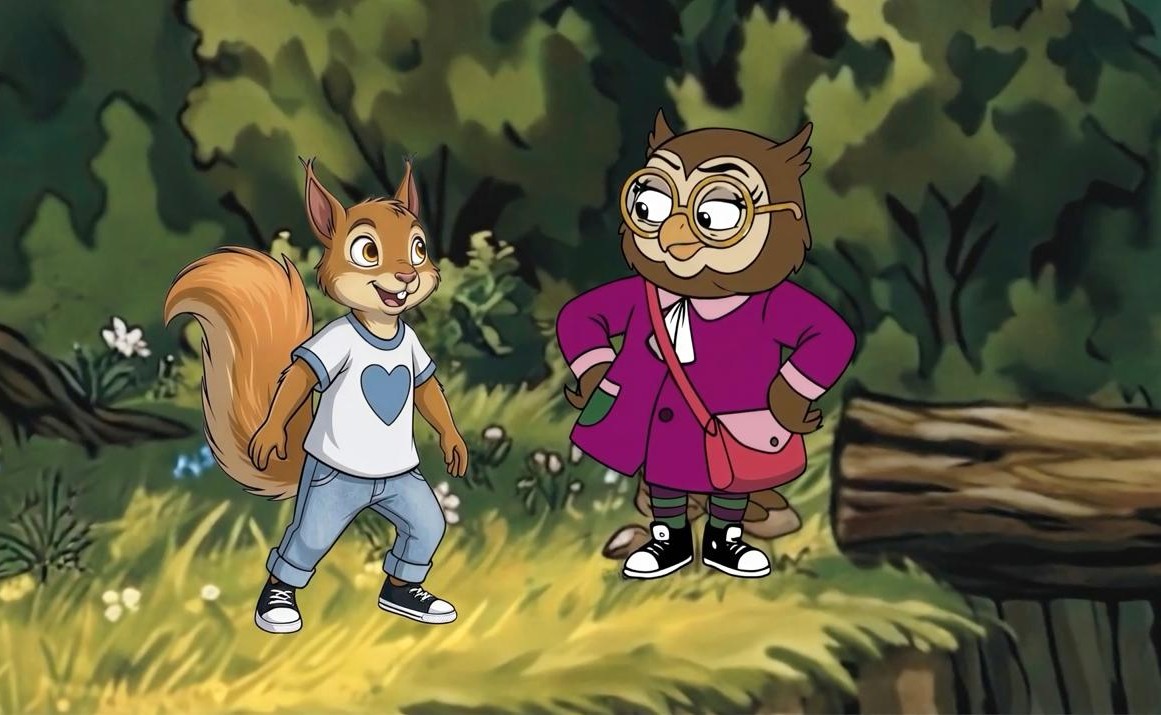
We at CEMAAT Media have long been aware not only of the problem, but also of ways to solve it. And perhaps the most important of these is creating high-quality content for young audiences in the Crimean Tatar language. That is precisely why our main project for 2026 is the production of animated series. One animated series is already airing on our YouTube channel. The first episode is here, the second here. There are five more episodes to come, featuring the adventures of a squirrel, an owl, and a cloud in the magical Crimean forest, and we’re confident that parents won’t regret joining in to watch, even for a second. We intentionally made the simple plots — based on timeless themes — multilayered by adding humor that both children and adults will understand. We’ve spiced up the characters’ dialogue with dialectal expressions from the southern coast of Crimea and the steppe to highlight the diversity of the language. After all, we’ve worked very meticulously on entire phrases so they can become new Crimean Tatar memes. Another animated series produced by CEMAAT Media will premiere in December, but we’ll tell you more about that later. For now, watch “Squirrel and Friends” and don’t say there’s no Crimean Tatar content for kids.